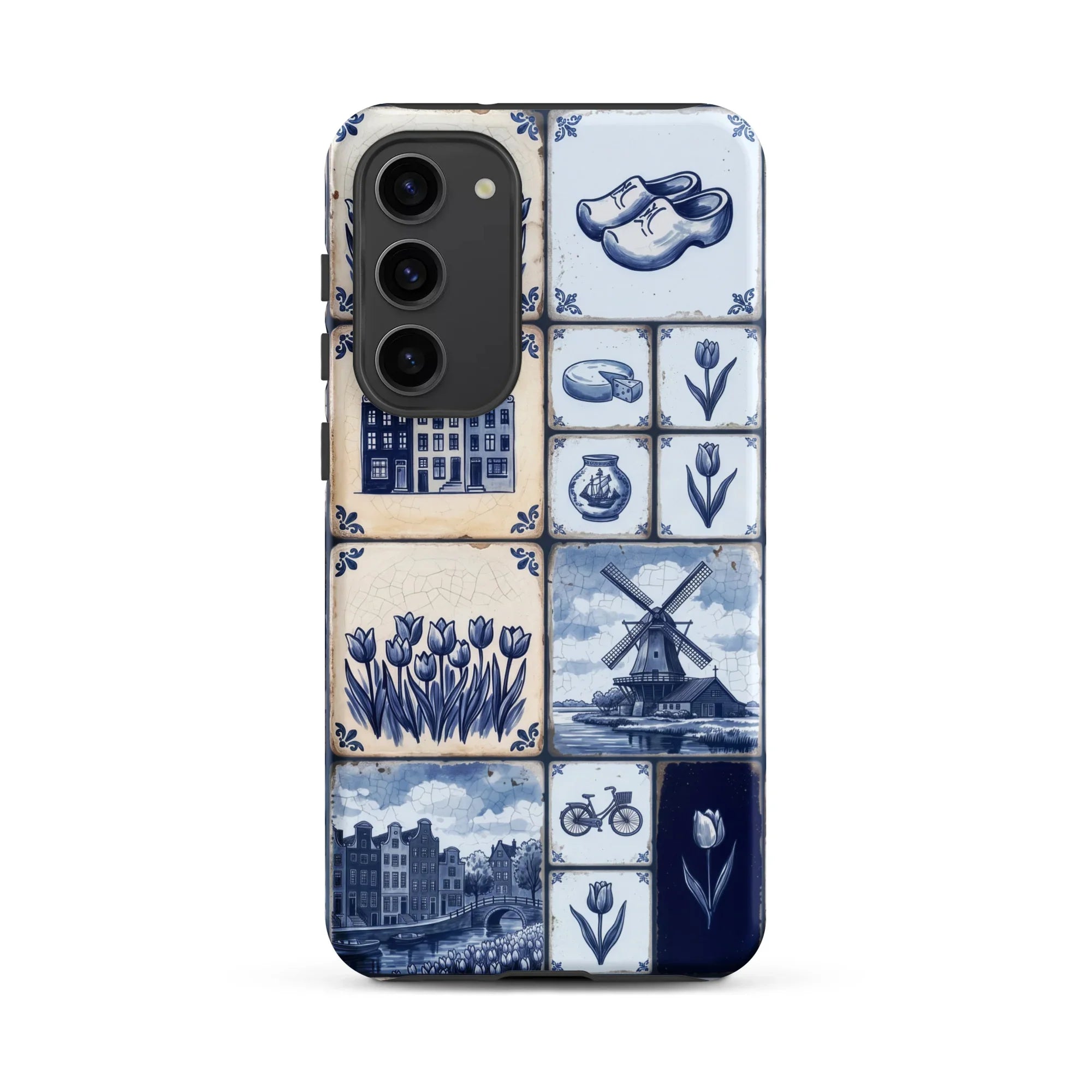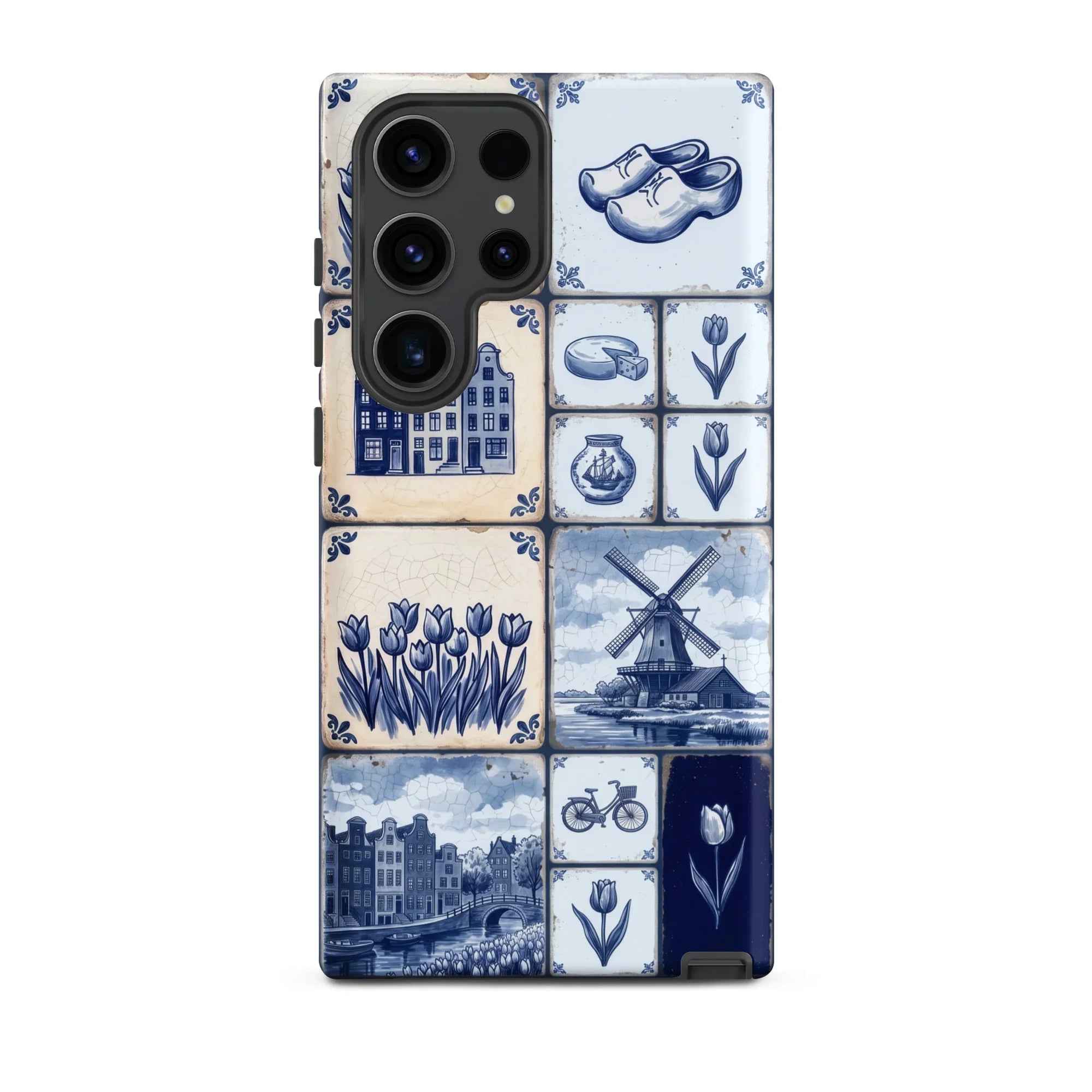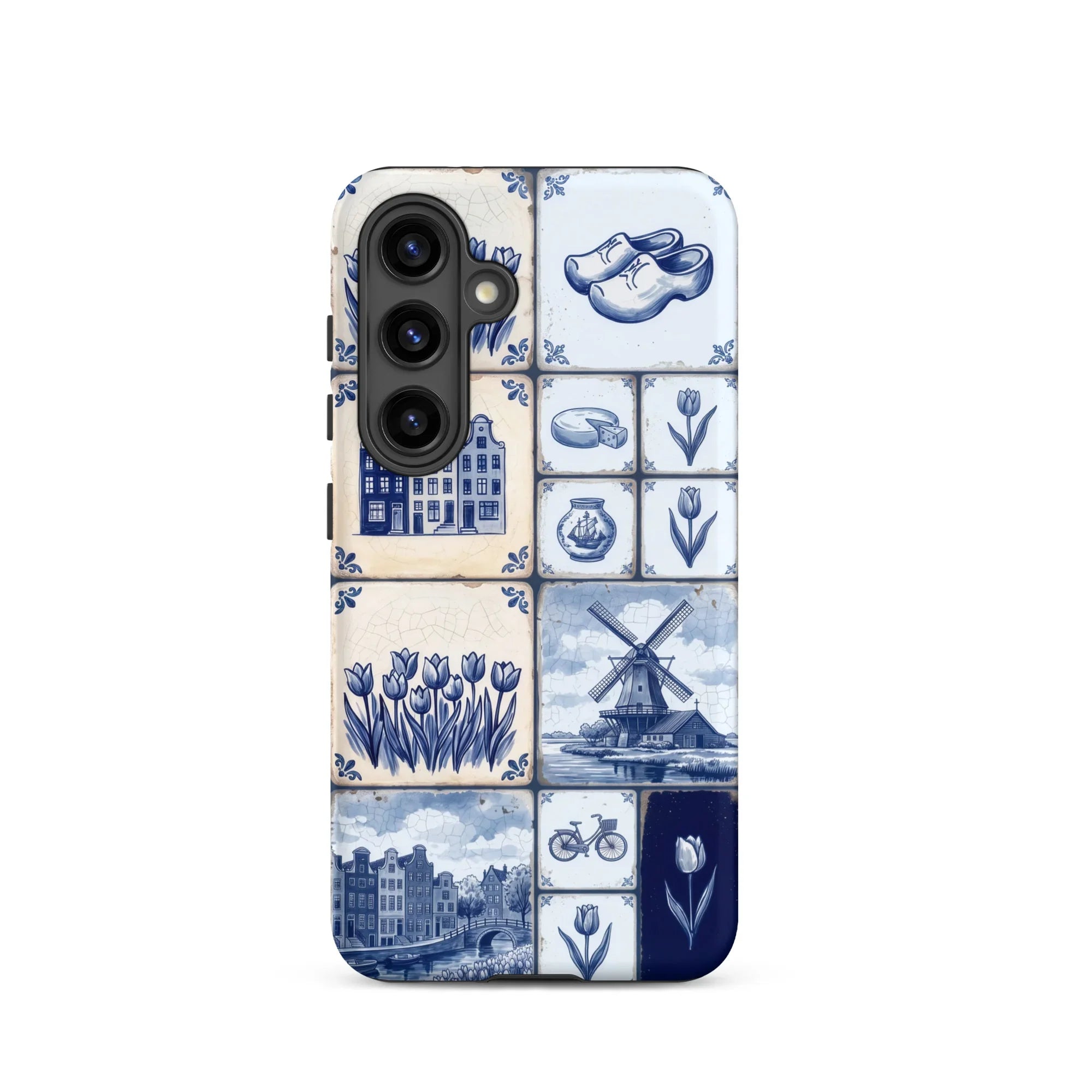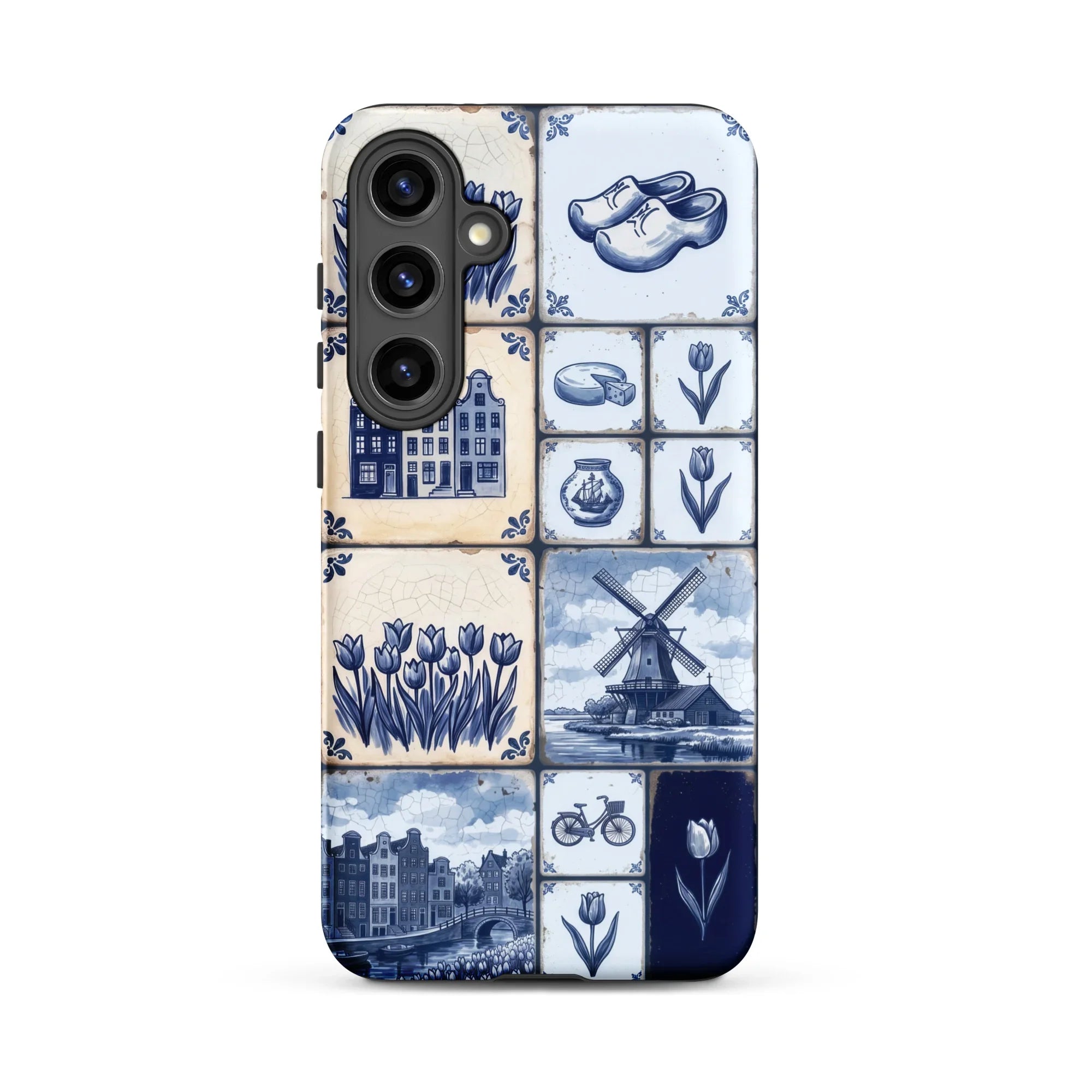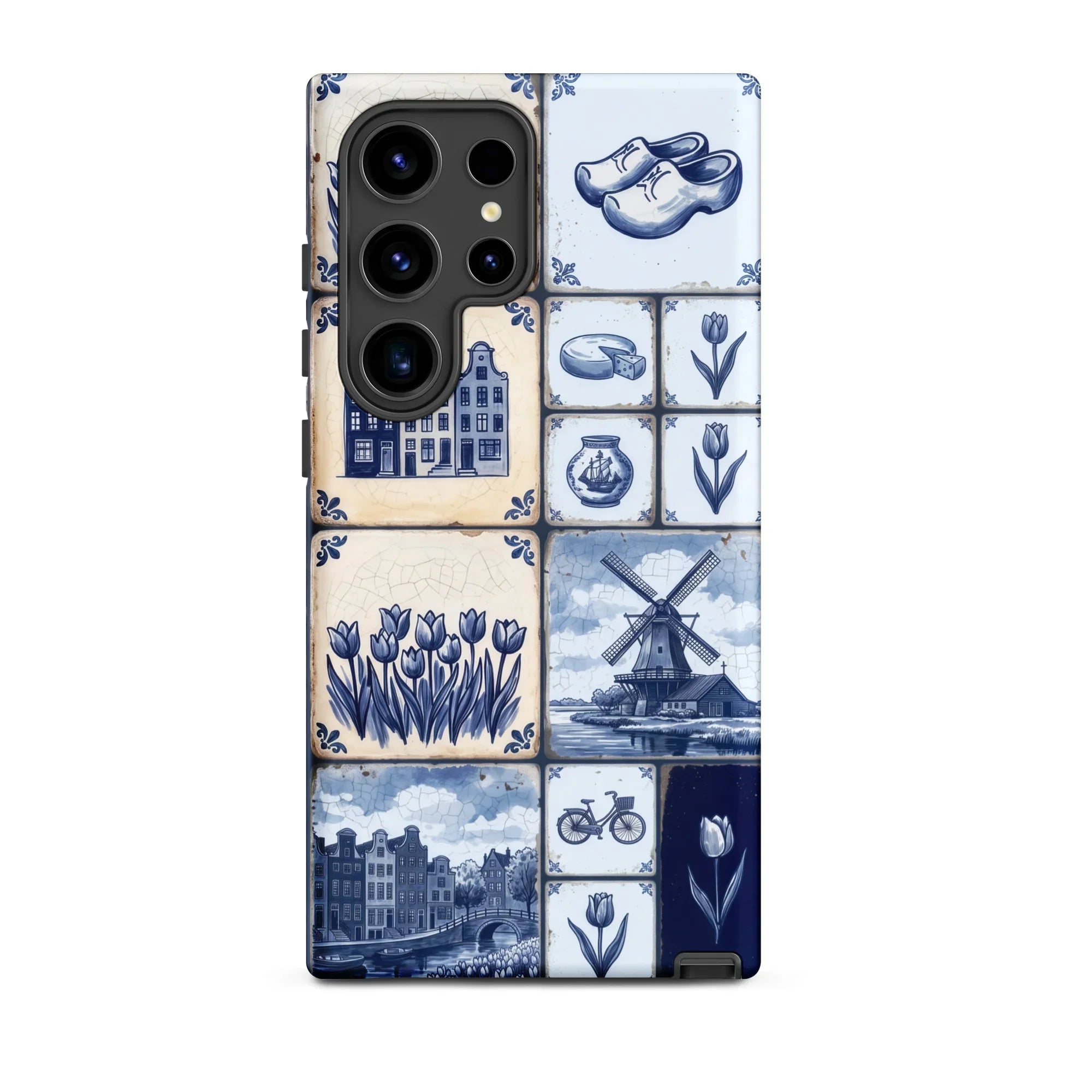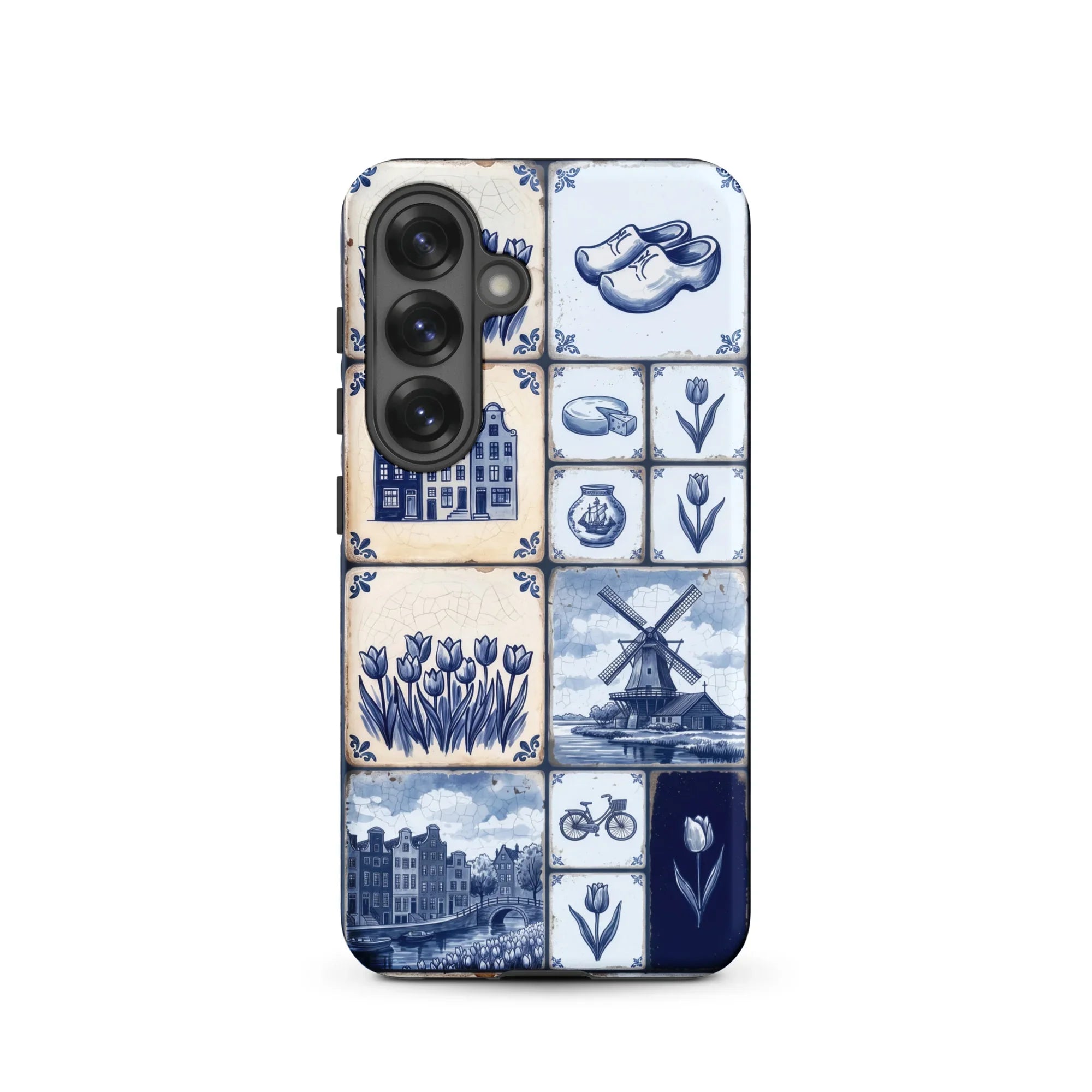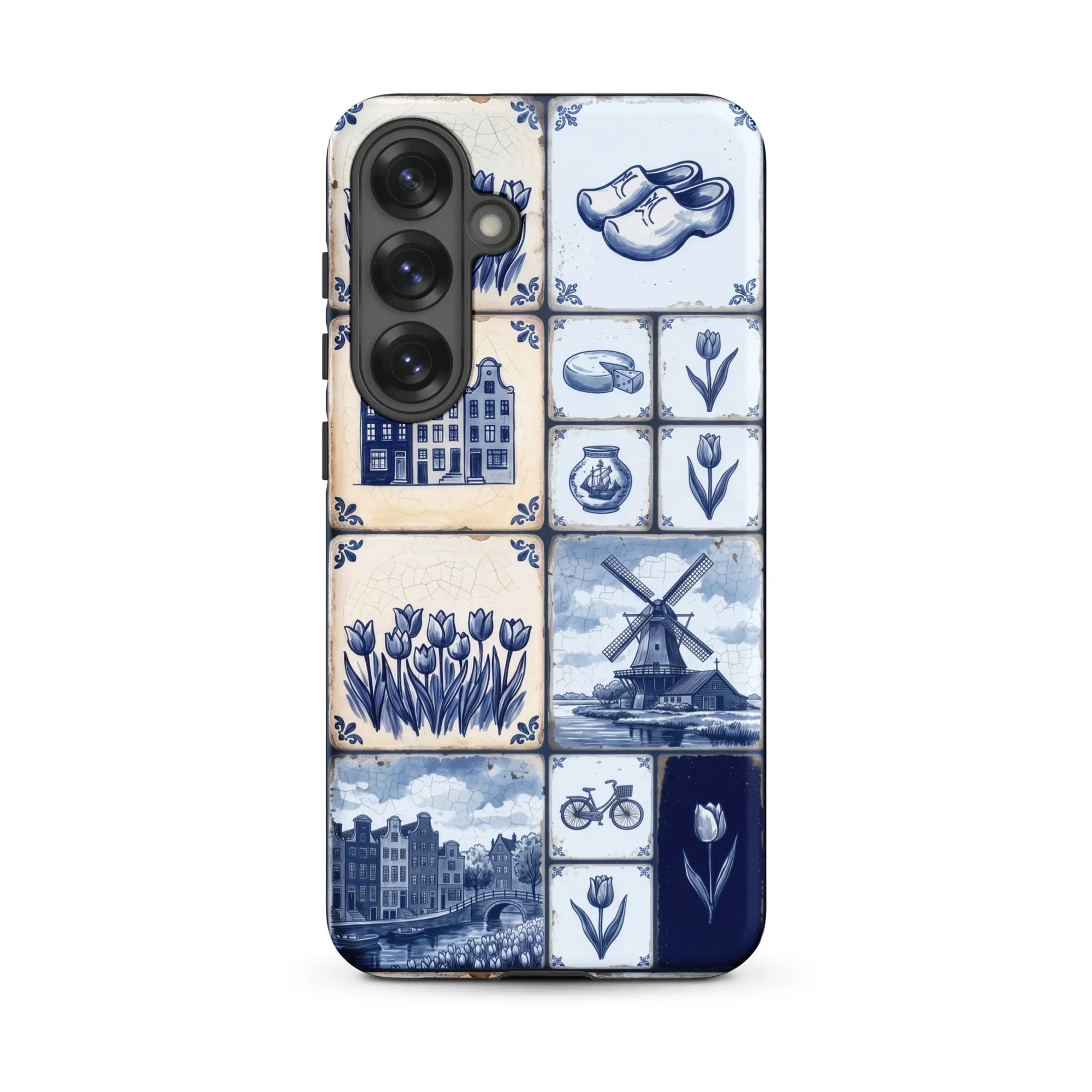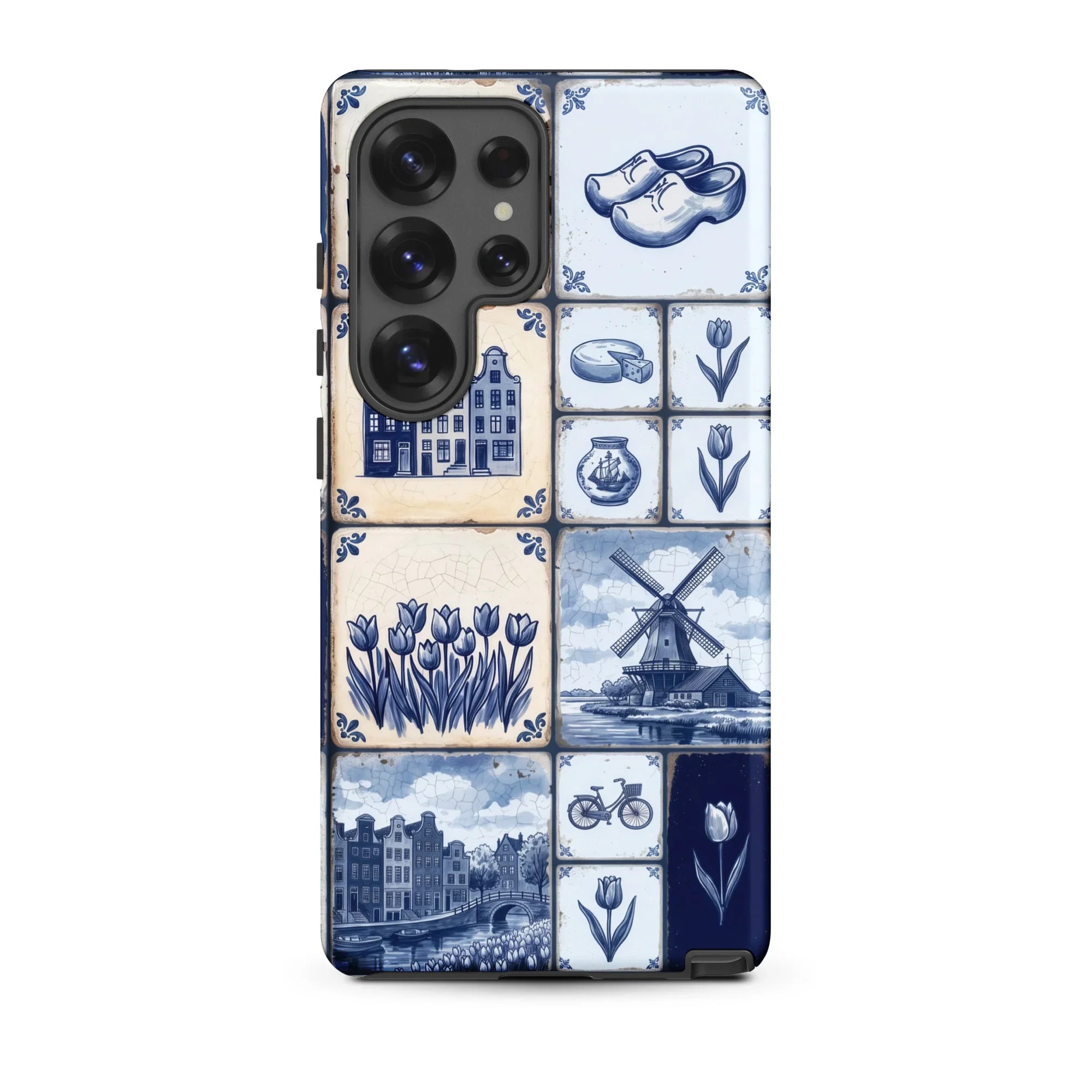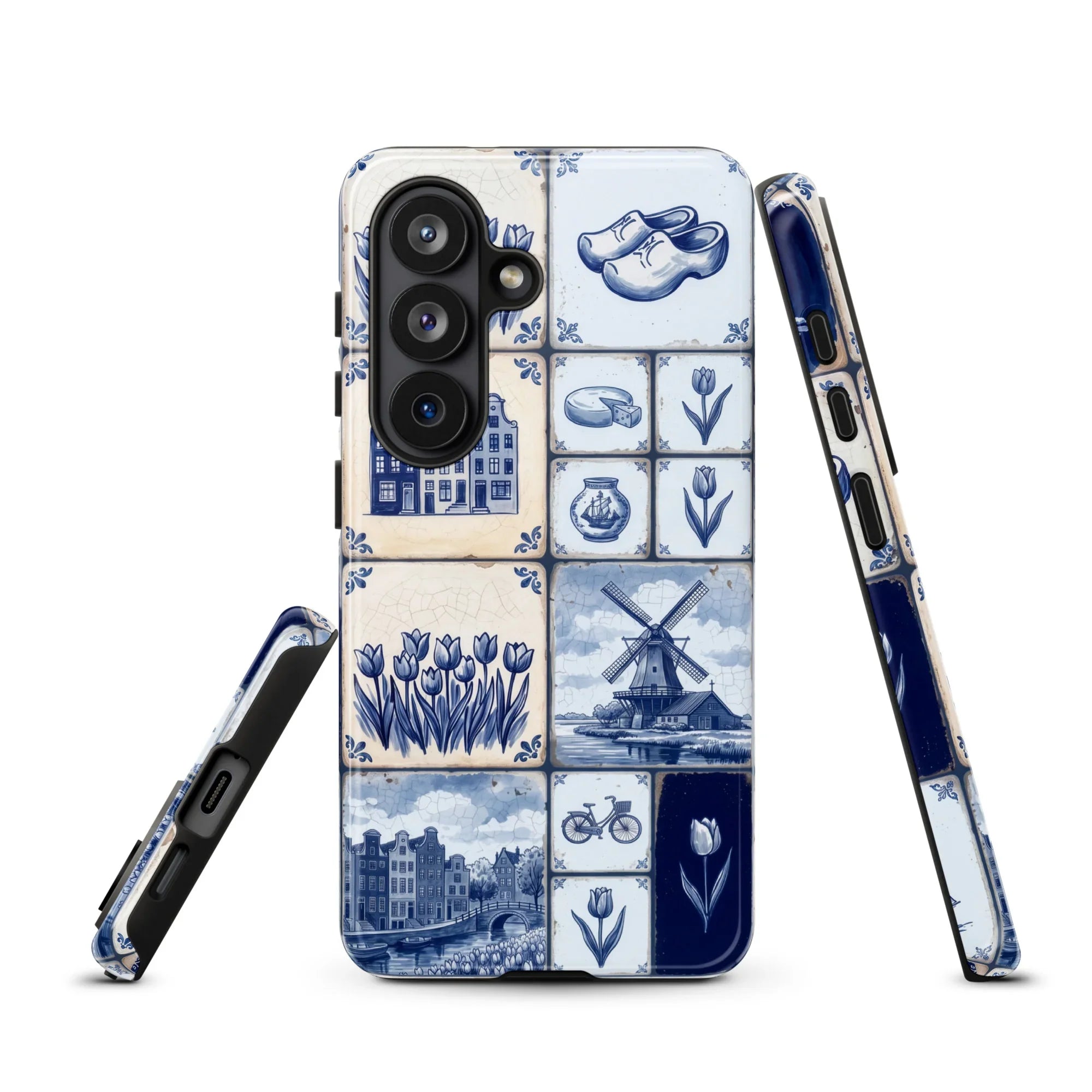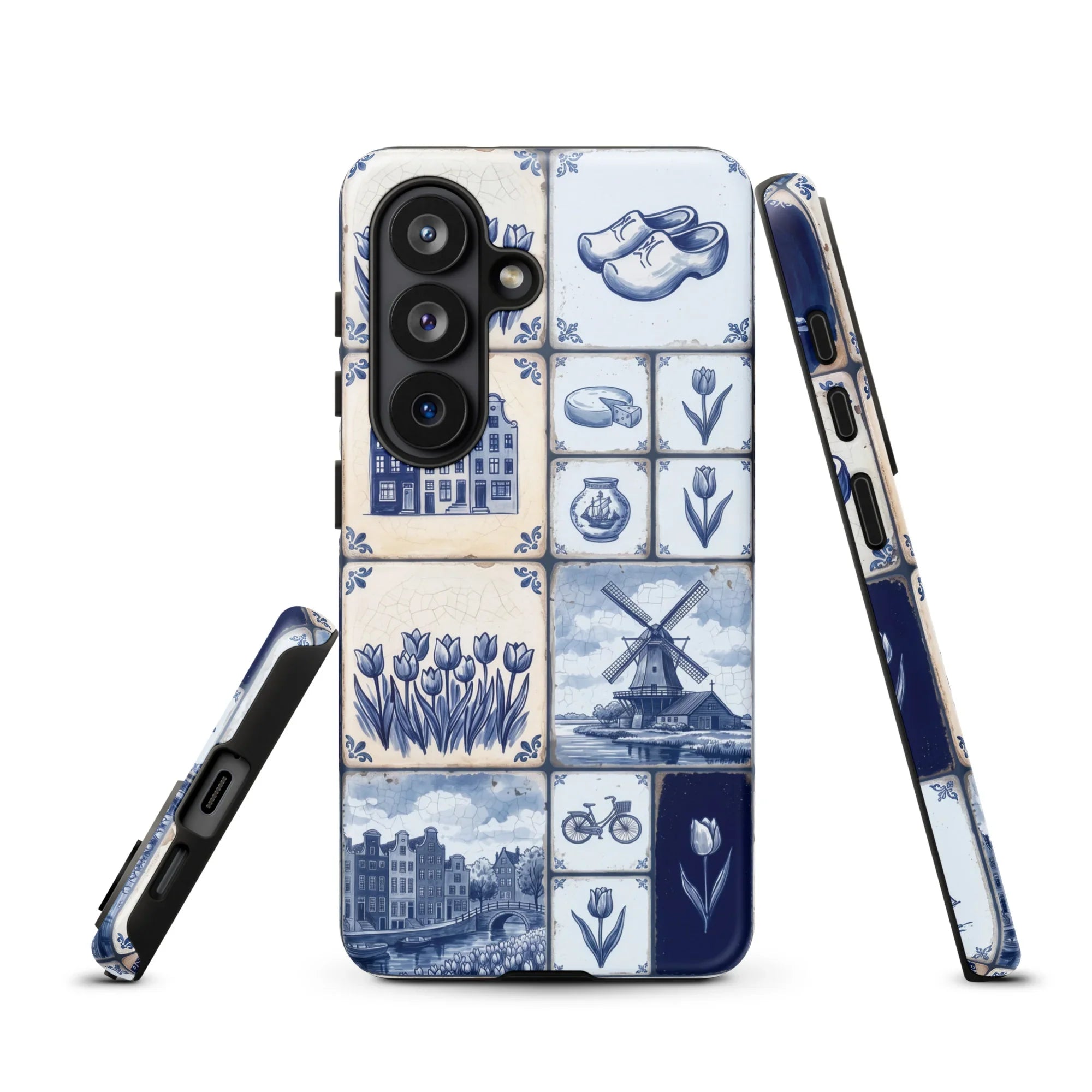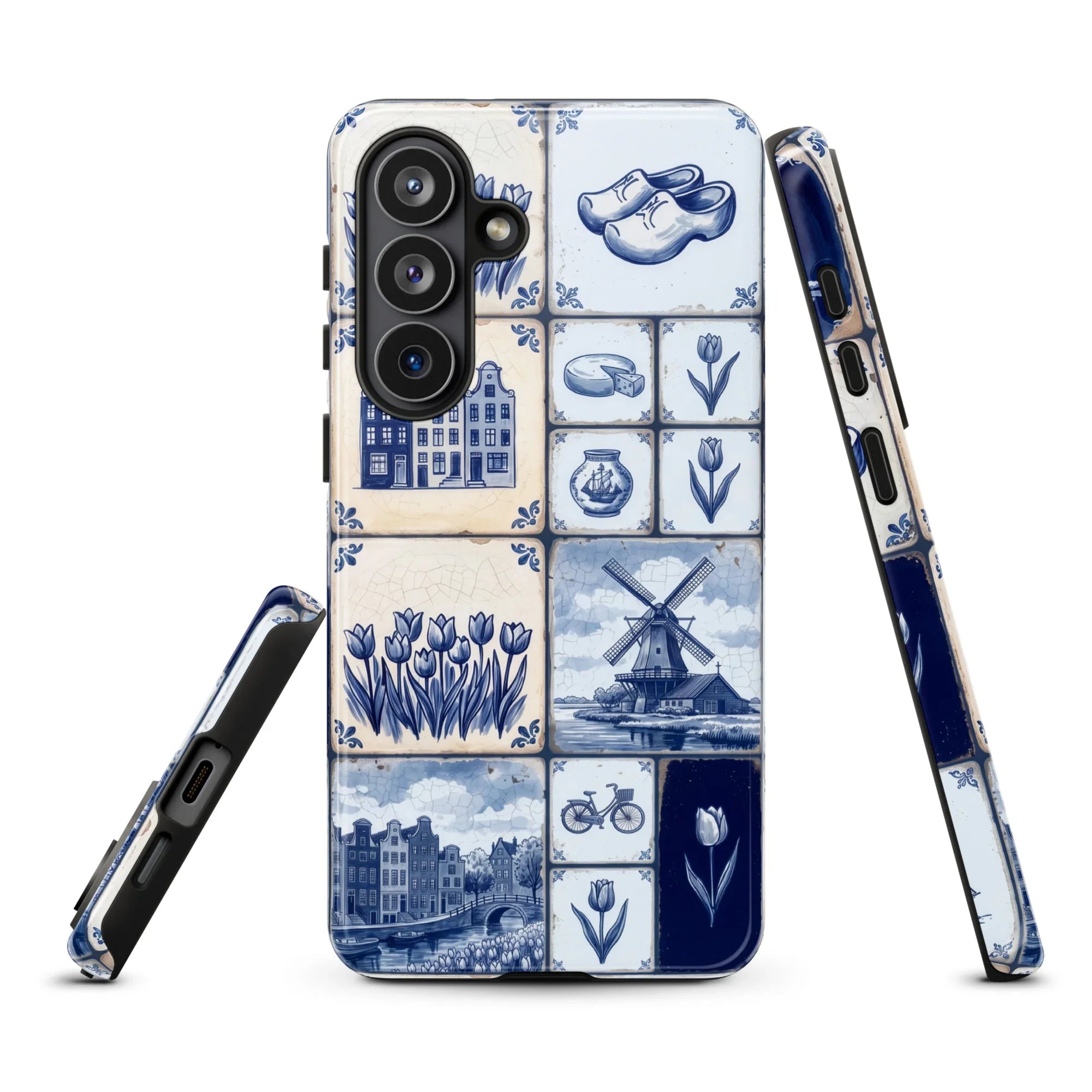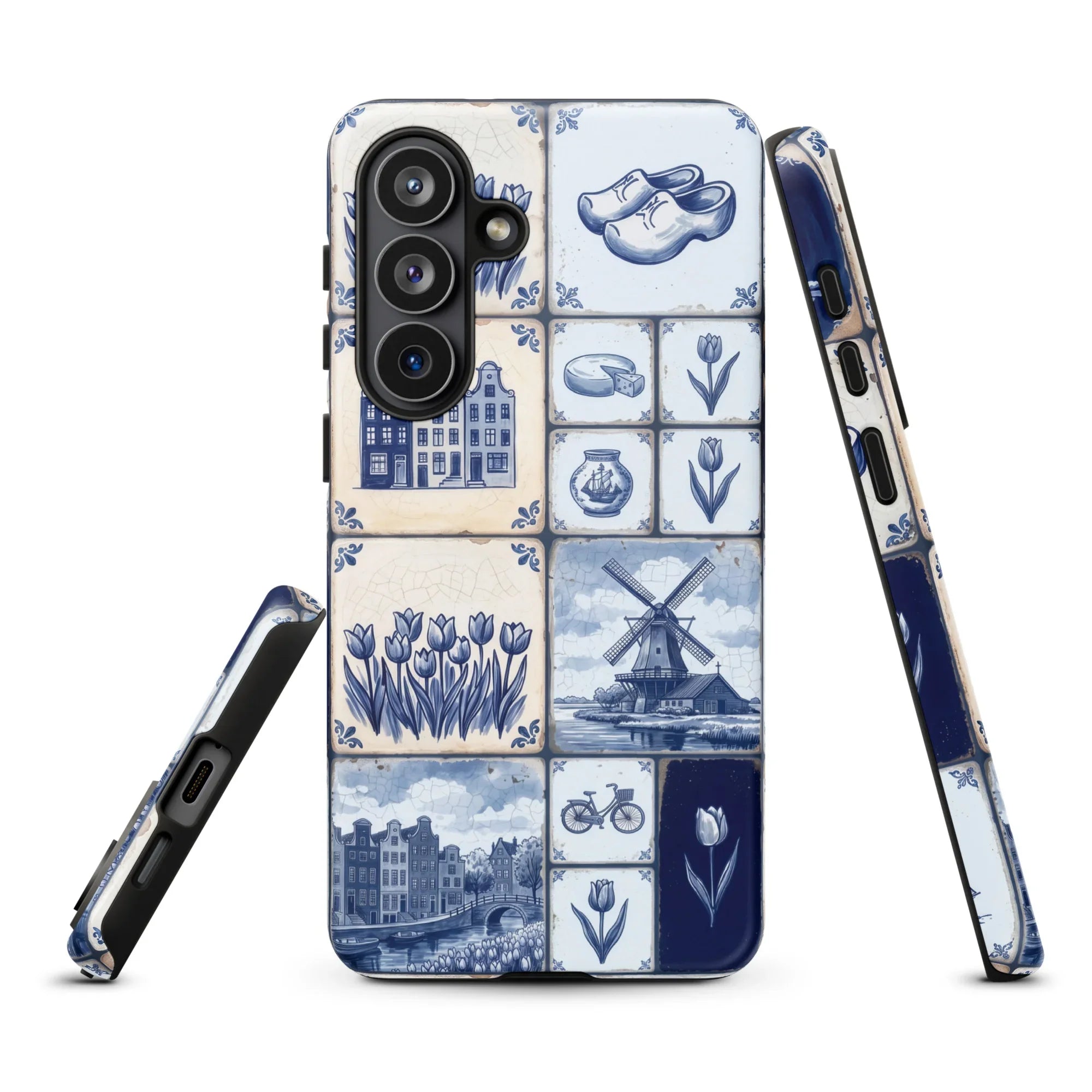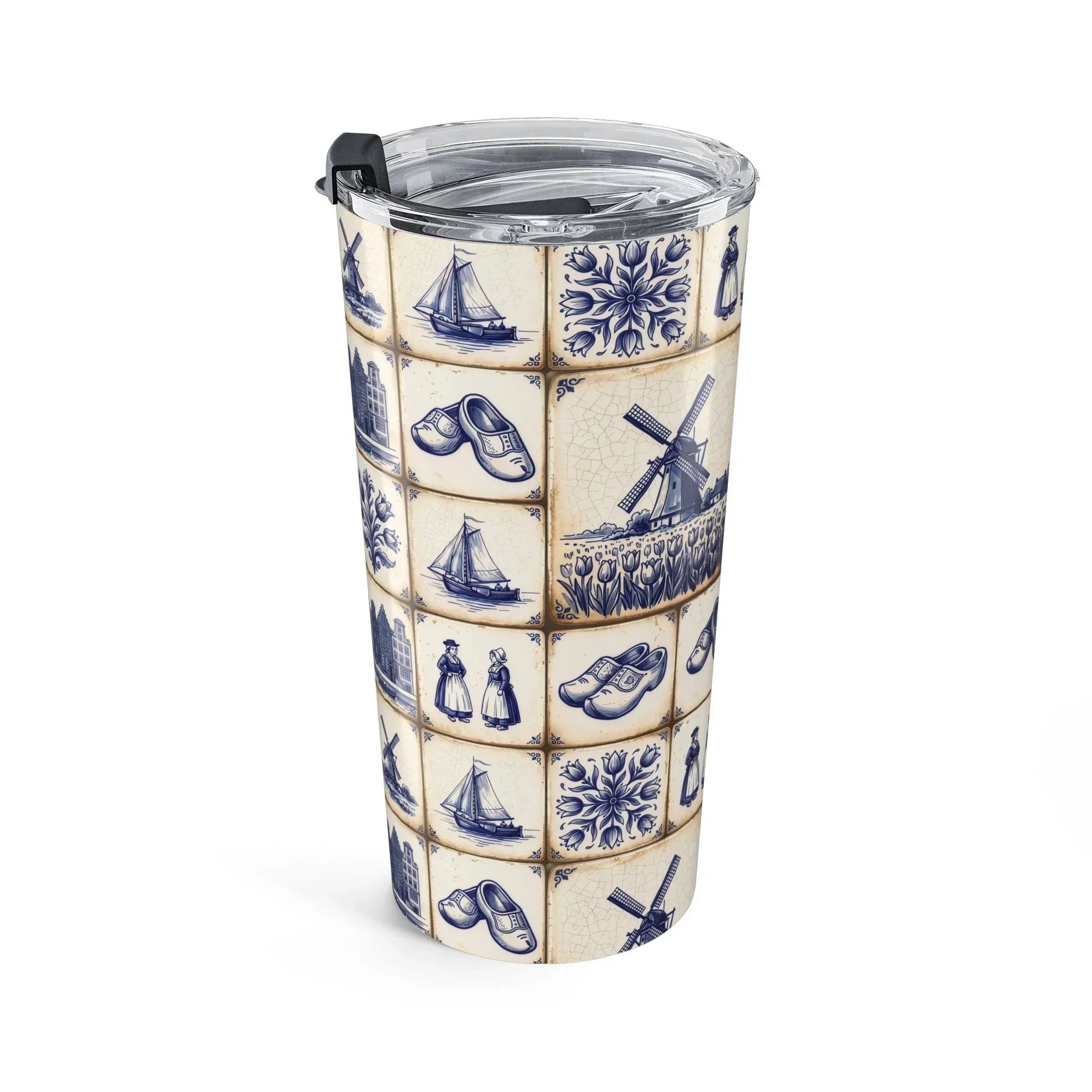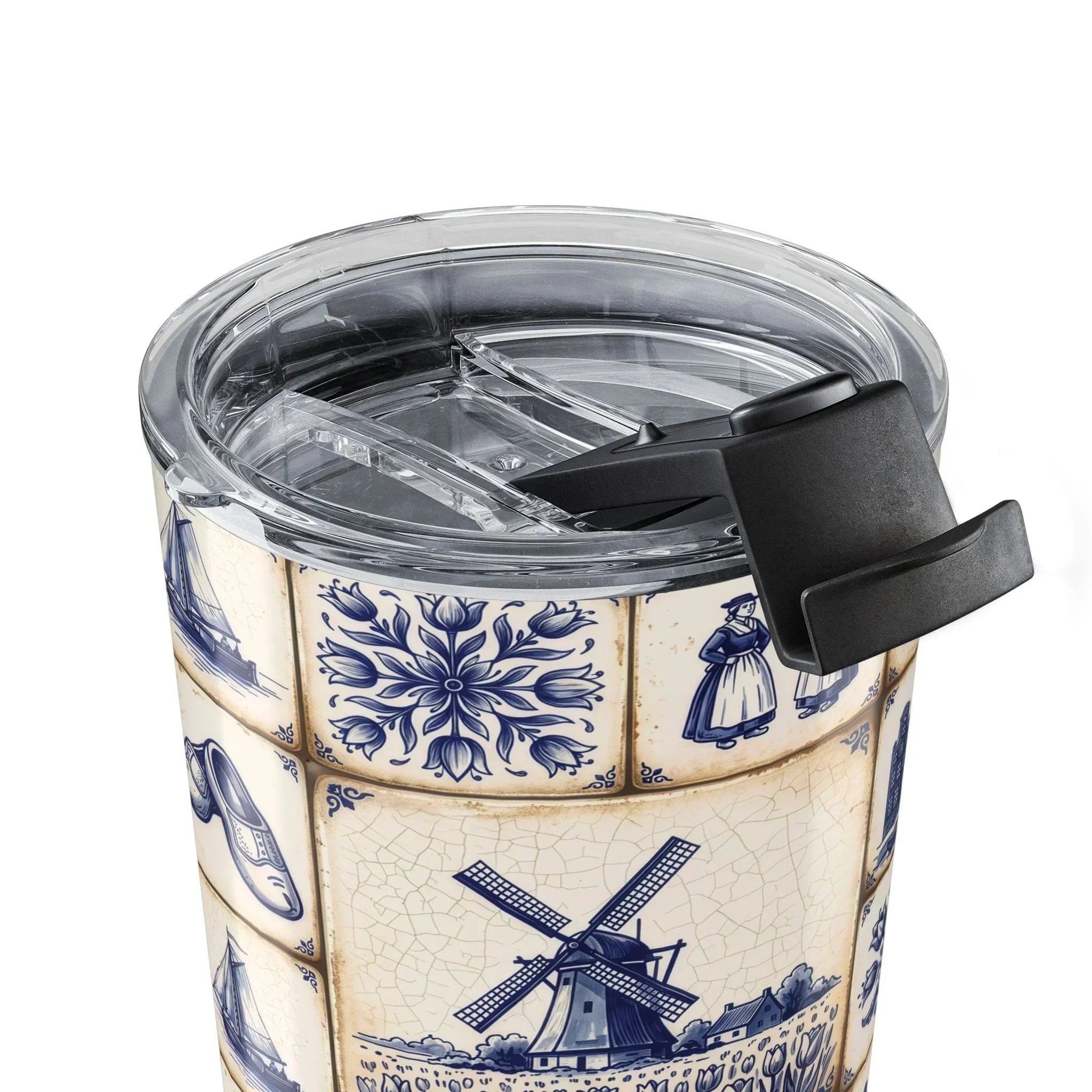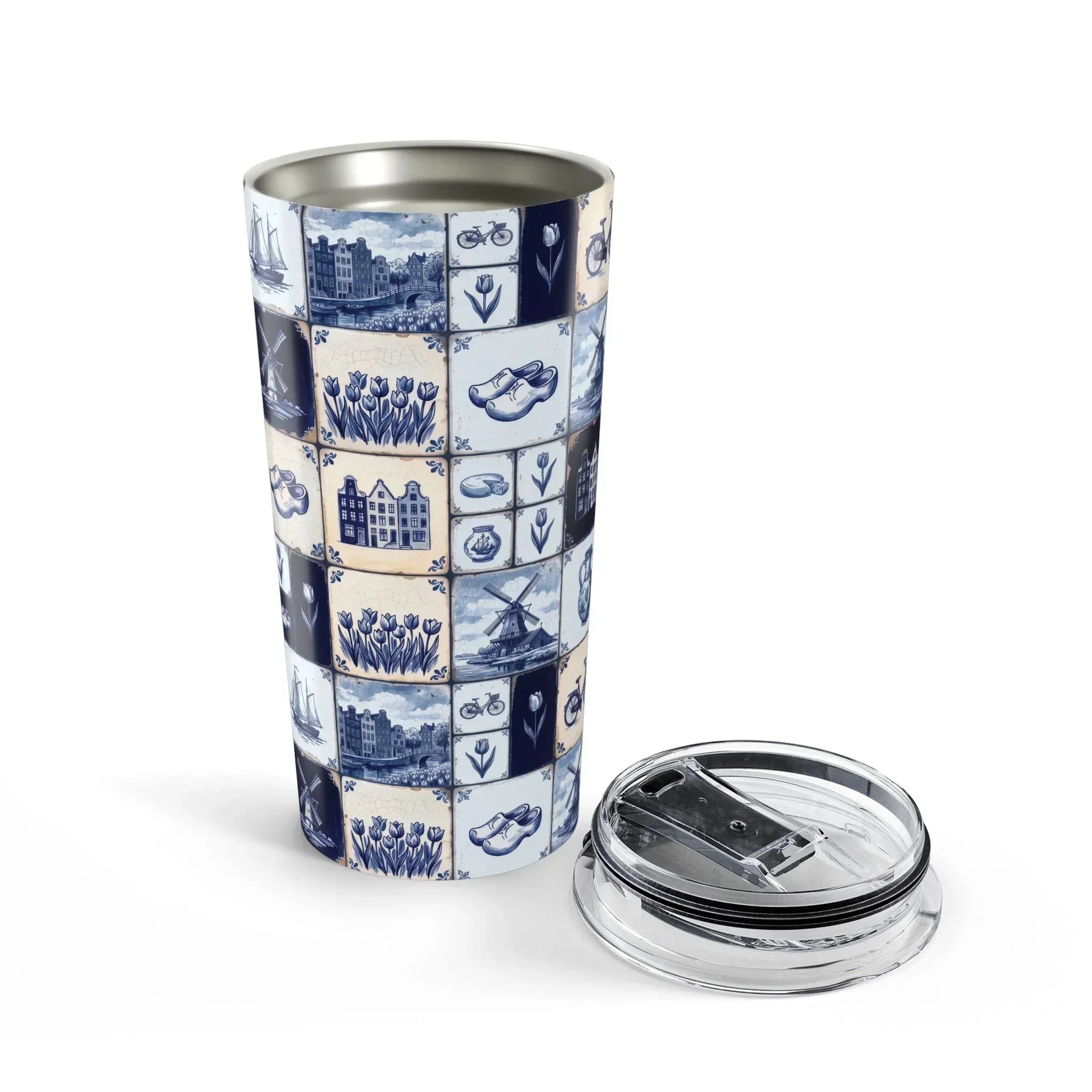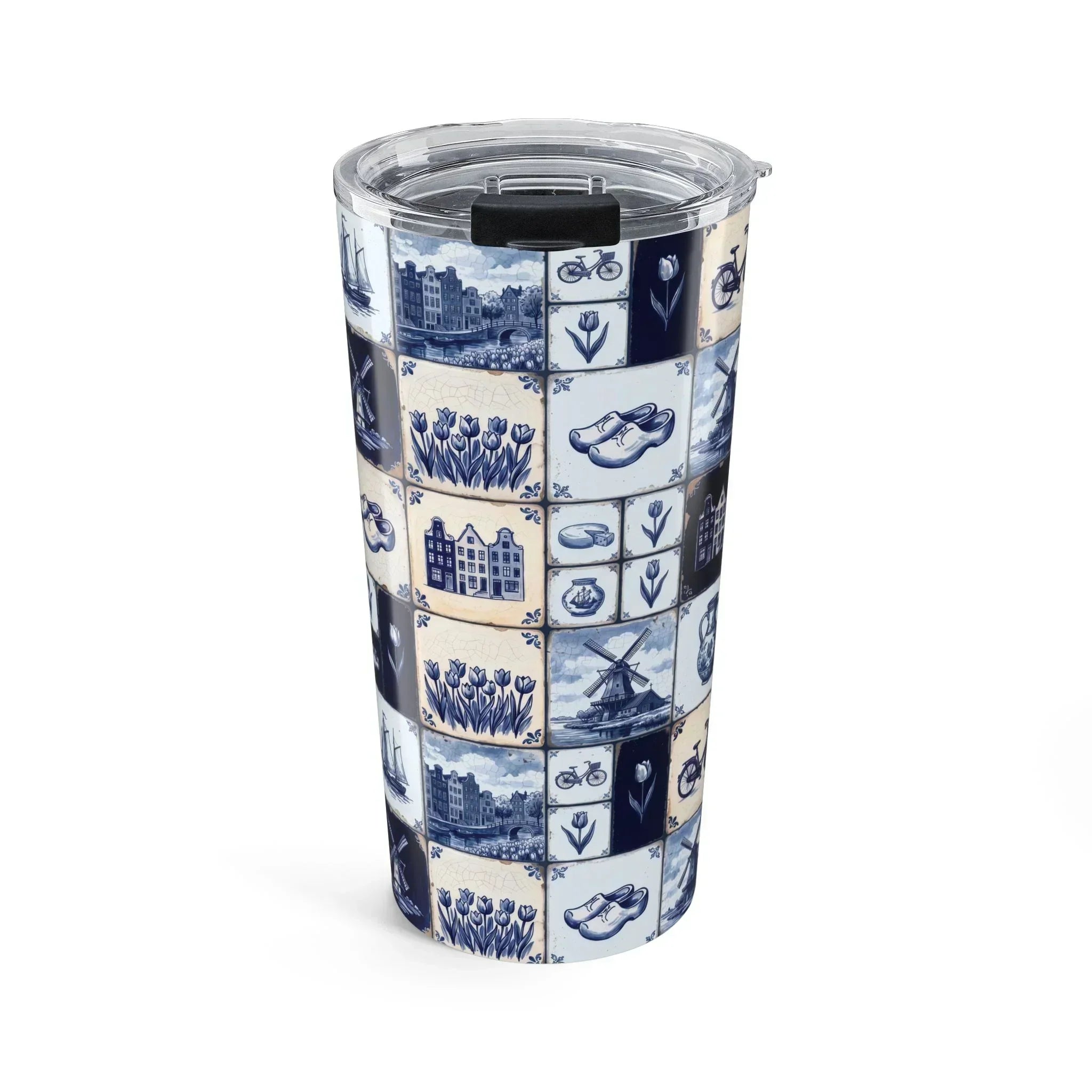


If you have ever wondered what makes a Delft tile so recognizable, you are about to step into one of the Netherlands’ most enduring decorative traditions.
With their blue-and-white palette, painted scenes and softly aged surfaces, Dutch Delft tiles are much more than ceramic decoration. Together with painted plates, vases and other earthenware objects, they form part of the broader ceramic tradition known as Delftware.
Today, this distinctive visual language appears in historic homes, museum collections, contemporary interiors and everyday design. Here are 12 things to know about the history, craftsmanship and continuing appeal of the Delft blue tile.

1. What Is a Delft Tile?
At its core, a Delft tile is a square piece of tin-glazed earthenware decorated with a painted image or pattern. The white surface is created by covering the clay body with an opaque glaze, giving ceramic painters a bright background for detailed designs.
Although Delftware was developed partly in response to imported Chinese porcelain, Delft tiles are not porcelain. Porcelain is hard, translucent and fired at very high temperatures, while Delftware has a more porous earthenware body covered by glaze.
The word Delftware applies not only to tiles but also to ceramic pieces produced in the same tradition, including plates, bowls, jars, vases, serving pieces, decorative figures and large ceramic panels. Delft Blue refers to the famous blue-and-white variation, although historic Delftware was also decorated in other colors.
 Tile panel with the tile and pottery factory in Bolsward, Collection Rijksmuseum.
2. The Origins of Dutch Delft Tiles
The story of Dutch Delft tiles stretches far beyond the city of Delft. Tin-glazing was used in the Middle East before spreading through Spain and Italy. Italian ceramic makers later carried the technique north to cities such as Antwerp.
During the late sixteenth century, political and religious upheaval encouraged ceramic makers to move from Antwerp into the Northern Netherlands. Their skills helped establish pottery industries in Delft, Haarlem, Gouda, Rotterdam and other Dutch cities. The history documented by Dutch Delftware traces the journey of tin glaze from the Middle East through Europe and into the Dutch ceramic tradition.
At the same time, Chinese blue-and-white porcelain was arriving in the Netherlands through international trade. Dutch potters did not have access to the kaolin clay needed to produce genuine porcelain, so they developed an earthenware alternative covered with opaque white tin glaze. Rather than simply copying Chinese ceramics, they adapted the blue-and-white palette to Dutch landscapes, people, occupations and everyday life.
 Left image: Tile panel with a ship, Collection Rijksmuseum. Right image: Tile panel with Cupids, Collection Rijksmuseum.
3. The Original Purpose: Life Inside the Dutch Home
Delft tiles were designed for function as much as beauty. Dutch homes could be cold and damp, while walls near fireplaces, cooking areas and floors were particularly vulnerable to smoke, moisture and dirt.
Glazed tiles provided a durable surface that was easier to clean than painted plaster or wood. They commonly appeared around fireplaces and stoves, along the lower sections of walls, inside kitchens and dairies, beside stairways and corridors, and around food-preparation areas.
As production techniques improved, the tiles became thinner and lighter. According to the Victoria and Albert Museum’s guide to Delftware tiles, tiles increasingly moved from floors to walls, where their delicate decoration was less likely to be damaged. What began as a practical household material gradually became a way to bring art, storytelling and personality into the home.
 Traditional Dutch Kitchen
4. How Delft Tiles Are Used Today
Historic Delft tiles can still be found in restored houses, kitchens, fireplaces and architectural interiors. They are valued not only for their decorative beauty but also for the glimpses they provide into earlier Dutch homes and daily routines.
Today, Delft tile designs are also used on kitchen backsplashes, bathroom walls, fireplace surrounds and decorative panels. Restaurants, hotels and contemporary ceramic installations frequently reinterpret the recognizable blue-and-white aesthetic.
 Delft Markt Square Building Facade
The design has also moved beyond ceramic surfaces. Delft-inspired motifs now appear on wallpaper, textiles, stationery, clothing and accessories. Some designers preserve the square appearance of individual tiles, while others separate the ships, windmills, flowers and figures to create entirely new compositions.
5. The Materials Behind Delftware
Traditional Delft tiles begin with earthenware clay. Unlike porcelain, earthenware is naturally porous and usually has a cream, yellow, red or brown body rather than a brilliant white one.
The opaque tin glaze disguises the natural color of the clay and creates the pale surface associated with Delftware. Mineral pigments provide the painted decoration, while heat from the kiln fuses the clay, glaze and colors into a finished ceramic surface.
 Plaque with the Amsterdam Lepers’ Asylum, Collection Rijksmuseum
Materials and recipes varied between workshops and production centers. Differences in clay, glaze composition and firing conditions could affect a tile’s color, texture and thickness. This helps explain the irregular edges, small firing marks and variations in tone frequently seen on antique Delft tiles. Rather than being flaws, these details often reveal the handmade character of the original craft.
6. The Technique: Painted and Fired by Hand
Creating a traditional Delft tile required patience and several carefully controlled stages. First, the clay was prepared, flattened and cut into square pieces. The tiles then had to dry slowly and evenly to reduce the risk of cracking or warping.
After the first kiln firing, the clay became a solid but still porous biscuit or bisque body. It was then covered with opaque white tin glaze, creating the surface on which the design could be painted.
Some designs were painted freehand, while workshops also used a transfer method known as pouncing. A drawing was pricked with tiny holes and placed over the tile. Charcoal dust was tapped through the holes, leaving a dotted outline for the painter to follow. This allowed popular motifs to be reproduced while preserving the individual variations of hand painting.
The decorated tile was then fired again, permanently fusing the pigments and glaze to the surface. Although modern Delftware workshops may use different materials and processes, Royal Delft’s craftsmanship tradition demonstrates the concentration and precision still involved in producing hand-decorated Delft Blue ceramics.
 The process of decorating a traditional blue vase on Royal Delft.
7. Popular Delft Tile Designs and Their Meaning
The subjects painted on Dutch Delft tiles transformed practical wall coverings into miniature stories. Some carried symbolic or religious meaning, while others simply reflected scenes that felt familiar to Dutch households.
Popular motifs included:
Ships and maritime scenes
Ships, fishing boats and distant harbors reflected the Netherlands’ close relationship with water. They could represent trade, travel, fishing or life near the sea.
 Left image: Plate with a ship scene, Collection Rijksmuseum. Right image: Plate with a winter landscape, Collection Rijksmuseum.
Windmills and landscapes
Canals, country roads, windmills and low horizons created compact views of the Dutch landscape. Historic windmills drained land, ground grain and supported manufacturing. Later, they became recognizable symbols of Dutch identity.
 Faience plate with landscape, Collection Rijksmuseum.
Everyday life
Many Delft tiles show people walking, working, playing or resting. Popular subjects included children’s games, tradespeople, shepherds, soldiers and riders. These ordinary scenes give antique tiles a surprisingly personal quality.
 Flower Holder, Collection Rijksmuseum.
Biblical stories![]()
Biblical scenes appeared on individual tiles and larger narrative panels. Some included chapter or verse references. These images could be decorative, educational and devotional.

Teapot painted with Old Testament scenes, Collection Rijksmuseum.
Flowers and plants
Tulips, carnations, foliage and stylized arrangements also appeared. They could suggest beauty or abundance, although many were chosen mainly for decoration.
 Dubbelde Schenkkan Plate, Collection of The Metropolitan Museum of Art
Animals and sea creatures
Birds, horses, dogs, fish and imaginary sea creatures brought movement and humor to tiled walls.
Corner ornaments
Small motifs in each corner helped connect neighboring tiles. When arranged together, the corner details created a consistent visual rhythm.
Not every motif had one fixed symbolic meaning. A ship might represent commerce, a family occupation or simply an interest in maritime life. Flowers might suggest beauty or abundance, but they could also have been selected purely for decoration. The meaning of a Delft tile often depends on its period, setting and surrounding images.
8. Delft Blue Comes From Cobalt
Color plays a central role in Delftware, but the decoration was created with ceramic pigments rather than dyes. Cobalt oxide produced the celebrated Delft Blue. Before firing, cobalt-based decoration could appear grey or nearly black; heat transformed it into its familiar blue color.
Painters could create several shades with the same pigment. Diluted cobalt produced pale skies, clouds and distant water, while a more concentrated application created dark outlines, shadows and architectural details. This tonal control allowed painters to suggest depth and movement while working almost entirely in blue.
 Painting of a traditional Delft blue plate
Historic Delftware was not always blue and white. Polychrome pieces also included manganese purple or brown, copper green, yellow and rusty red. Nevertheless, blue-and-white decoration became particularly fashionable during the seventeenth century under the influence of Chinese porcelain. Dutch painters adopted the palette and filled it with their own landscapes, people, ships and stories.
 Left image: Dish, painted with a pastoral scene, Collection Rijksmuseum. Right image: Faience dish. Painted blue with a landscape, Collection Rijksmuseum.
9. Production Centers and Regional Variations
Although Delft became the most famous name, it was not the only Dutch city producing painted tiles and tin-glazed earthenware. Important production centers included Haarlem, Rotterdam, Amsterdam, Utrecht, Harlingen and Makkum.
Each location developed its own combinations of materials, colors, painting techniques and popular subjects. Haarlem was an important early center of Dutch majolica, while Harlingen became known for maritime, biblical and figurative scenes. Makkum developed a ceramic tradition that continues today.
 Left image: Plate with a ship scene, Collection Rijksmuseum. Right image: Plate with a winter landscape, Collection Rijksmuseum.
Delft itself became an especially important center of refined faience and elaborate decorative objects. Around 1700, its ceramic industry reached an artistic and technical peak, with approximately 33 active potteries, according to Museum Prinsenhof Delft.
The phrase Delft tiles from Holland is now used broadly, especially outside the Netherlands. Museums and collectors may identify historic pieces by their city, workshop, factory or painter whenever this information is available. These regional differences can be seen across antique and later vintage Delft tiles, showing that Dutch tile art is a varied tradition rather than one fixed style.
10. Where to See Famous Delft Tiles and Delftware
The Netherlands is naturally one of the best places to explore Dutch Delft tiles. Museum Prinsenhof Delft holds Delft earthenware dating from the seventeenth century to the present, while the Royal Delft Museum occupies the historic home of De Porceleyne Fles, founded in 1653.
 Royal Delft Museum, Delft, The Netherlands
The Rijksmuseum in Amsterdam also preserves important examples of Dutch tiles and Delftware. Delft tiles can even be spotted in famous Dutch paintings. In Johannes Vermeer’s The Milkmaid, small decorated tiles line the lower section of the wall behind the central figure. The Nederlands Tegelmuseum in Otterlo is dedicated specifically to Dutch ceramic tiles, with a collection that includes ships, soldiers, flowers, animals, biblical stories and pastoral scenes. More information is available through CODART’s Nederlands Tegelmuseum guide.
Outside the Netherlands, notable Delftware collections can be found at the Victoria and Albert Museum in London and the Metropolitan Museum of Art in New York. These collections reveal how Delftware developed across different periods, cities and workshops.
11. The Global Impact of Dutch Delft Tiles
The history of Delftware is a story of cultural exchange moving in several directions. Tin-glazing travelled from the Middle East through Spain and Italy before reaching the Low Countries, while Chinese porcelain helped inspire the famous blue-and-white palette.
Dutch ceramic makers transformed these international influences into a locally recognizable style. Chinese-inspired colors and techniques were used to depict Dutch waterways, ships, houses, occupations, landscapes and scenes of everyday life.
 Left image: Jar with chrysanthemums and rocks, Collection of The Metropolitan Museum of Art. Right image: Dish with flowers and birds, Collection of The Metropolitan Museum of Art
The finished tiles then travelled outward again. They were exported across Northern Europe and influenced ceramic production in Britain and other regions. Dutch Delft tiles are sometimes compared with Portuguese azulejos. Although the traditions share certain visual and technical connections, Portuguese tile art has its own distinctive Iberian and Islamic history.
Delftware was also connected with the commercial and colonial networks of the Dutch Republic. Materials, objects and artistic ideas travelled through systems that were not always peaceful or equal. Recognizing these connections provides a richer and more complete understanding of Dutch Delft tiles and their place within global decorative history.
12. Delft Tile Art in Everyday Design
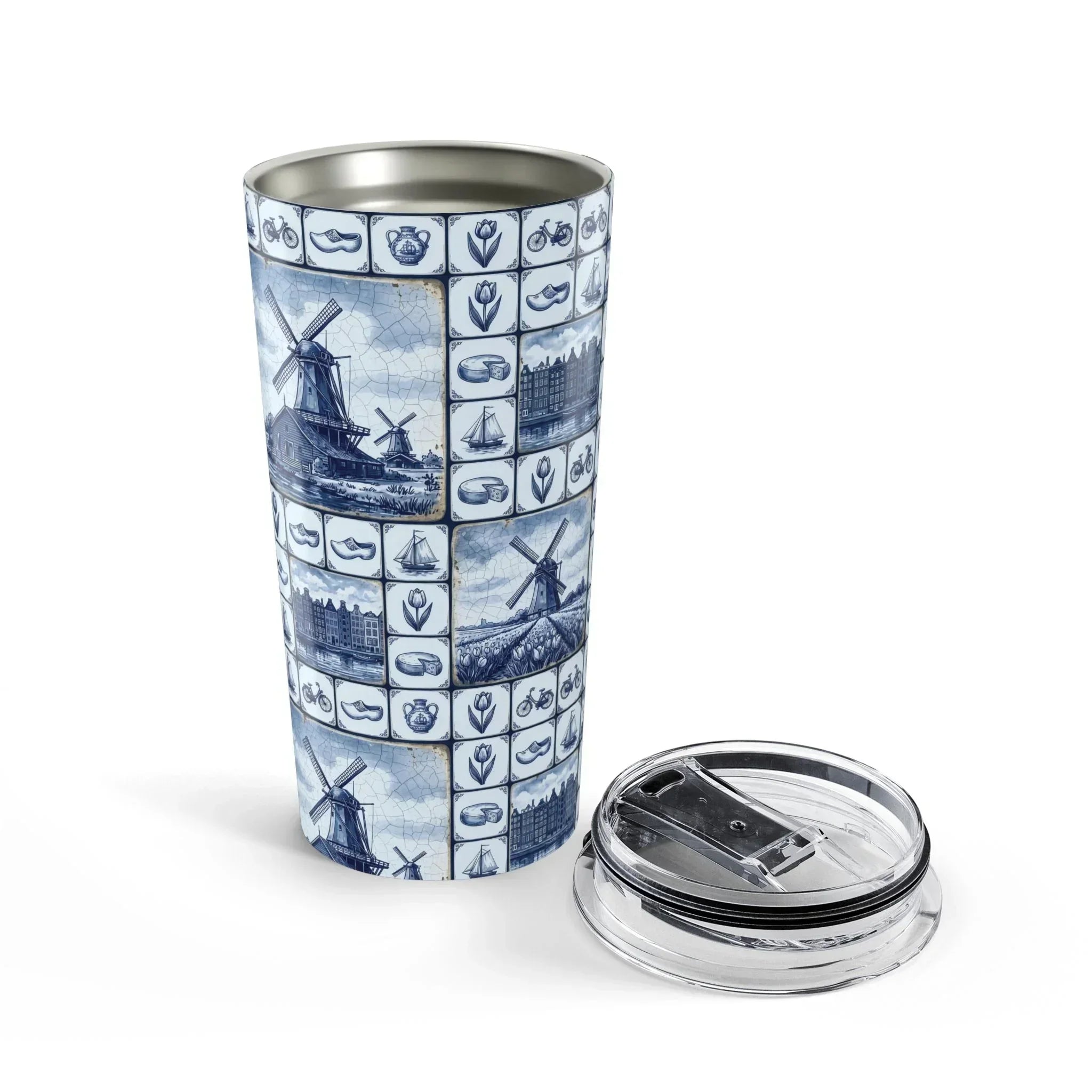
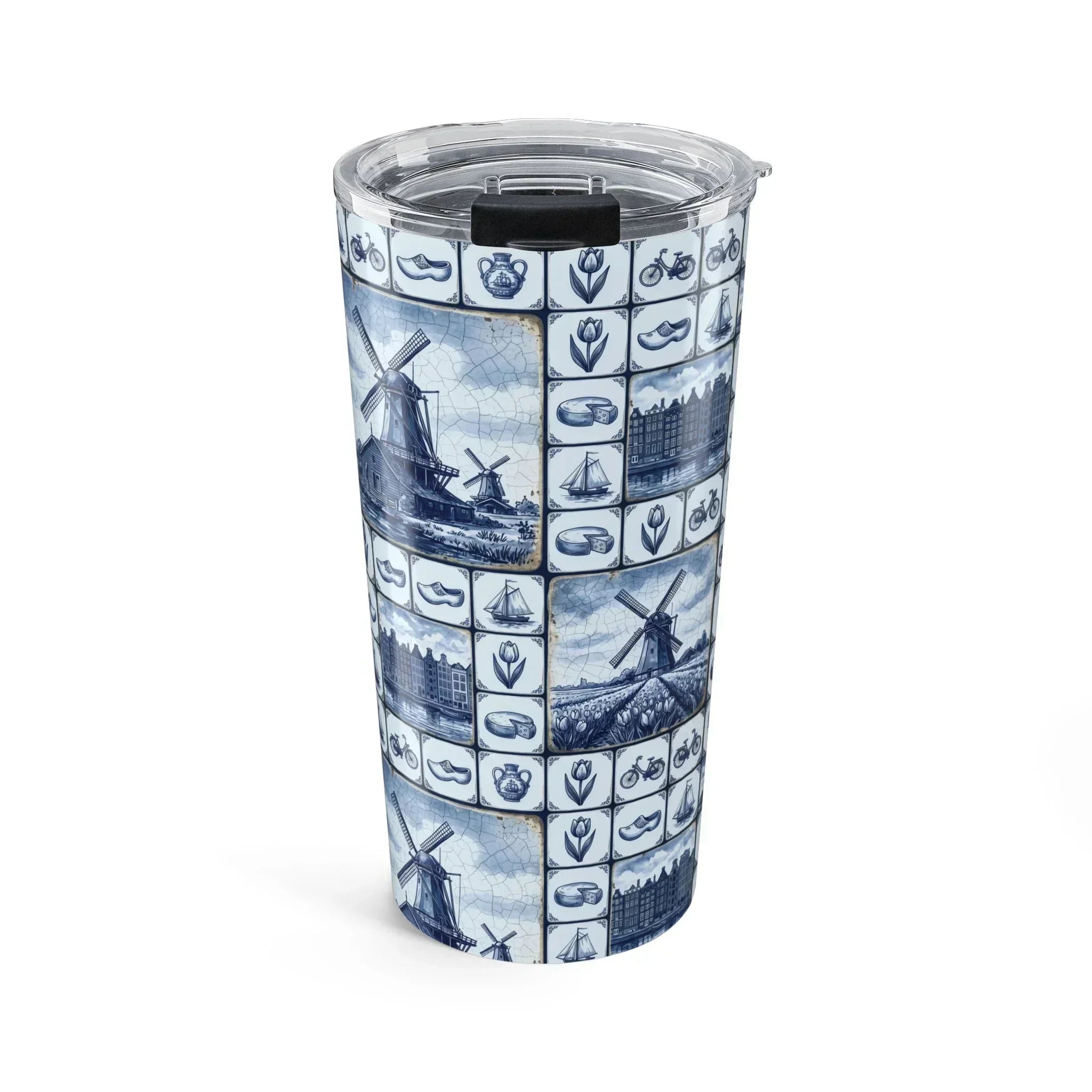
The visual language of the Delft tile continues to move beyond ceramic walls. Its square structure creates order, while the illustrated scenes introduce variety. A series of similar tiles feels calm and architectural, while a mixture of ships, houses, windmills and figures creates a more playful narrative.
The blue-and-white palette is equally versatile. It feels familiar in traditional interiors but can also look clean, graphic and contemporary. This balance allows Delft-inspired designs to work across home décor, clothing and practical accessories without losing their historic character.
 Dutch Delft Tile inspired Bathroom
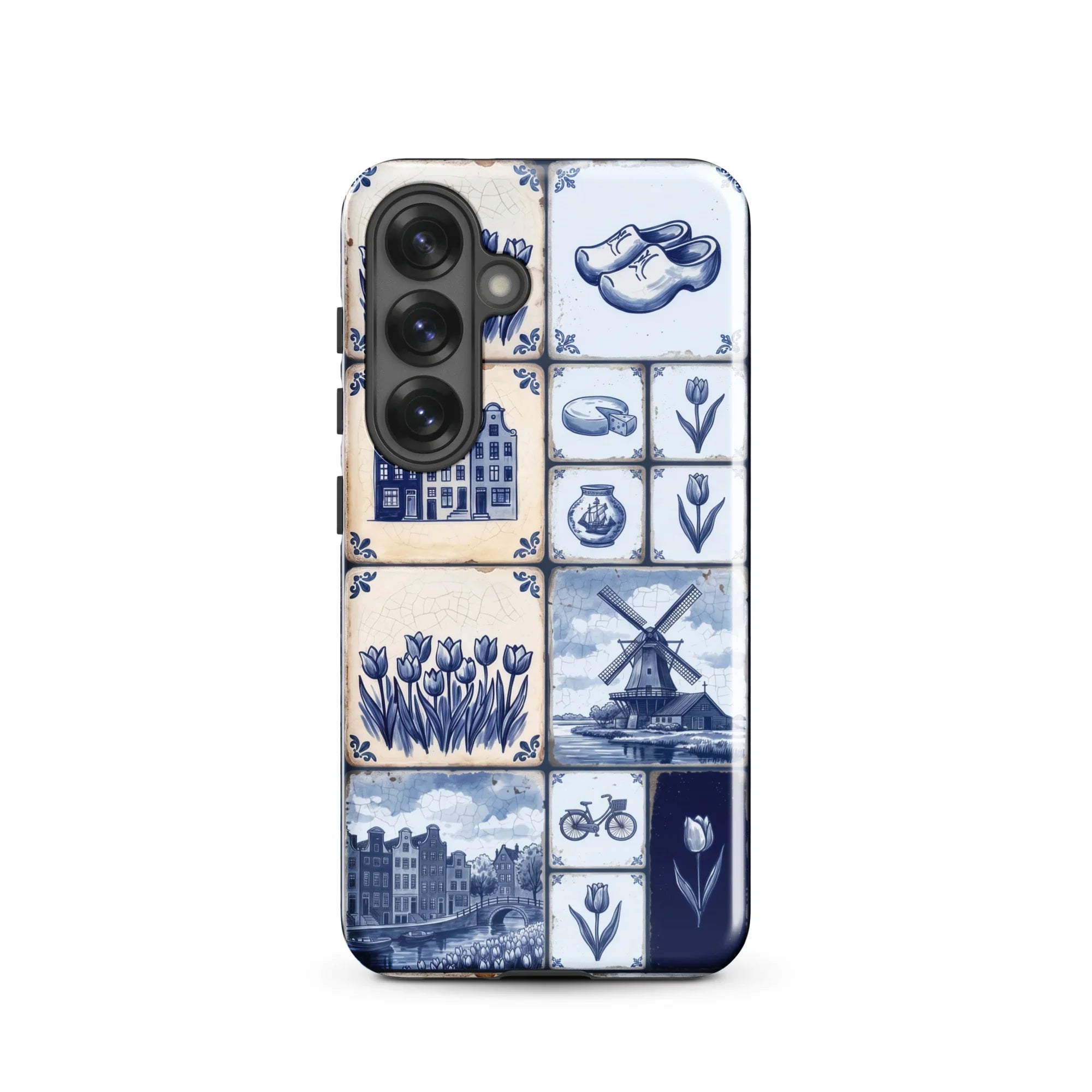
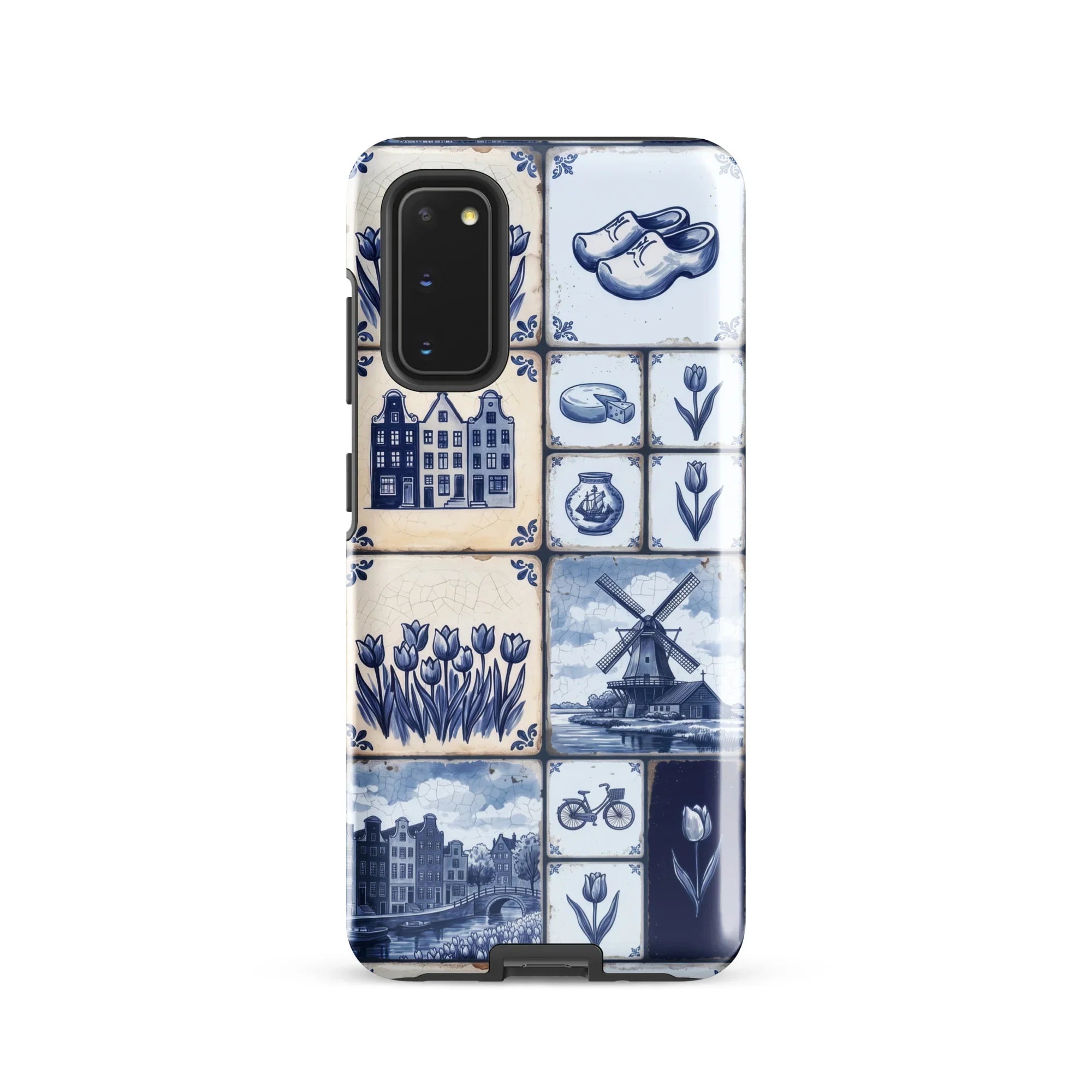
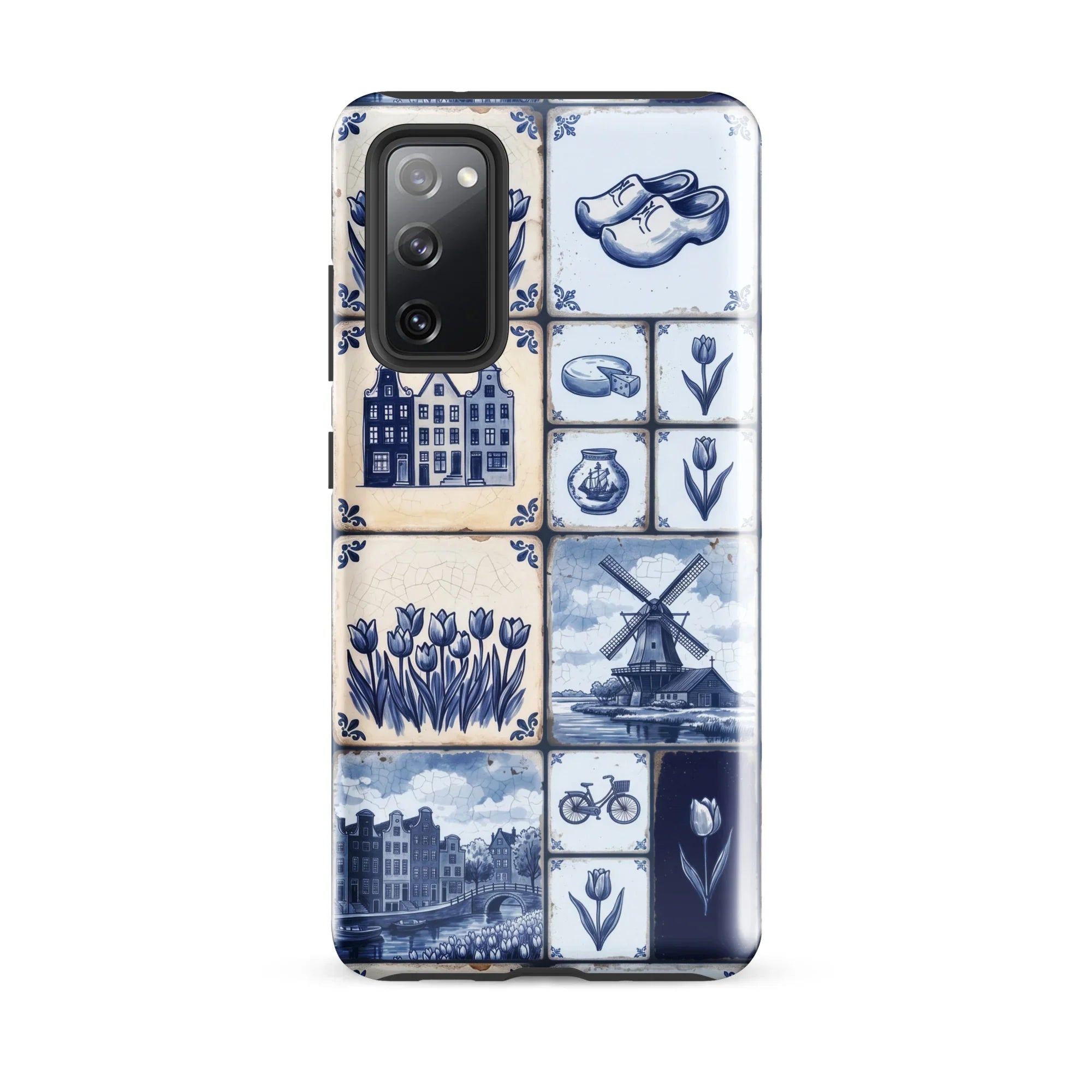
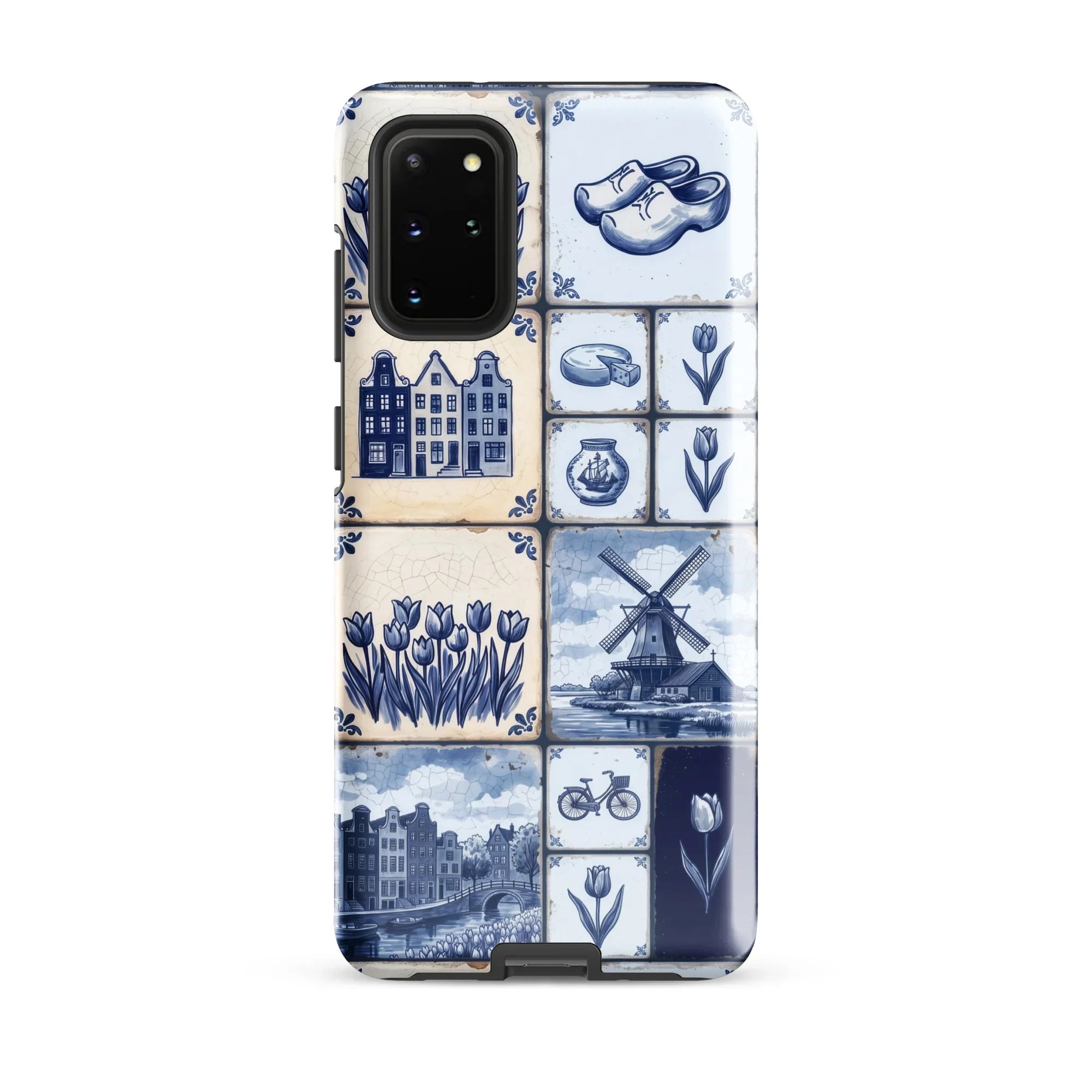
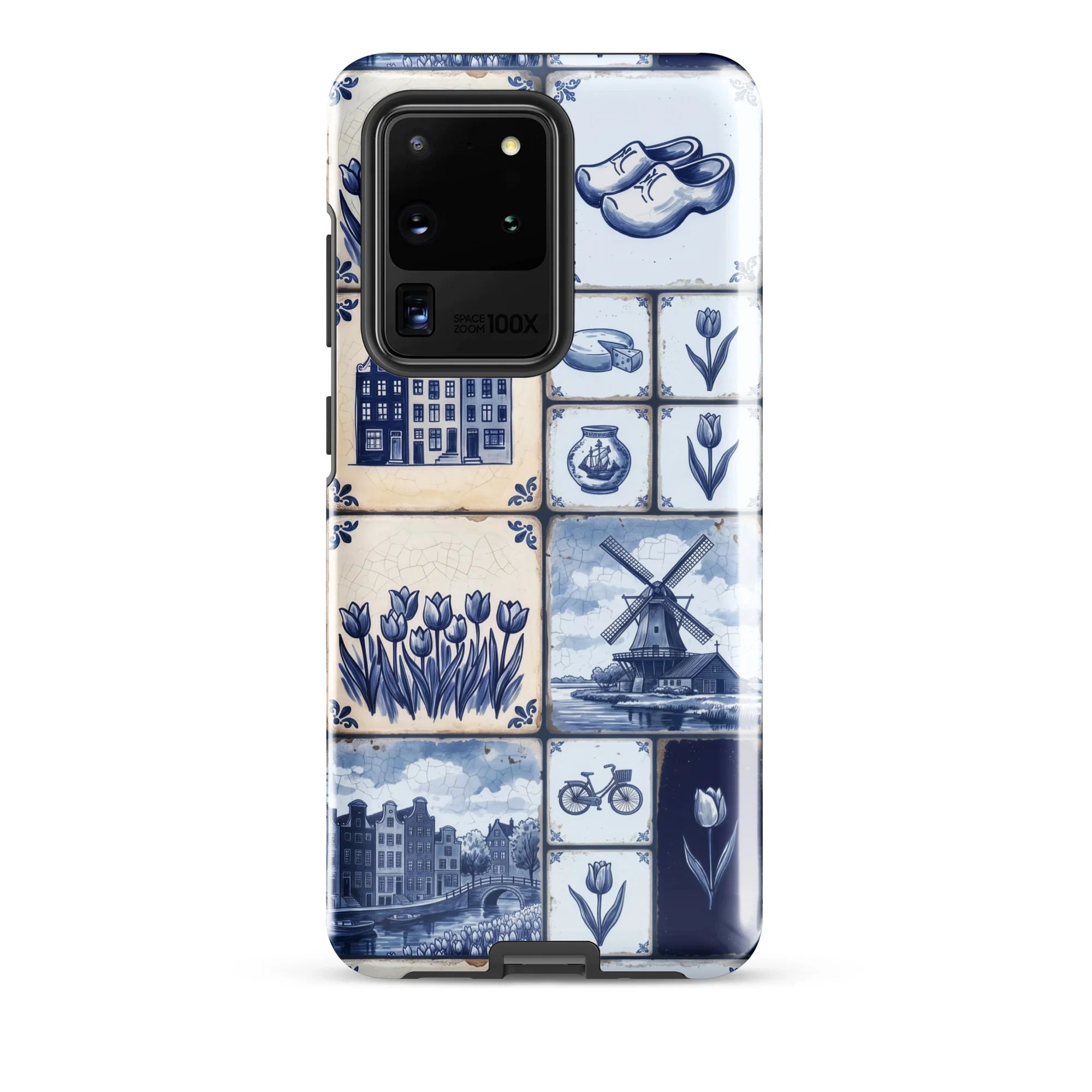
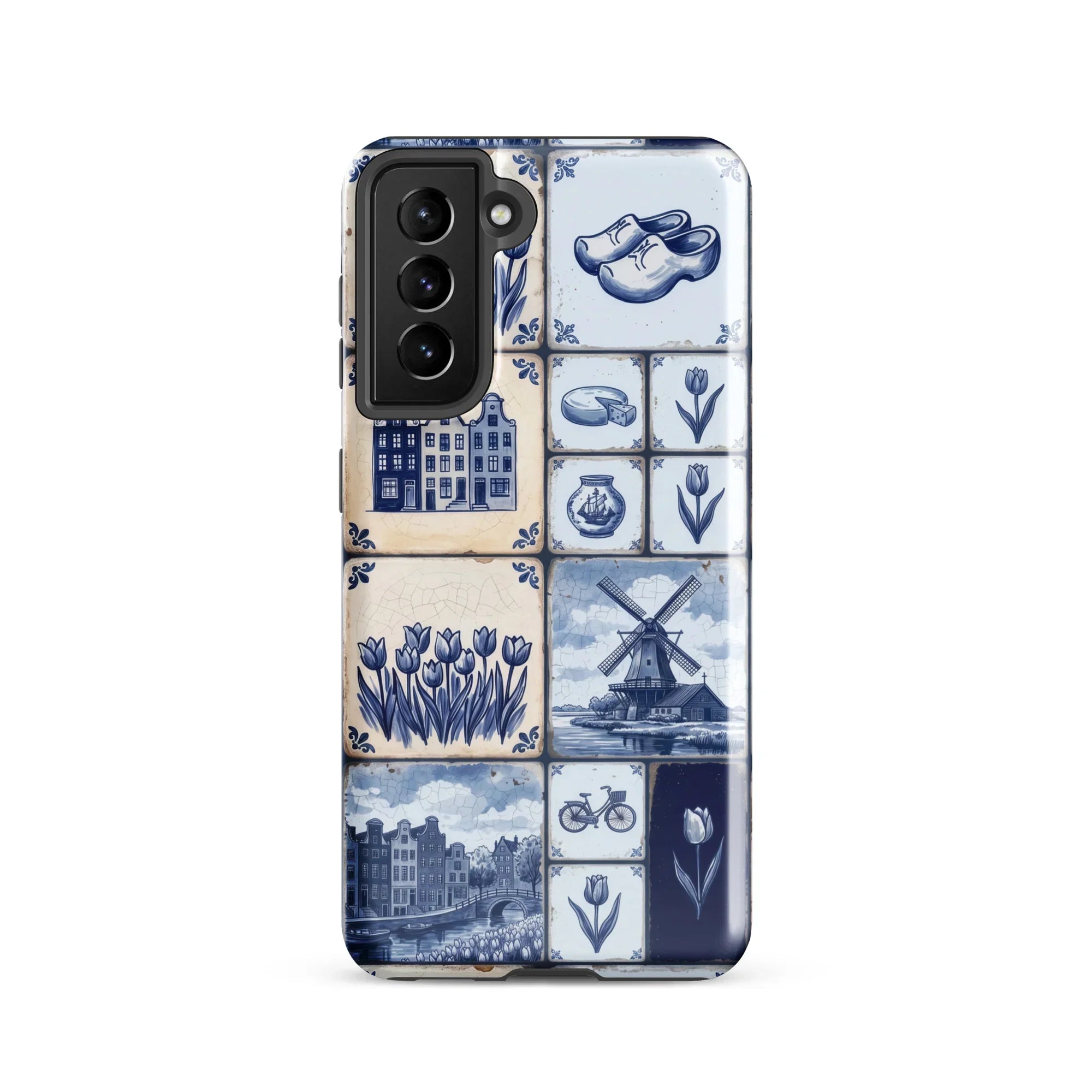
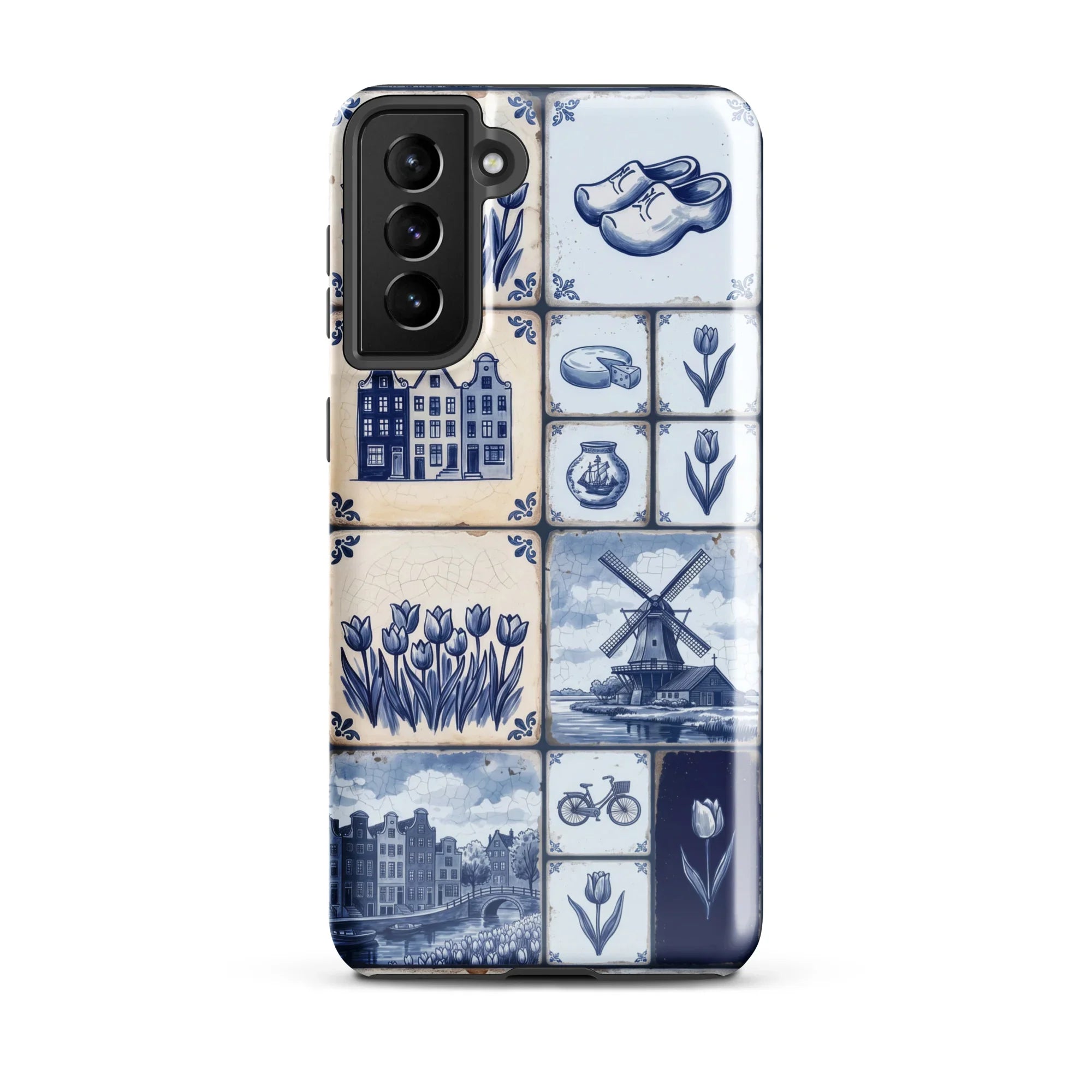
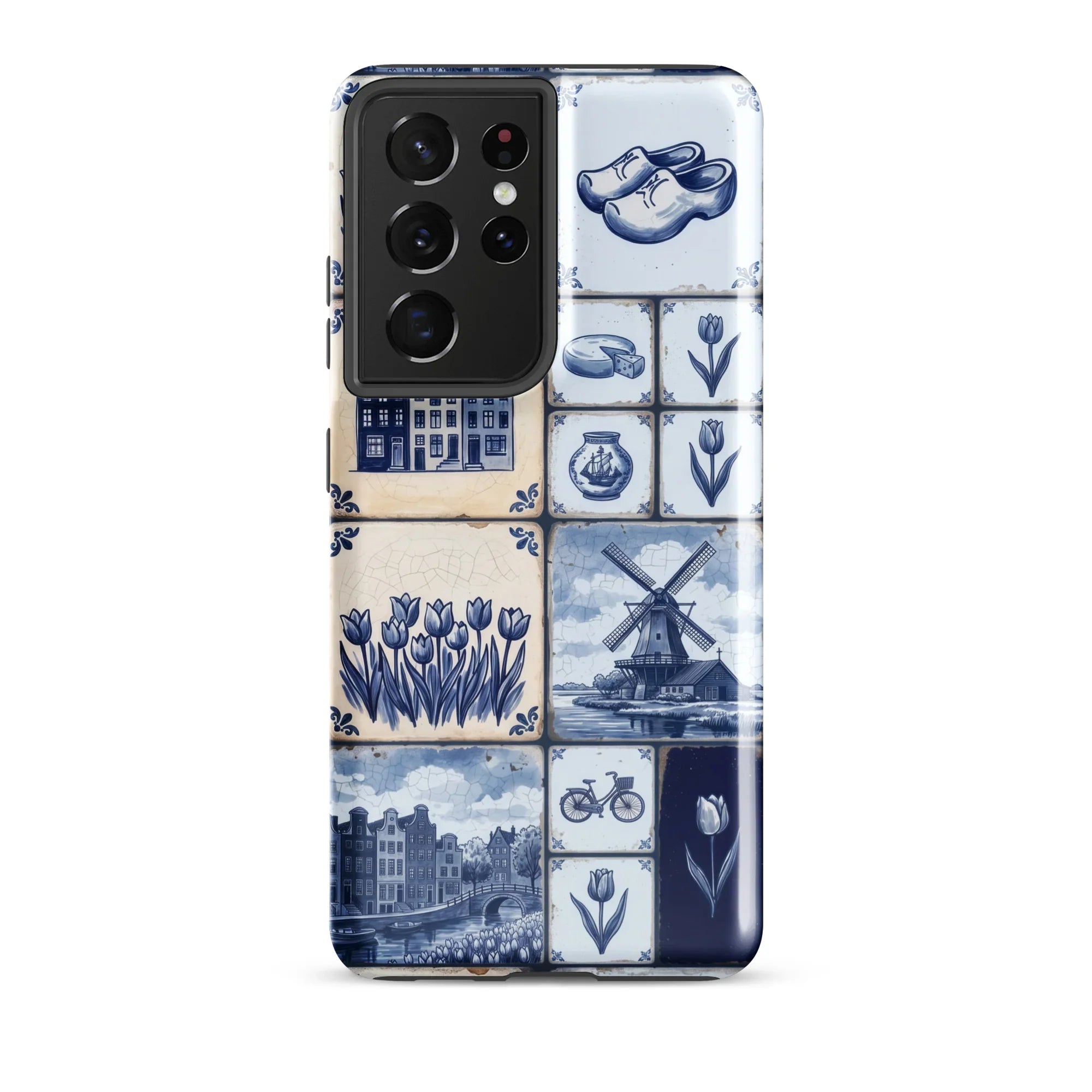
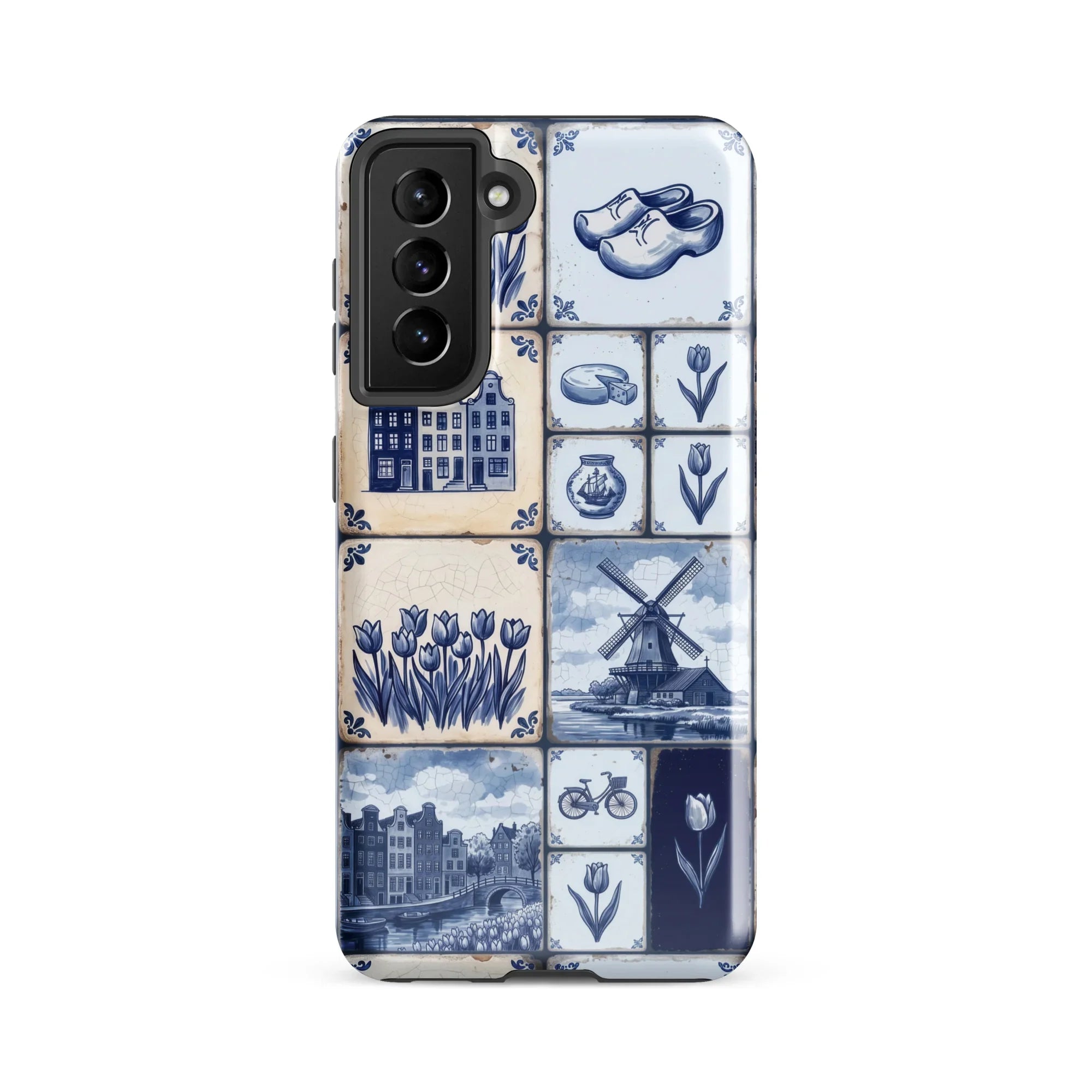
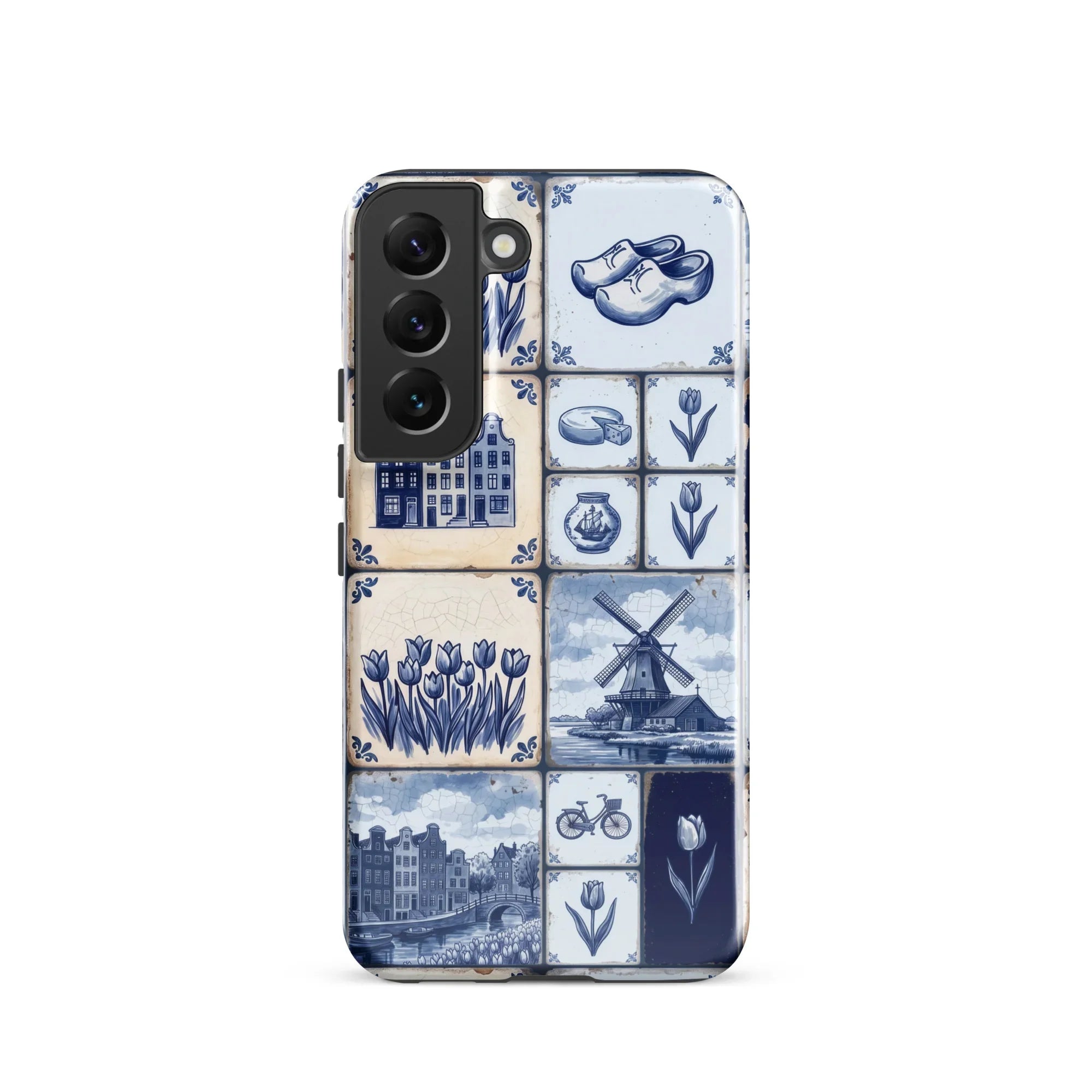
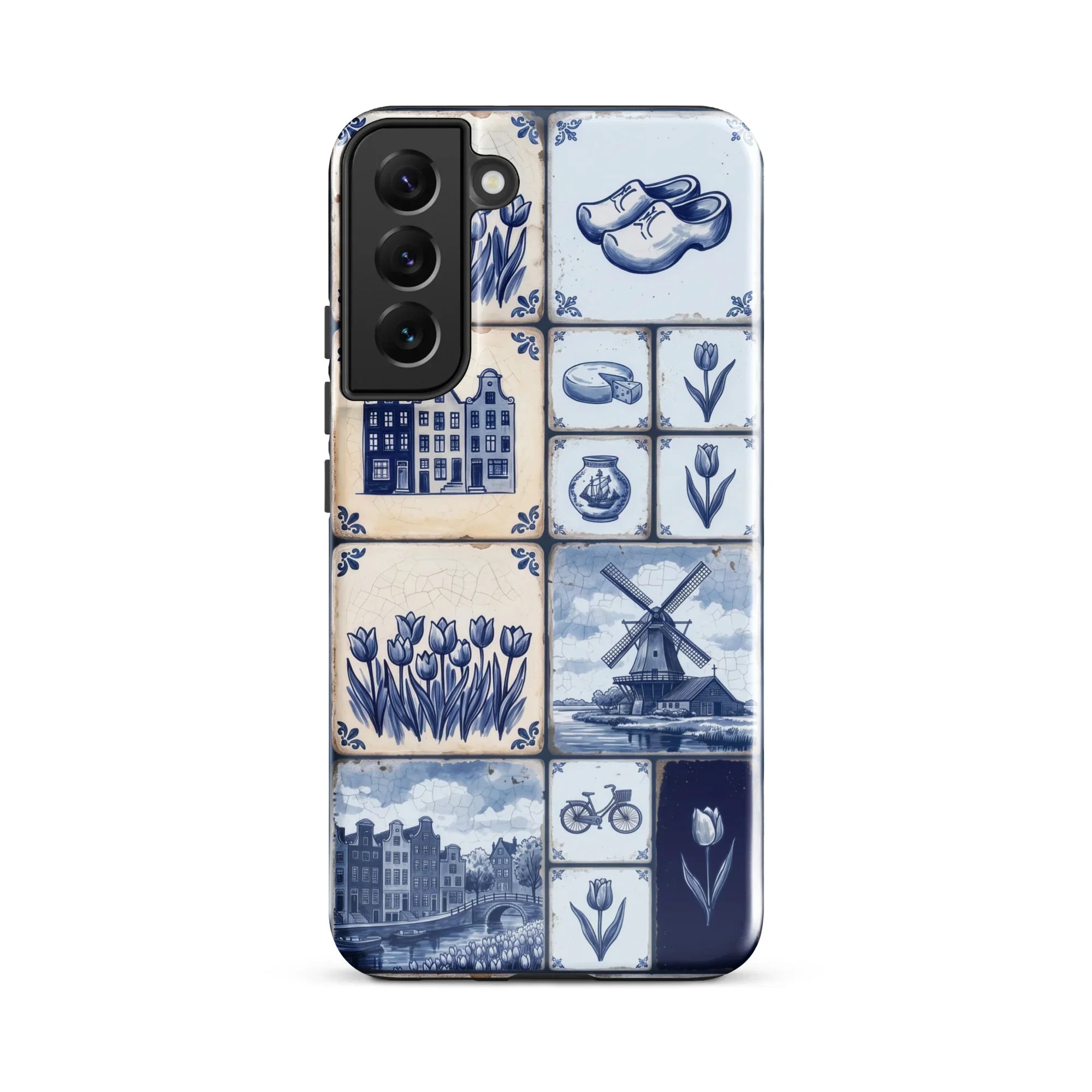
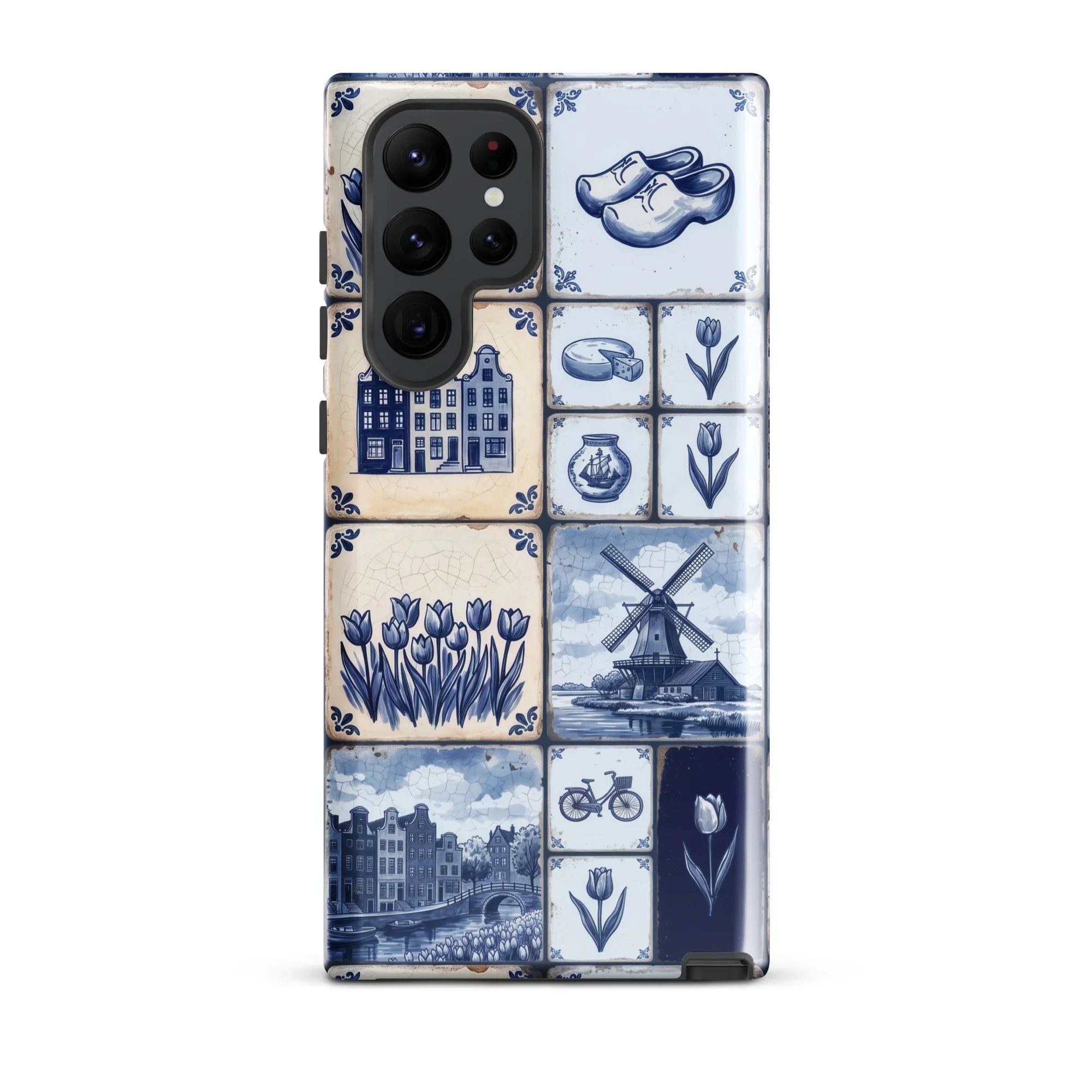
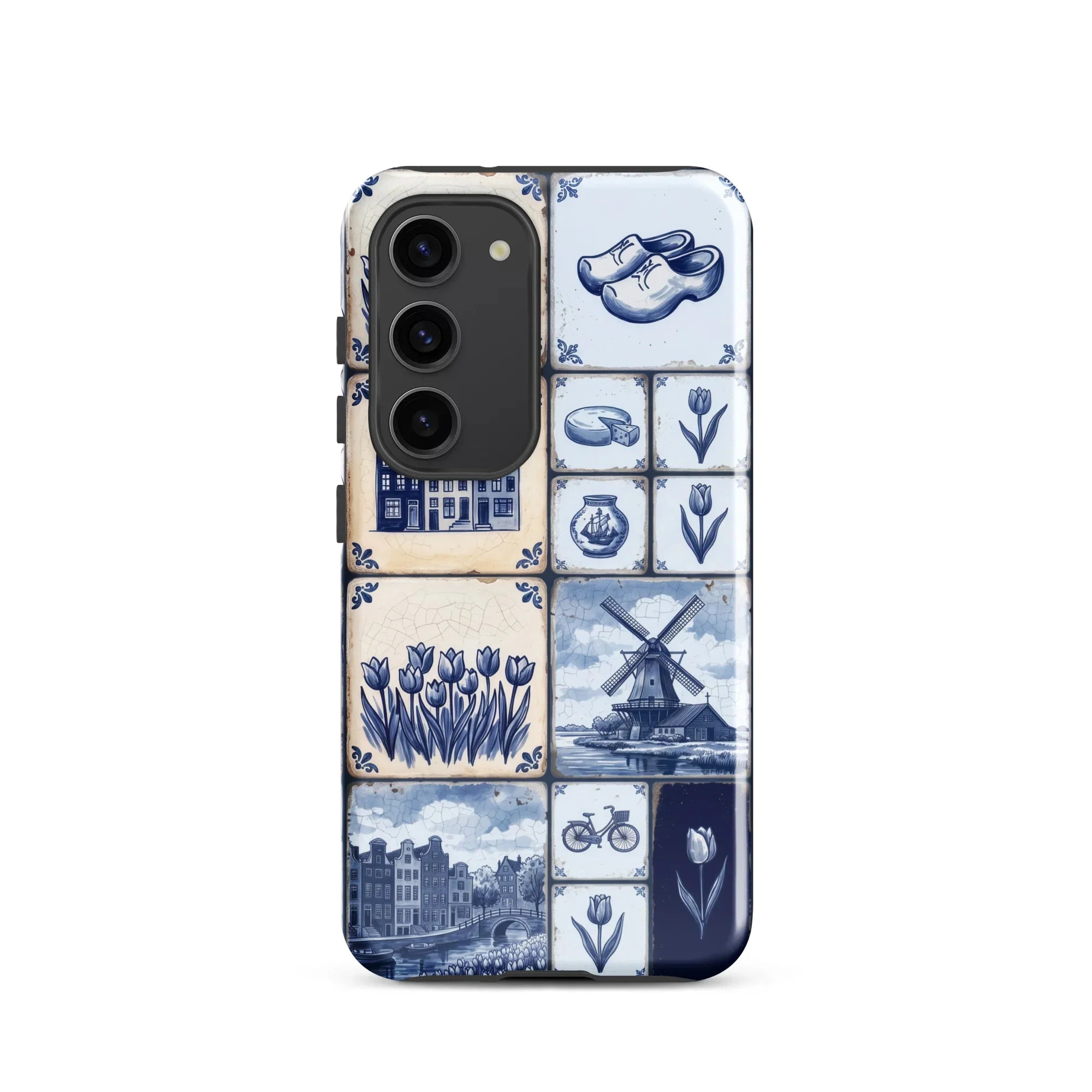
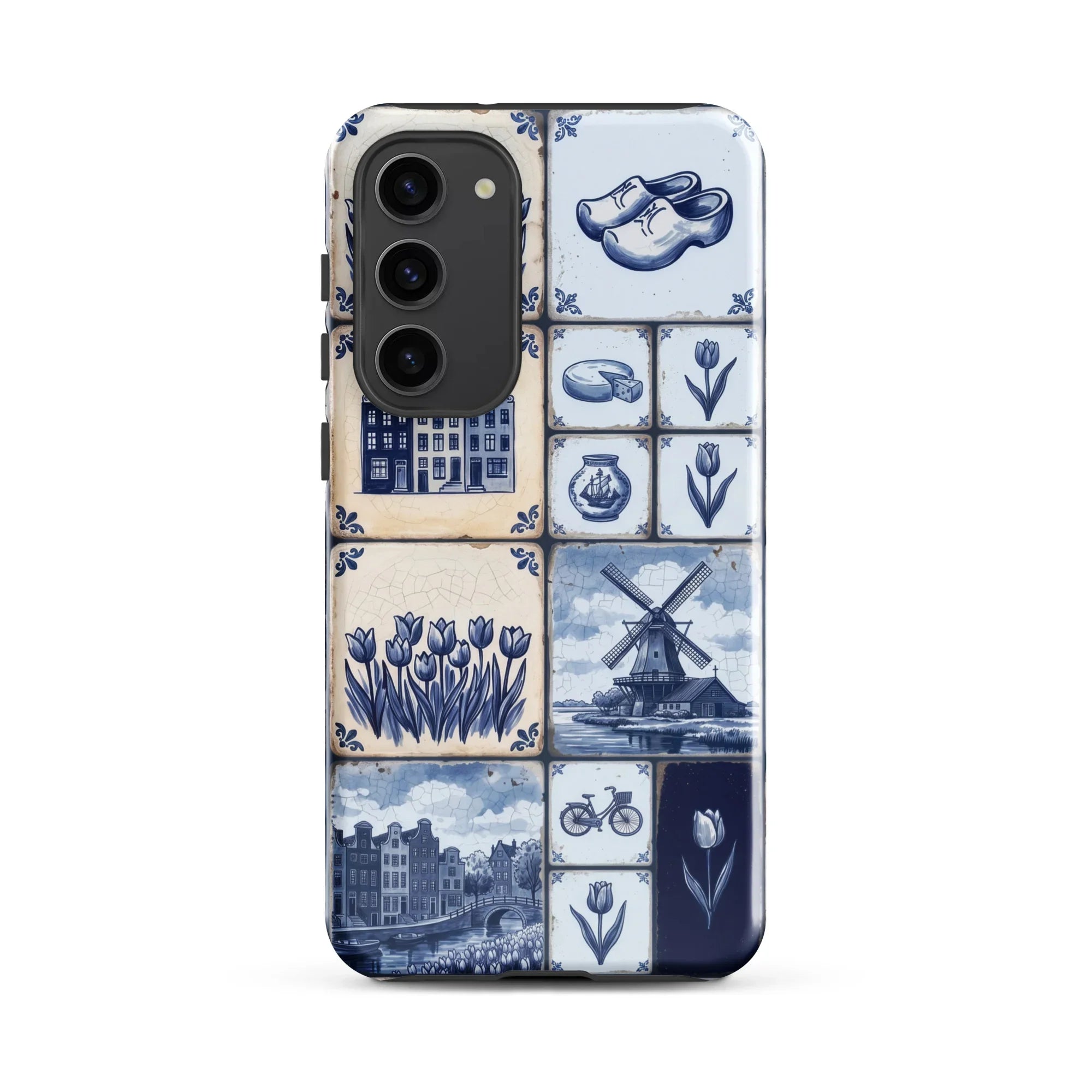
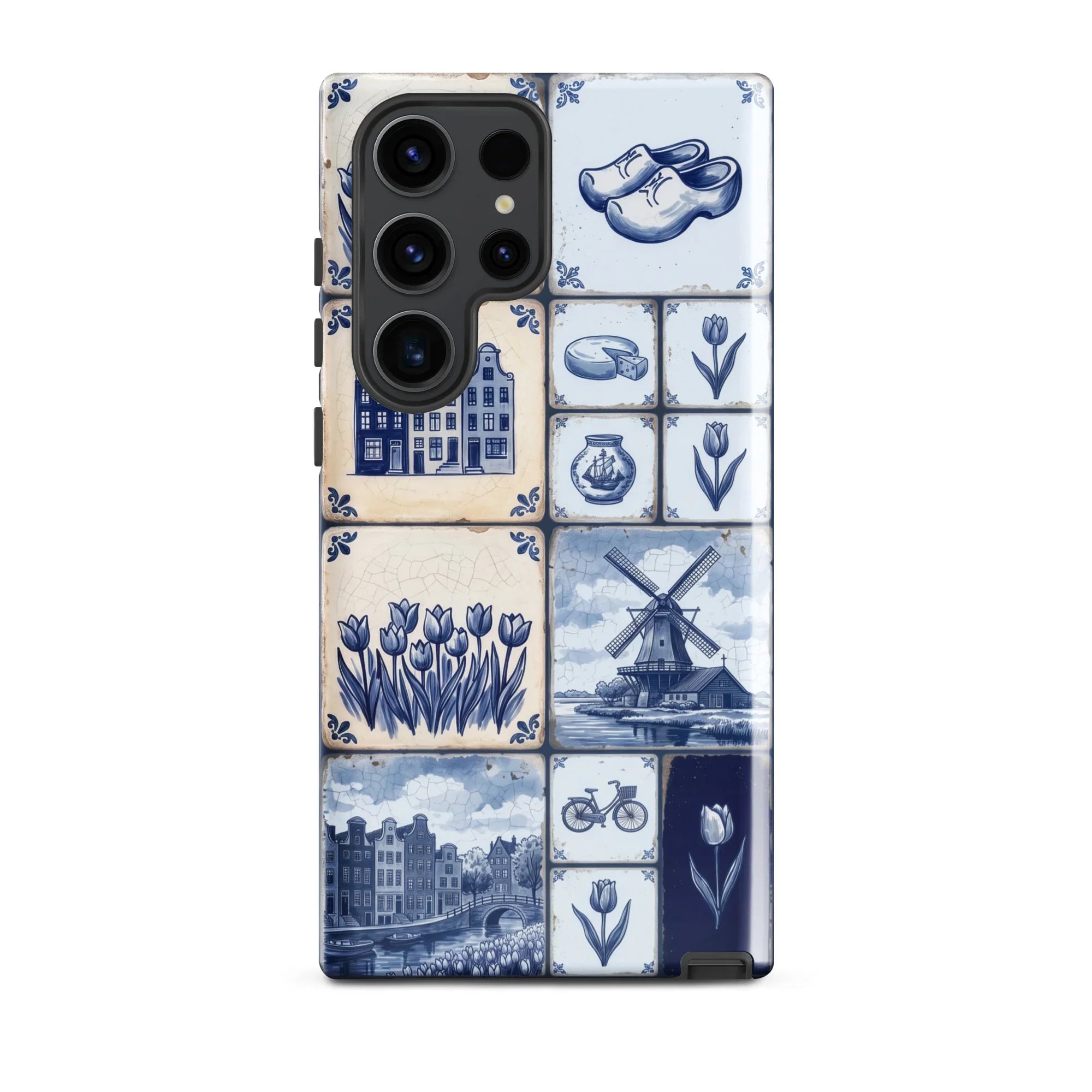
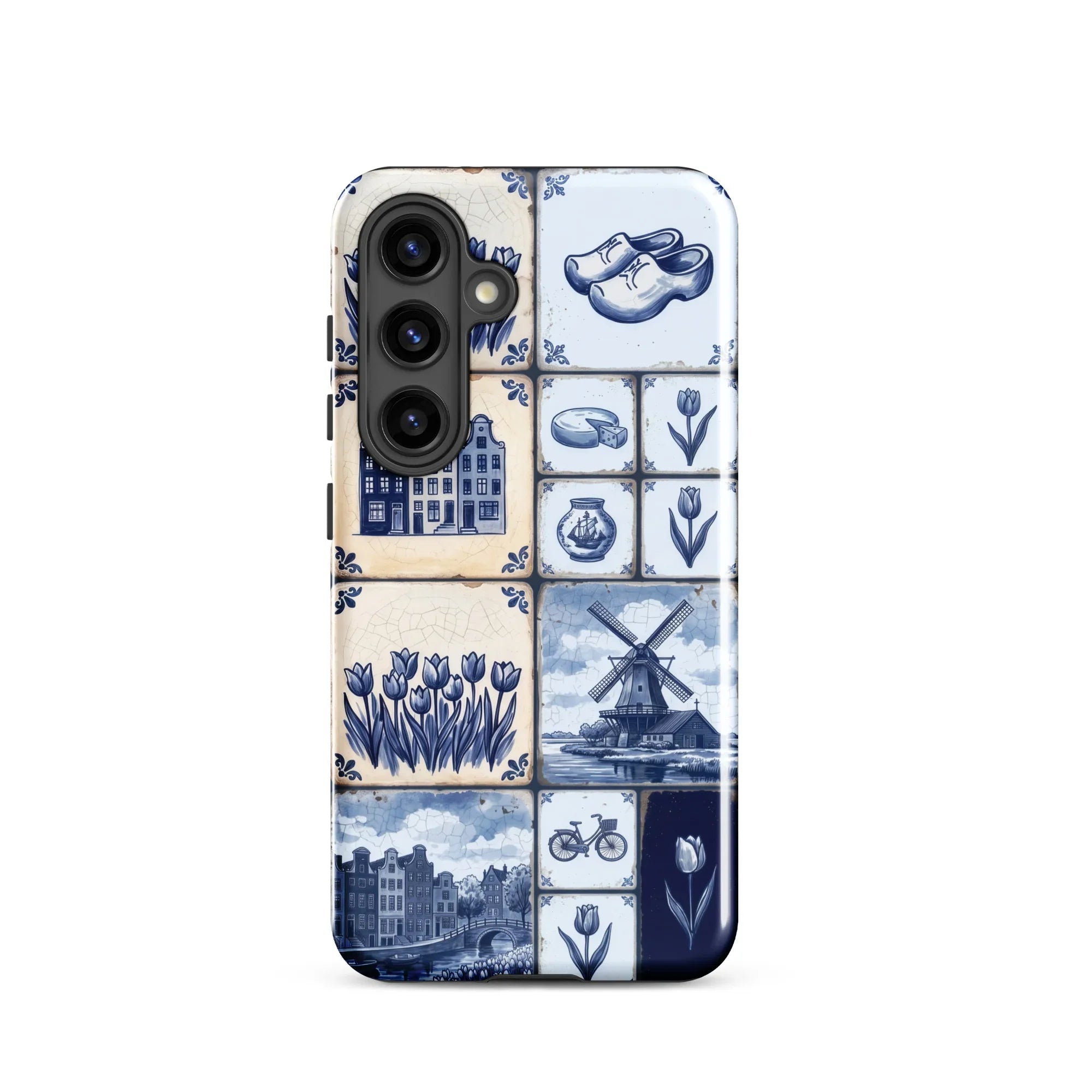
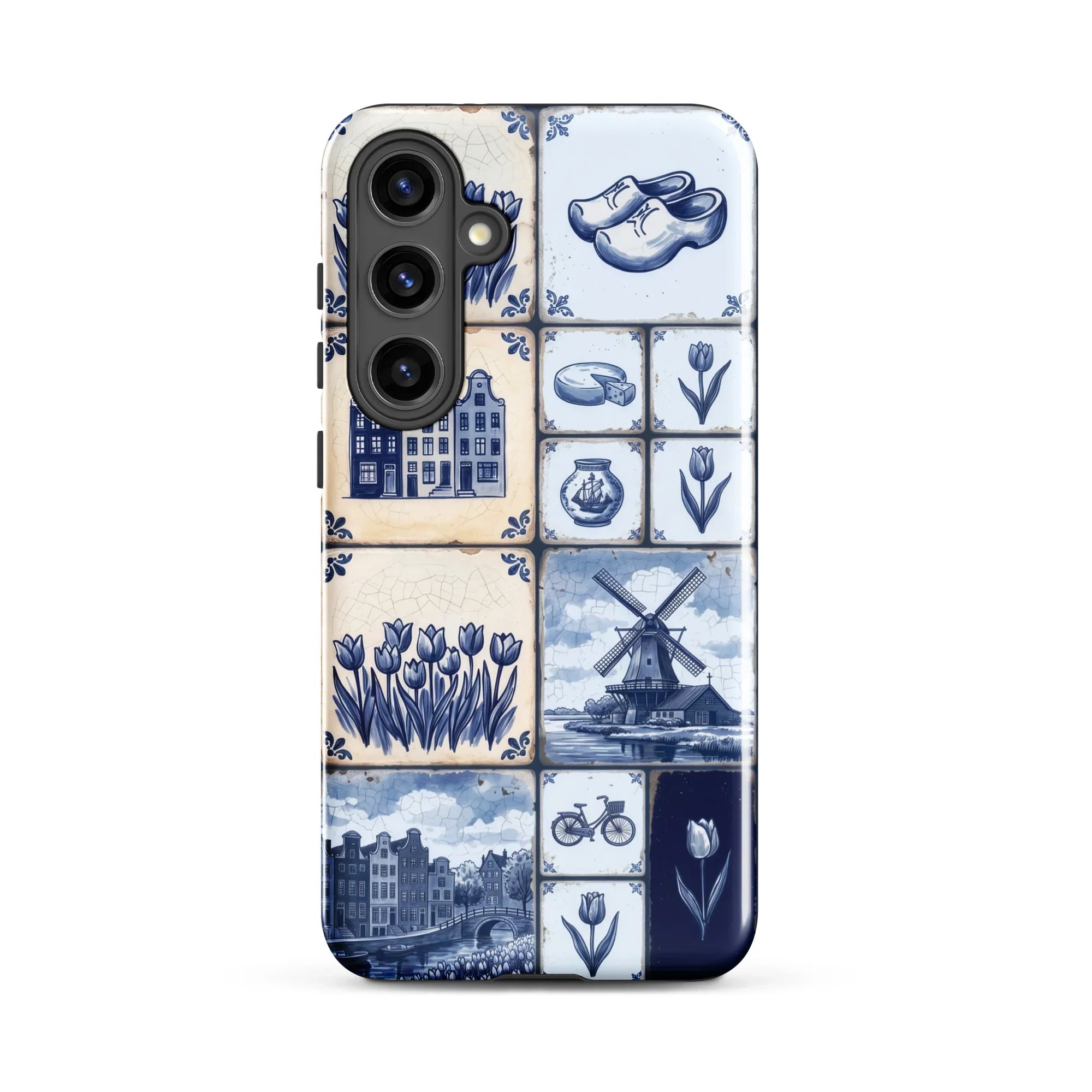
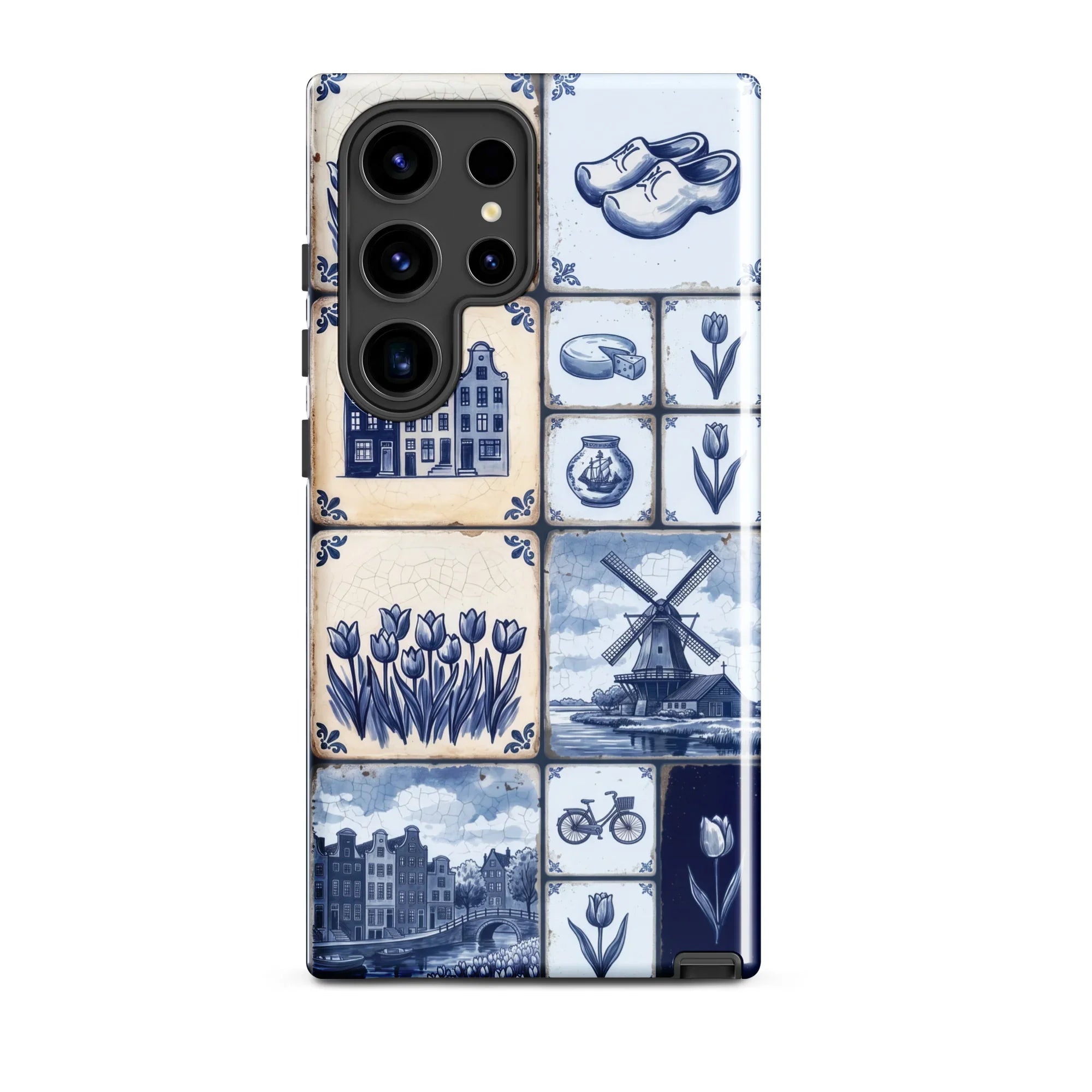
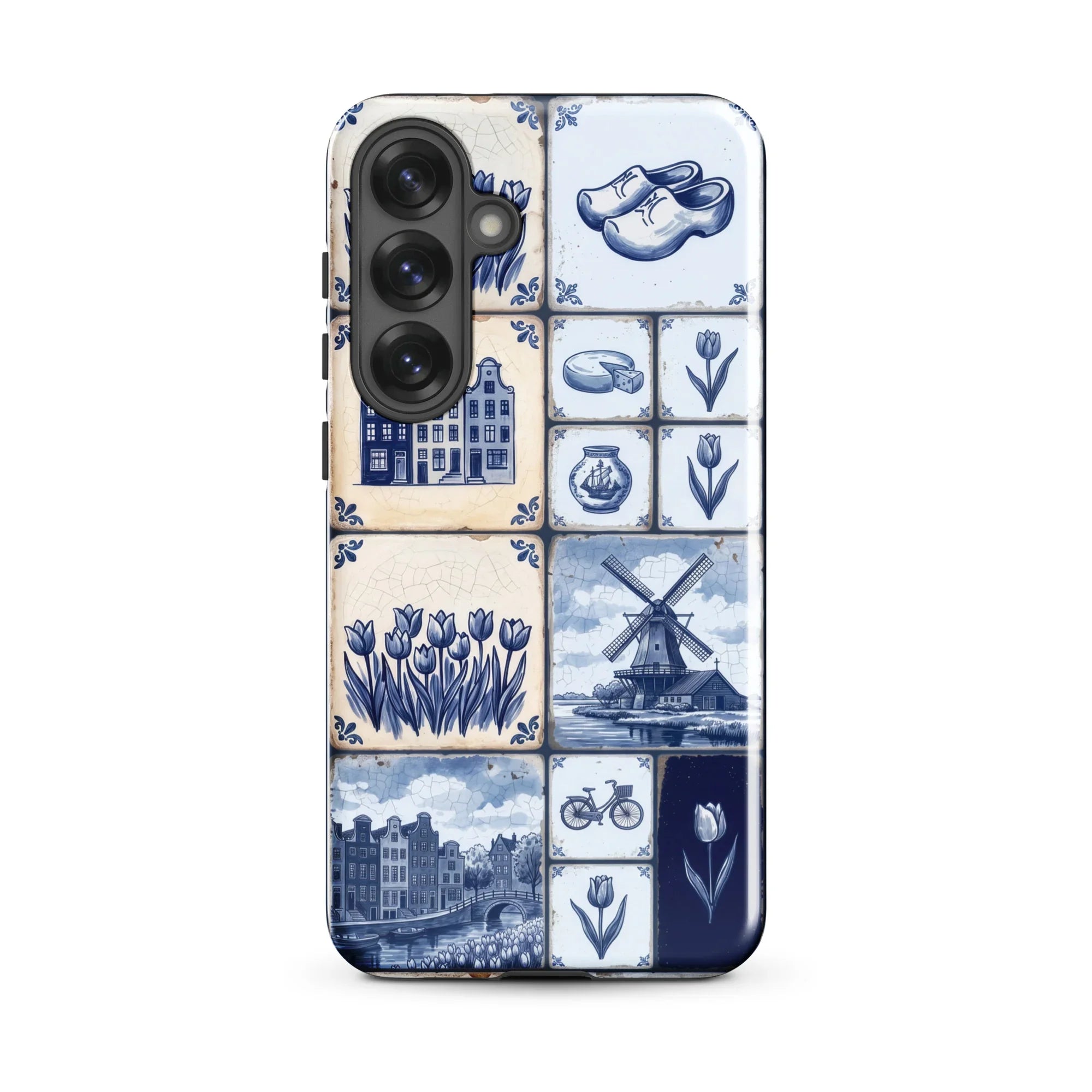
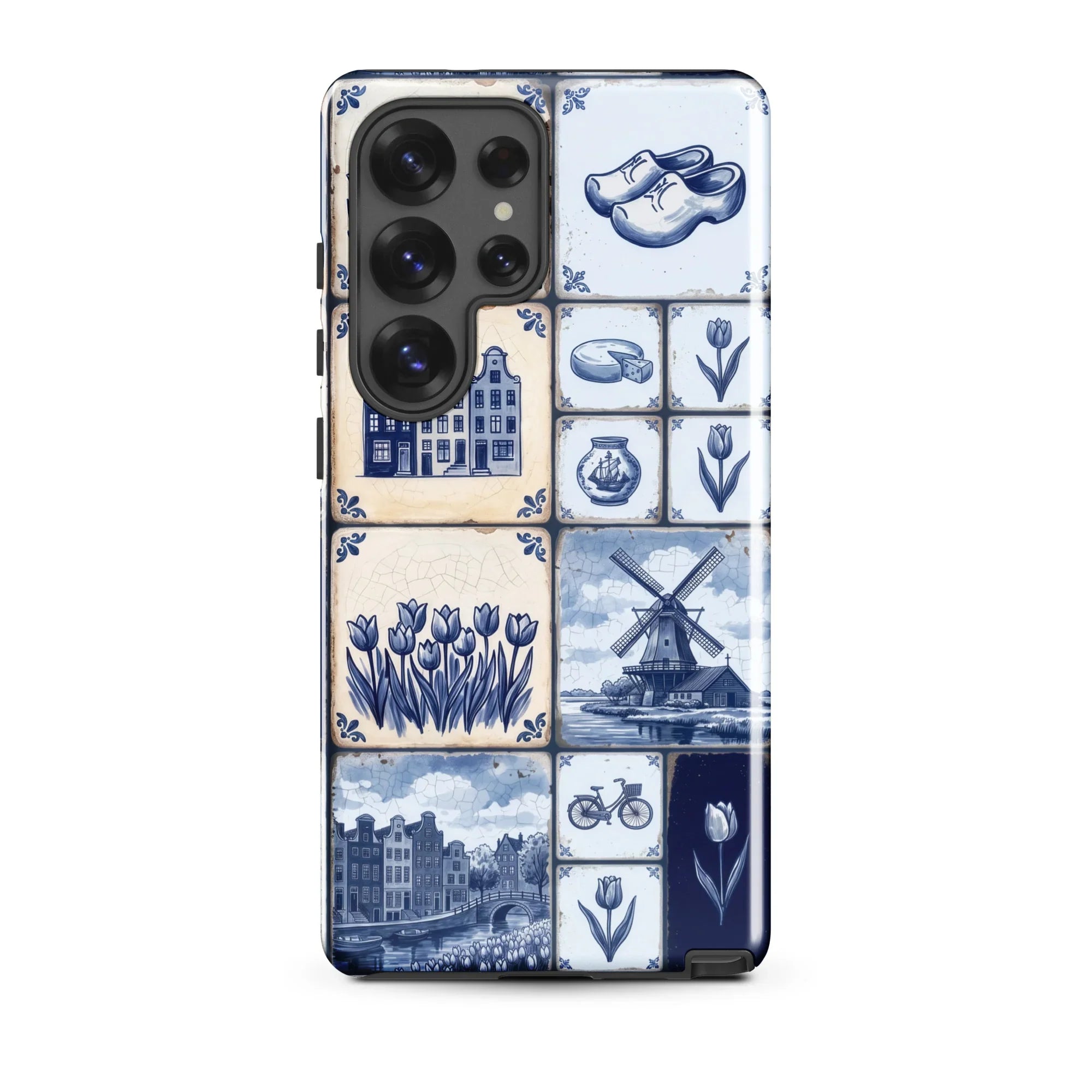
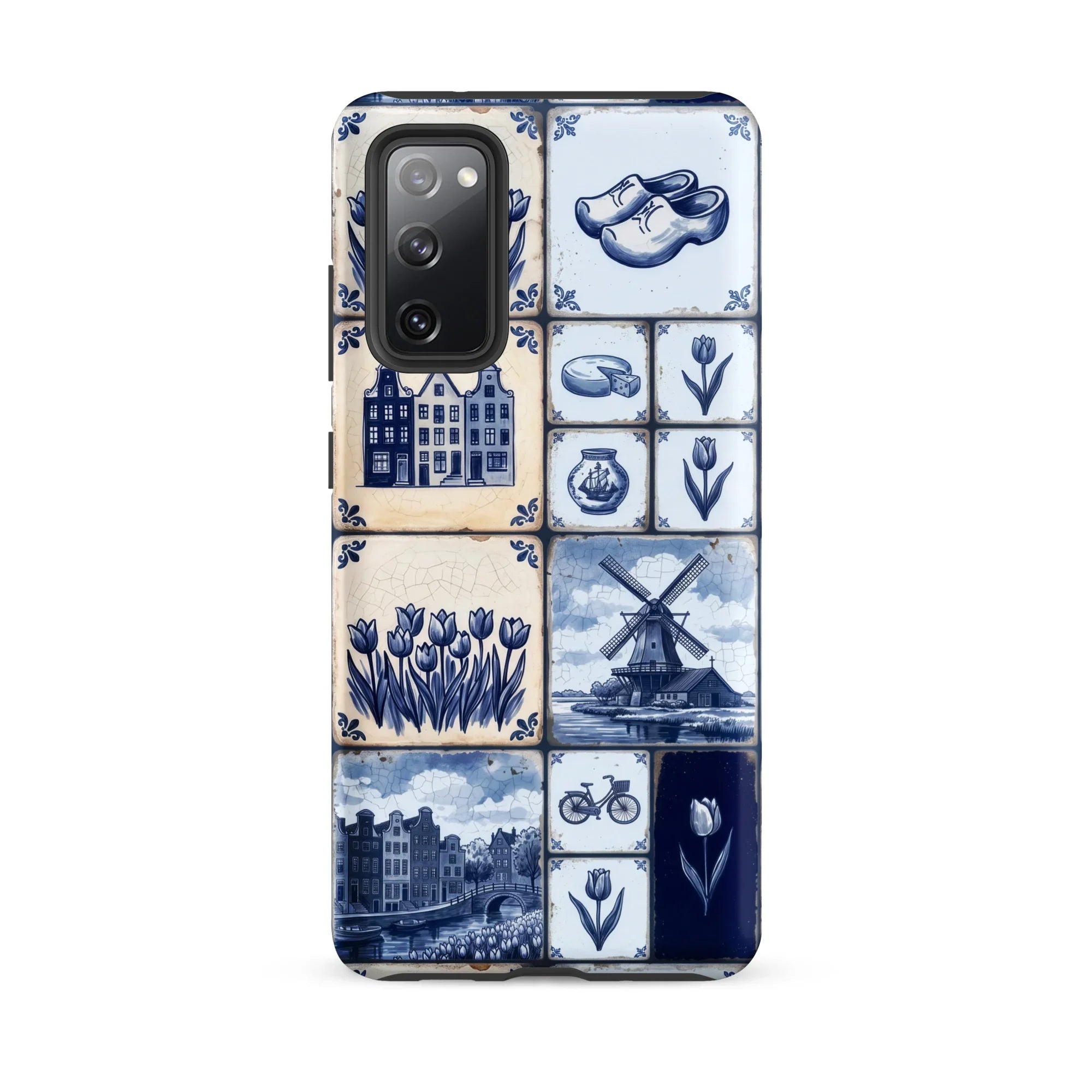
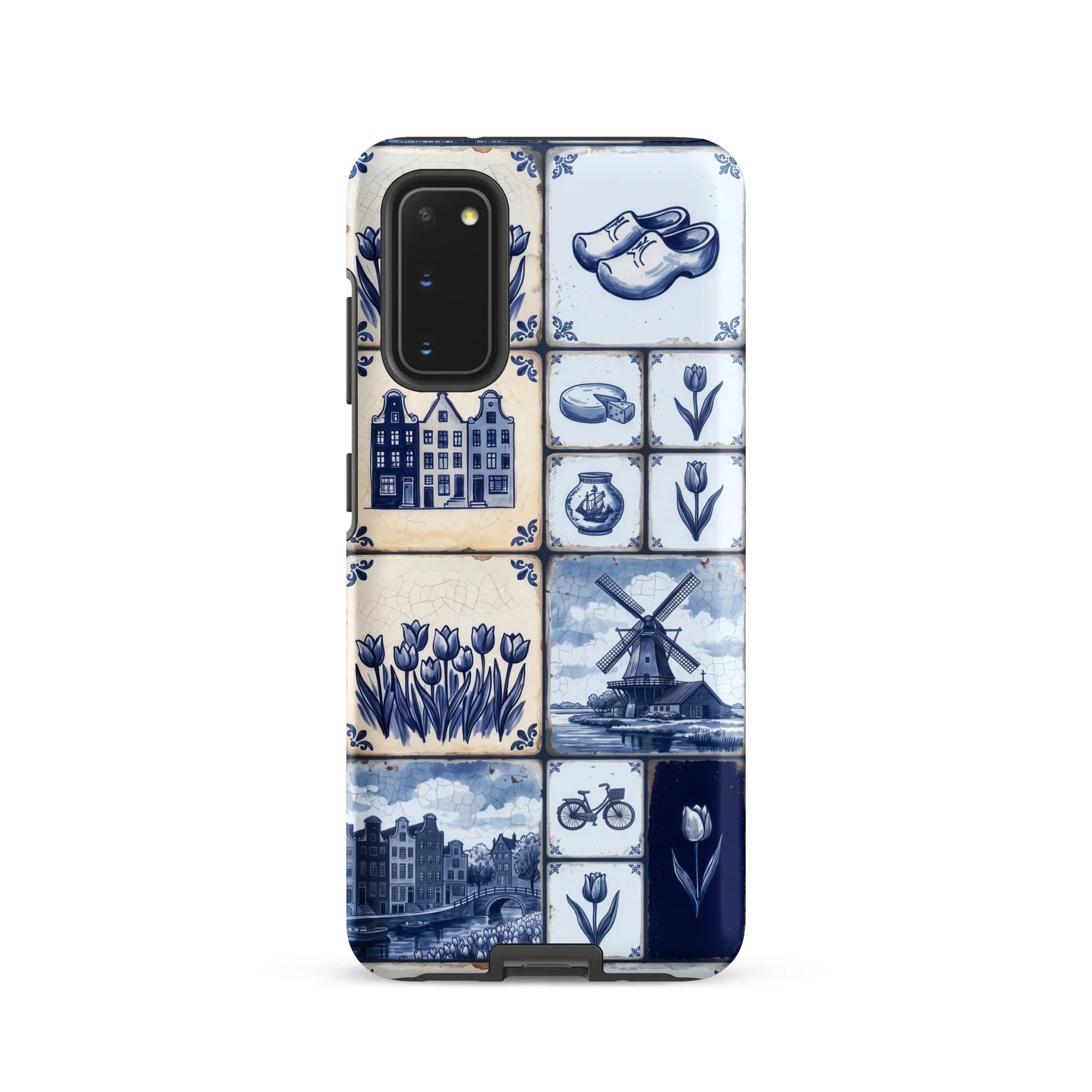
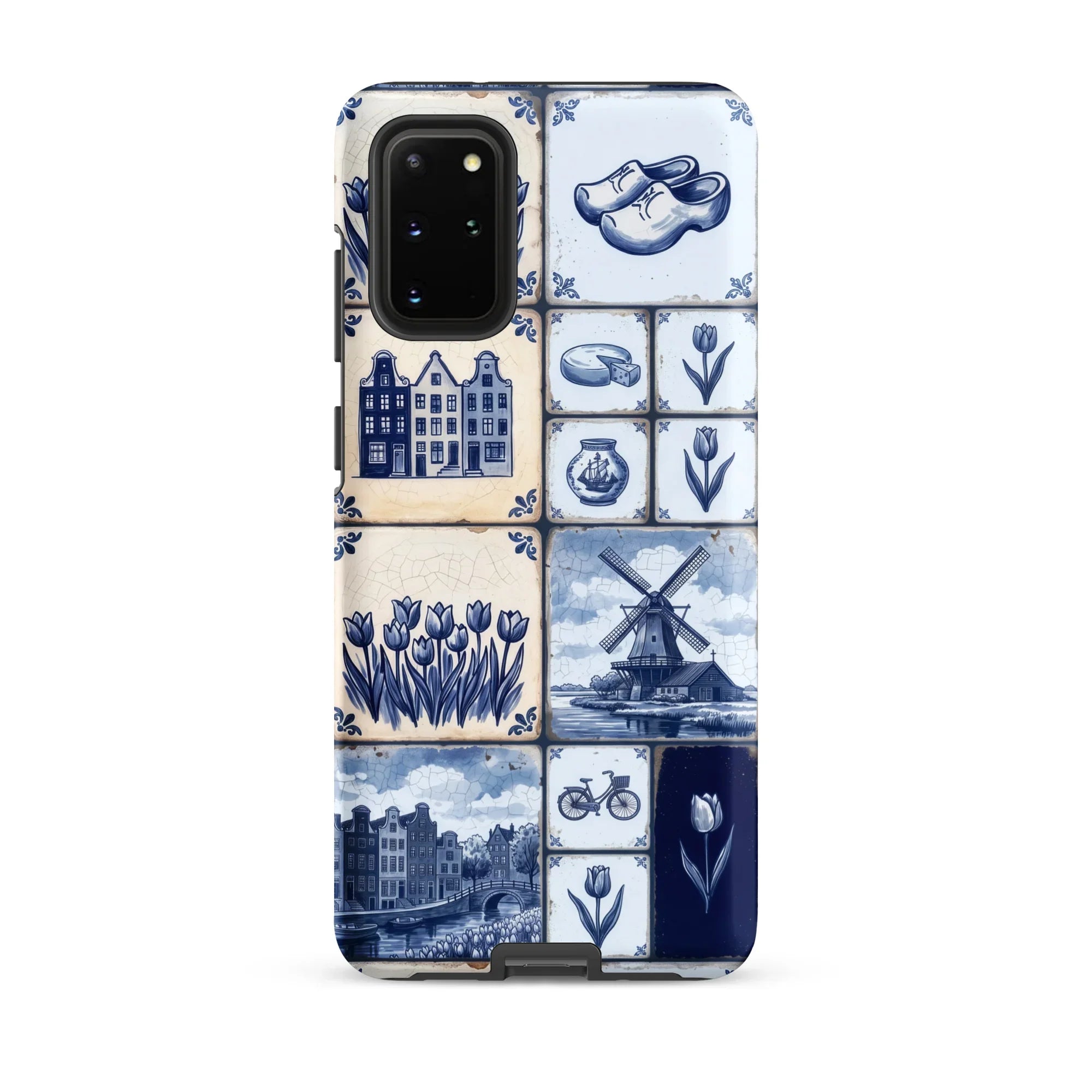
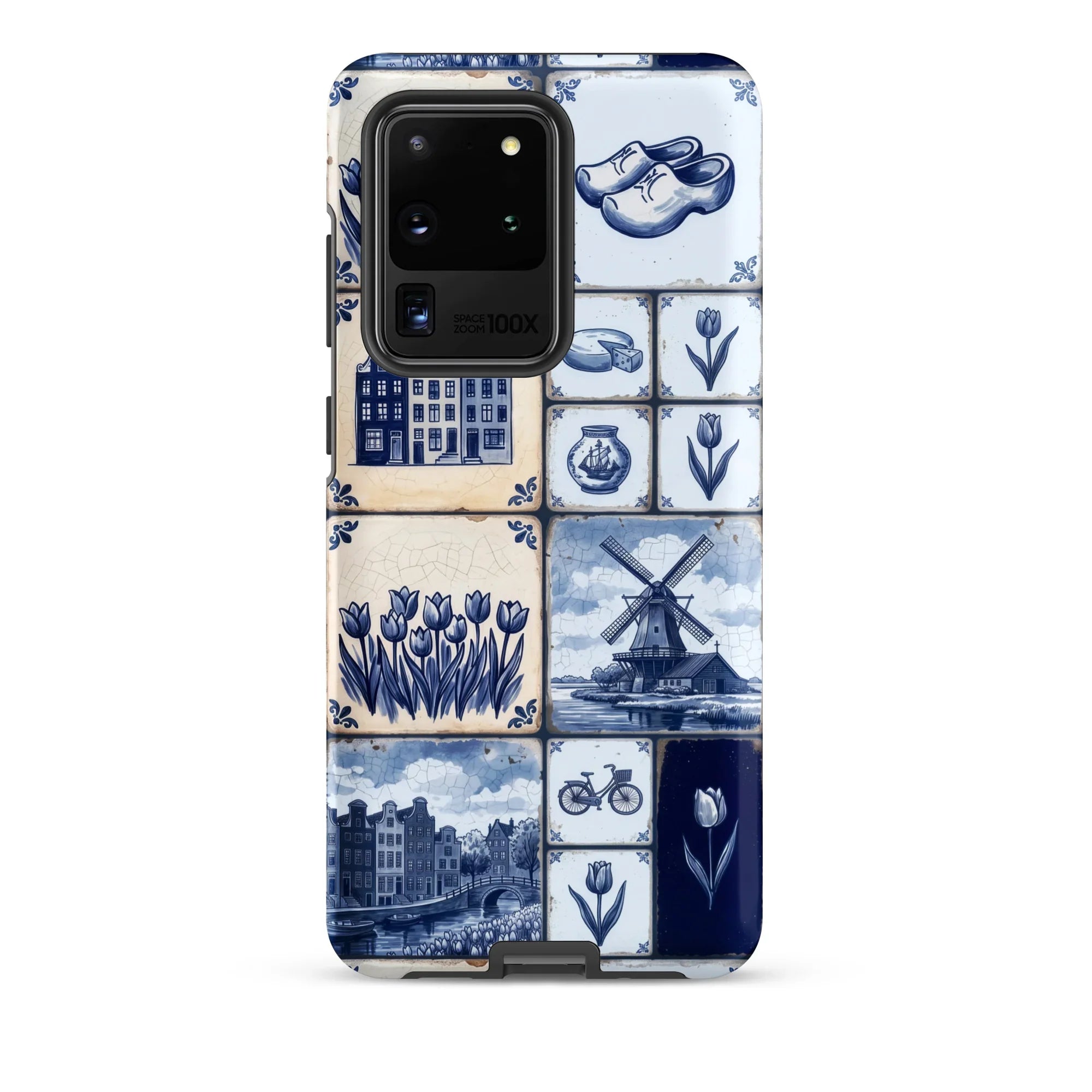
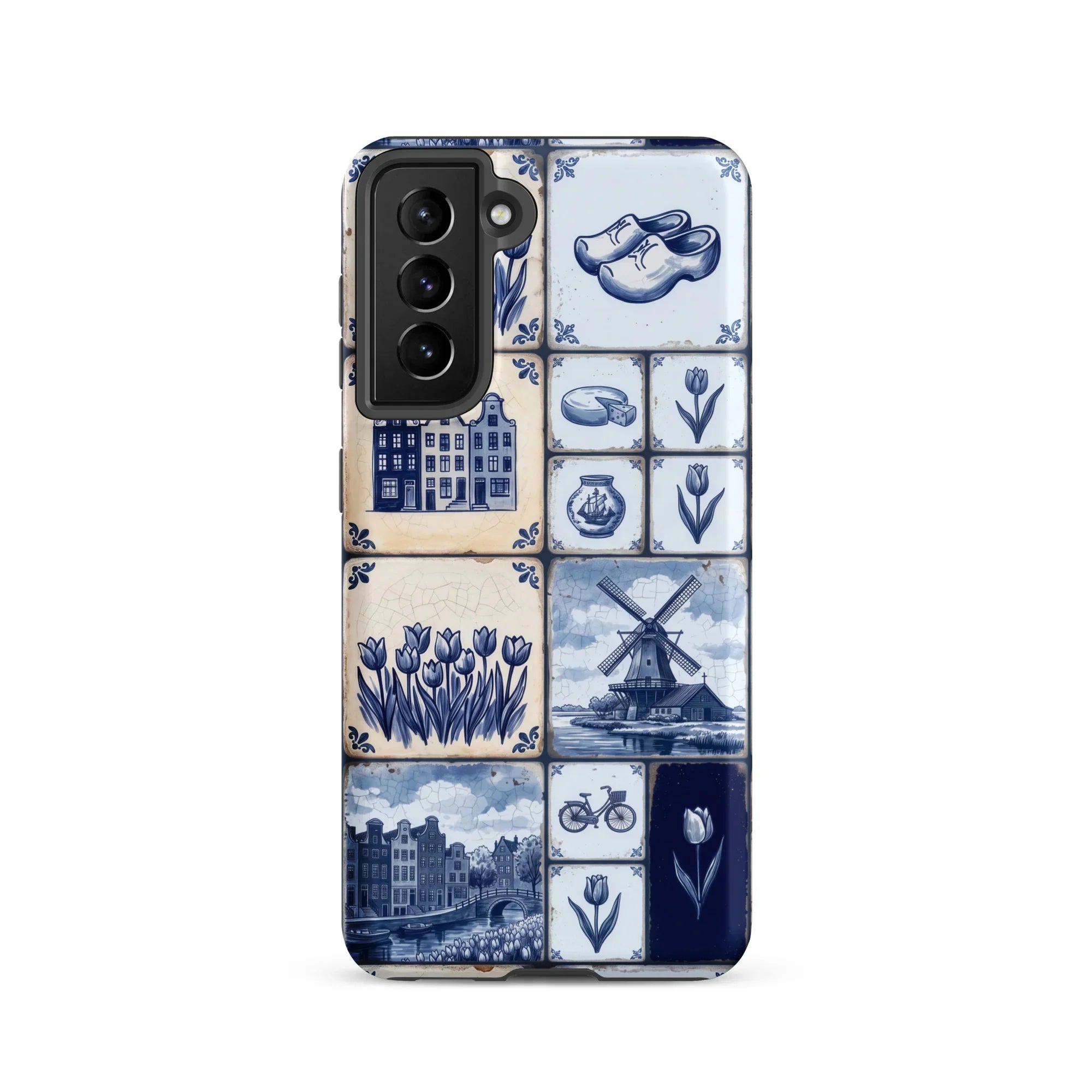
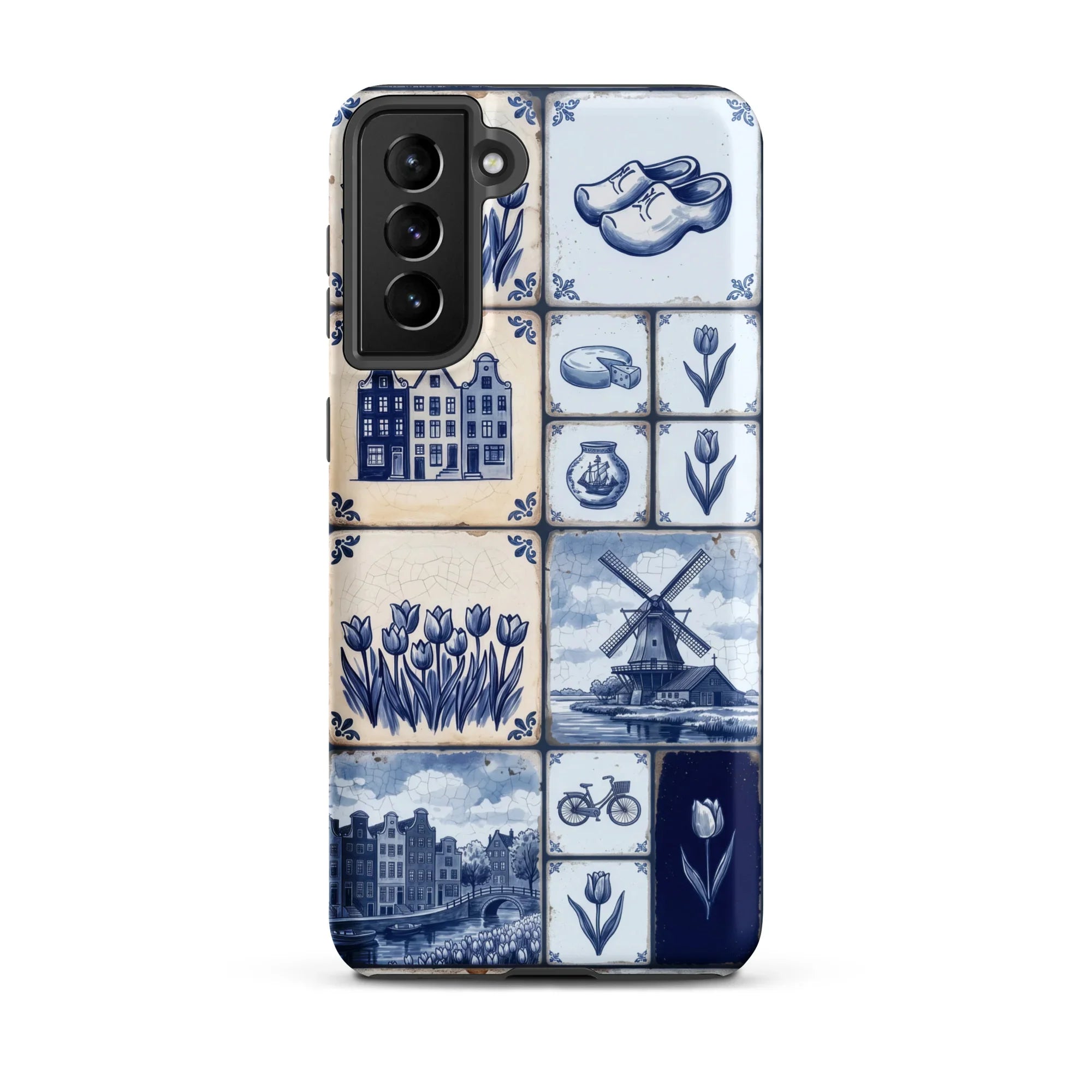
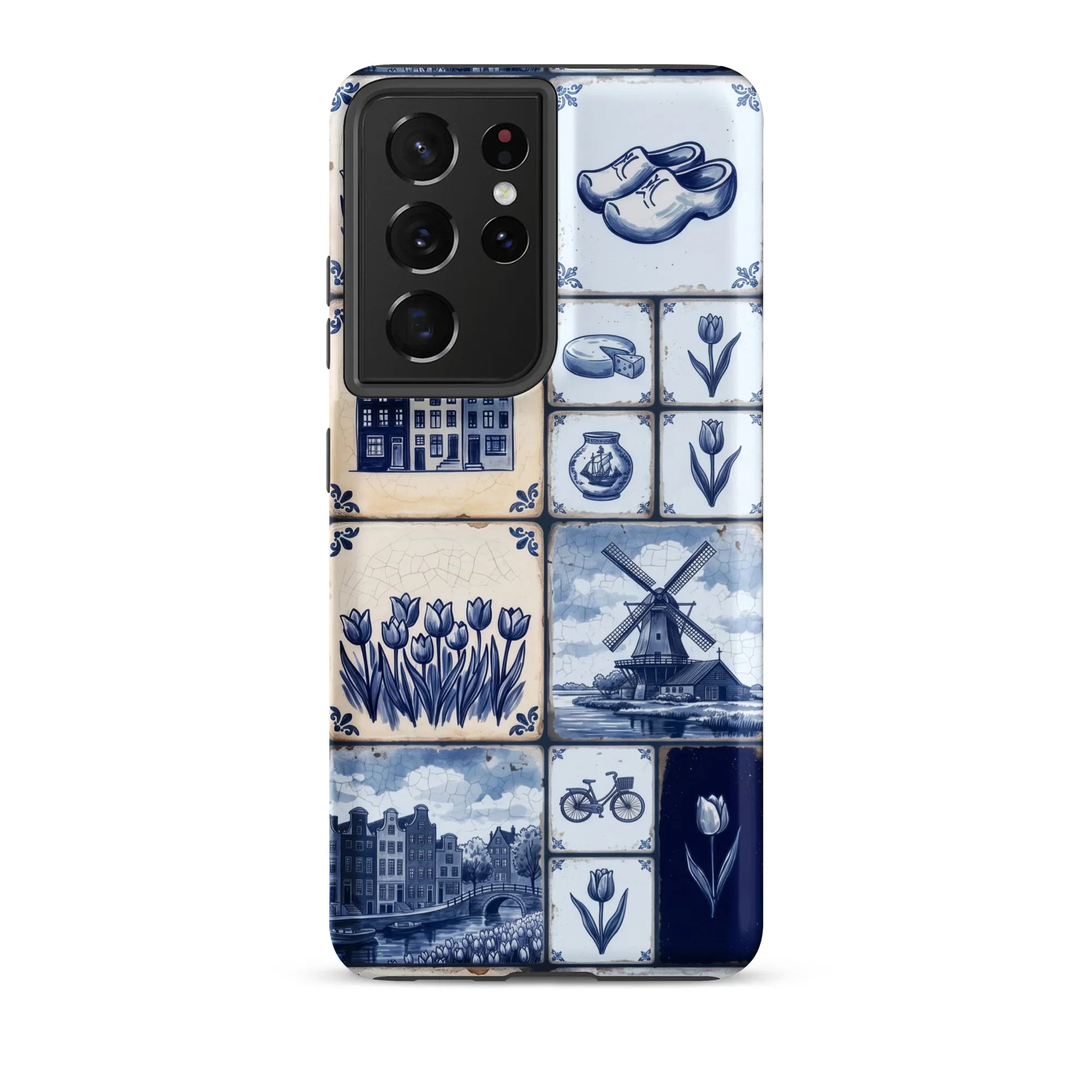
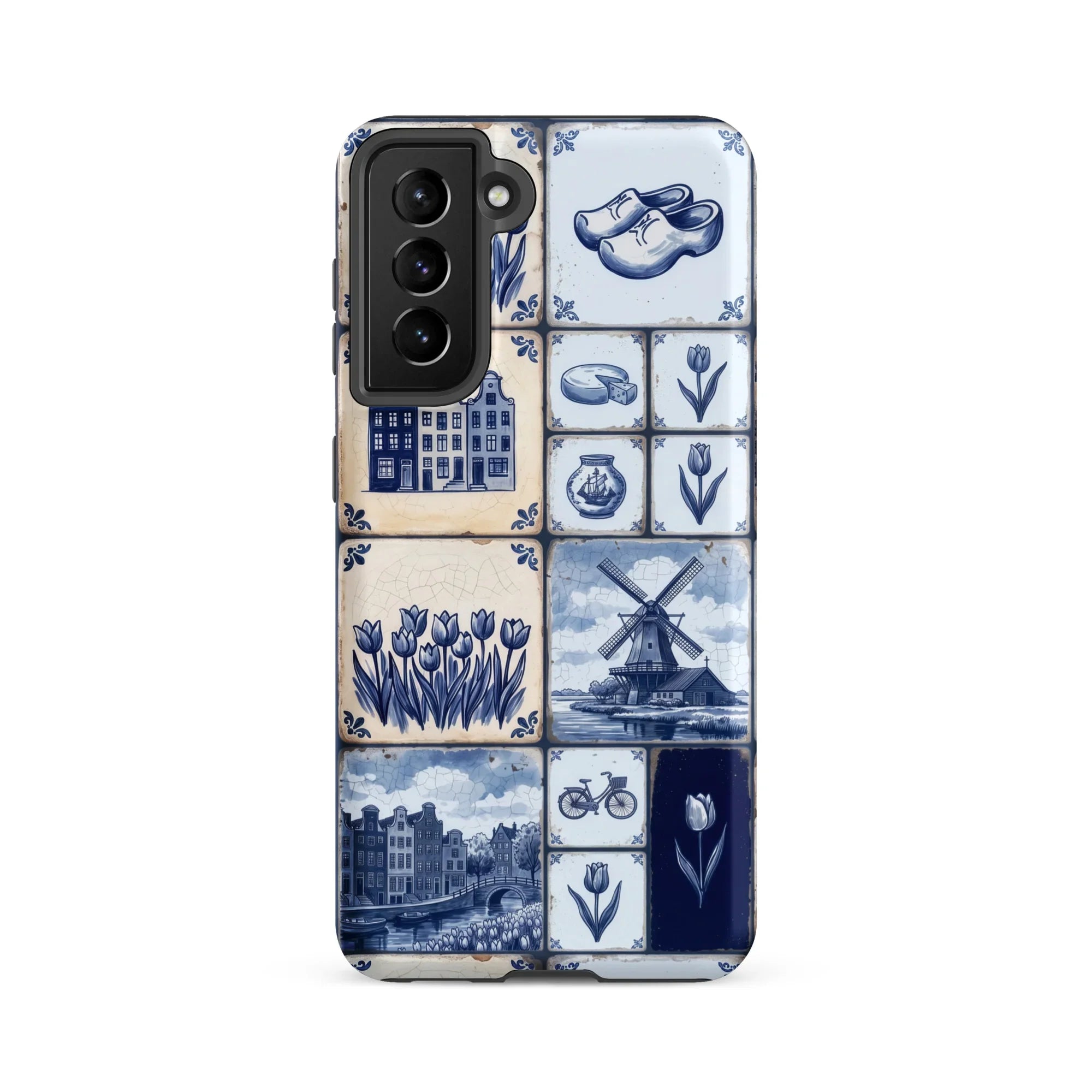
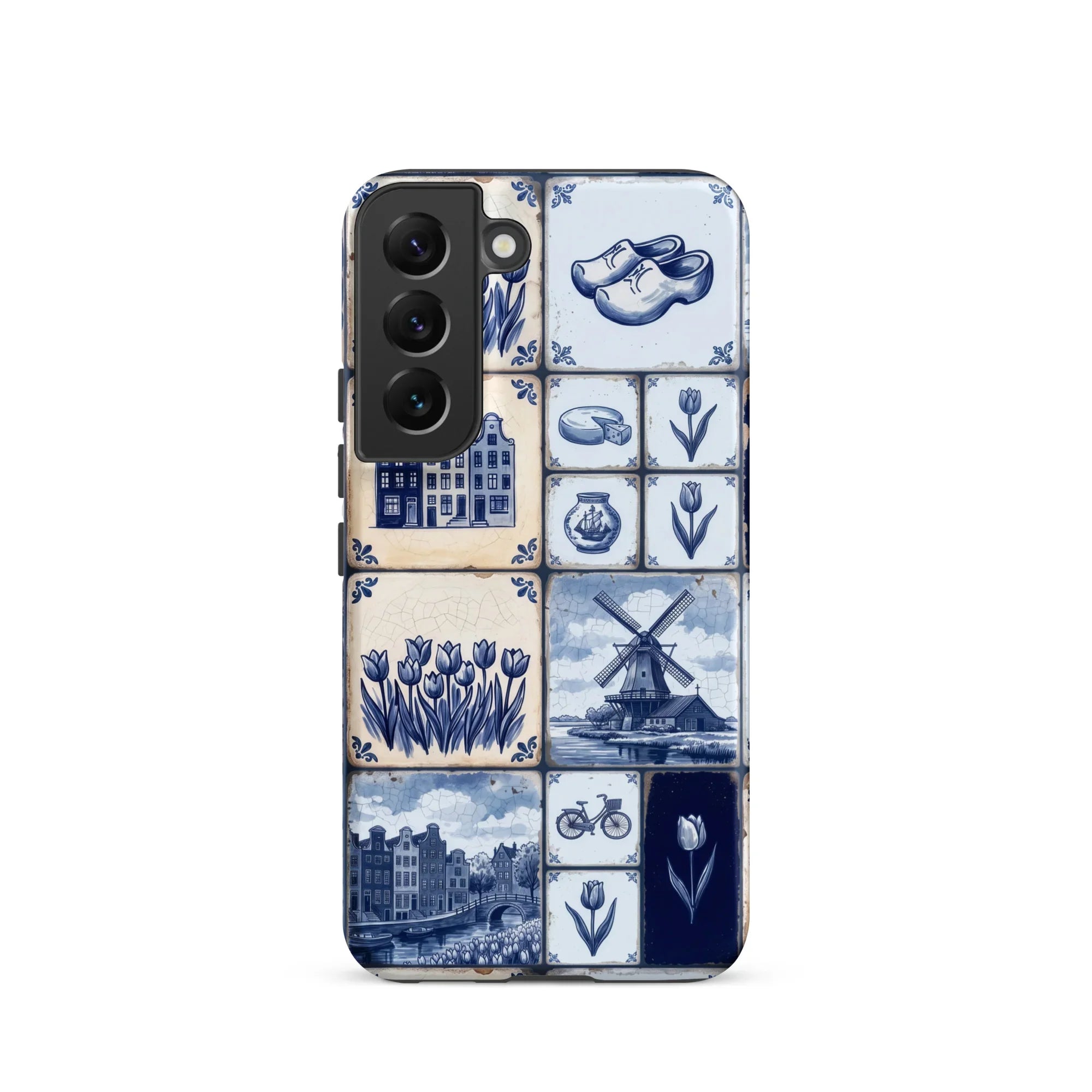
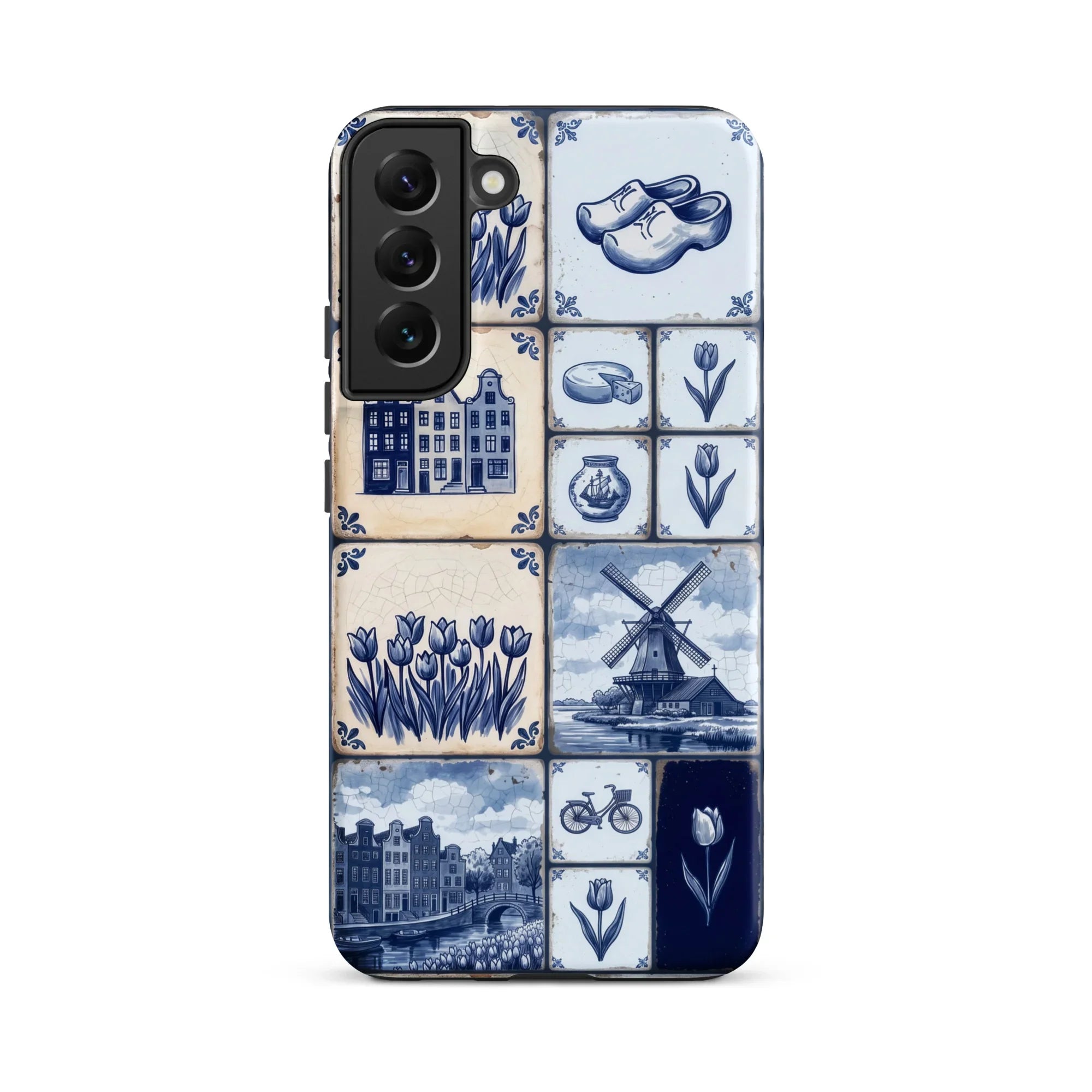
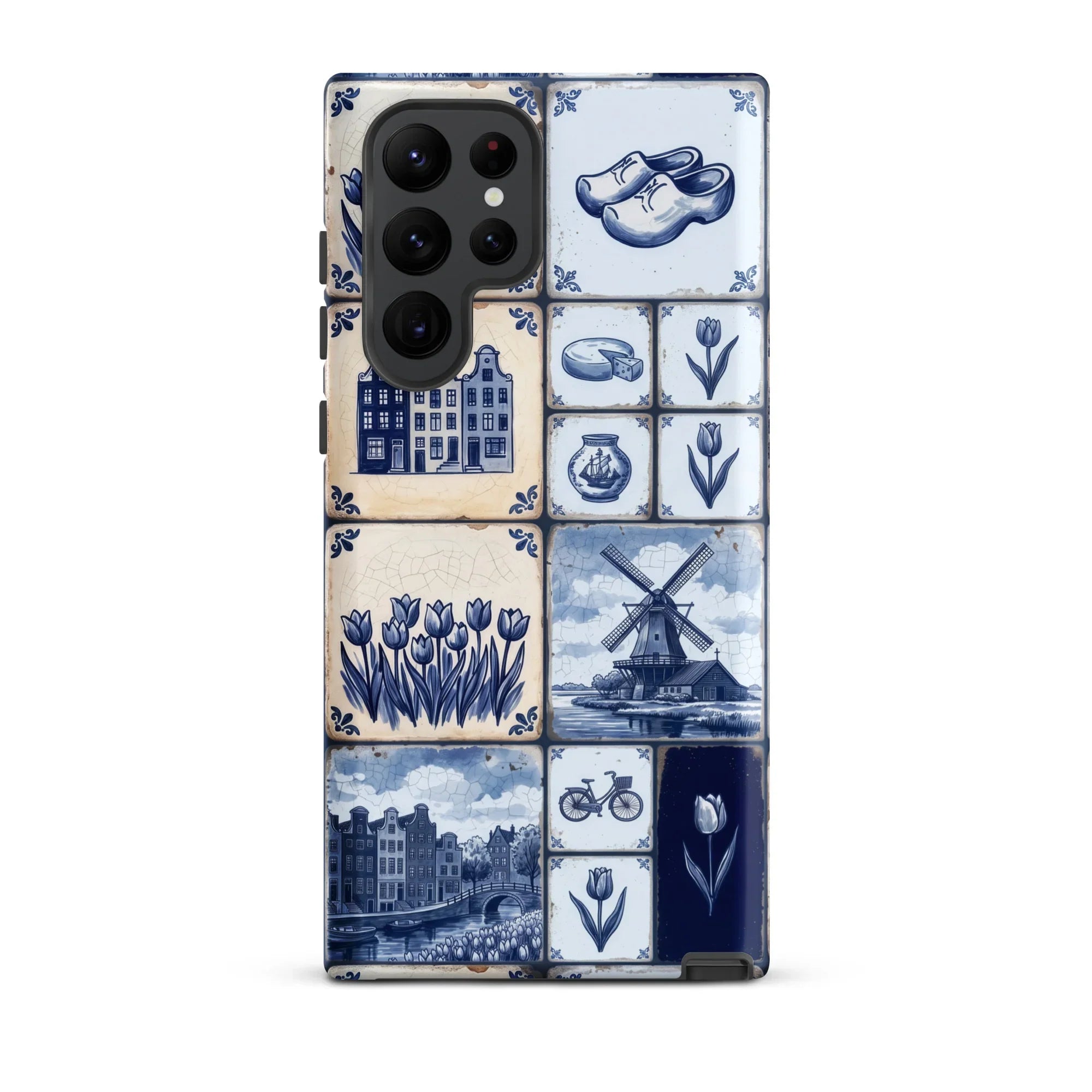
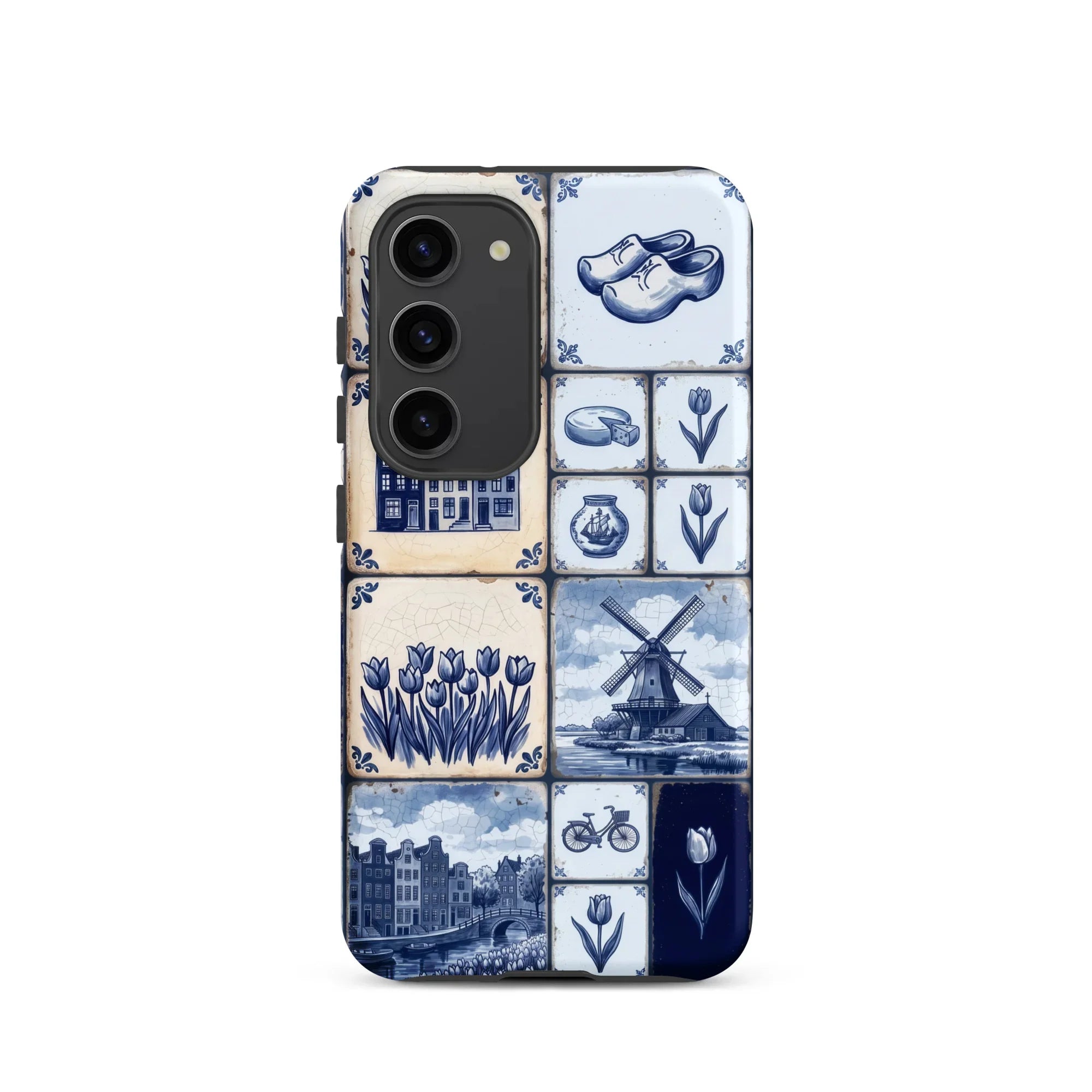
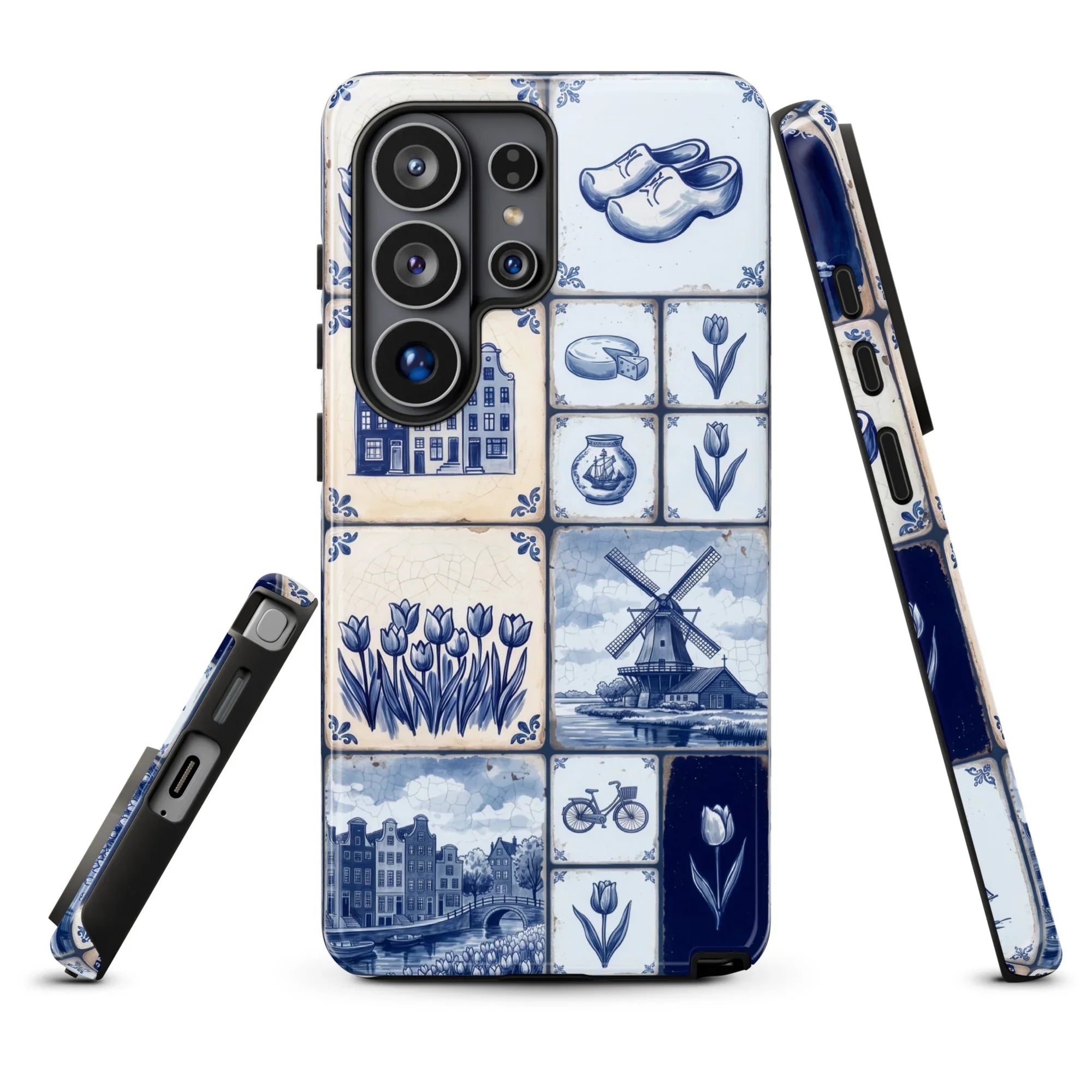
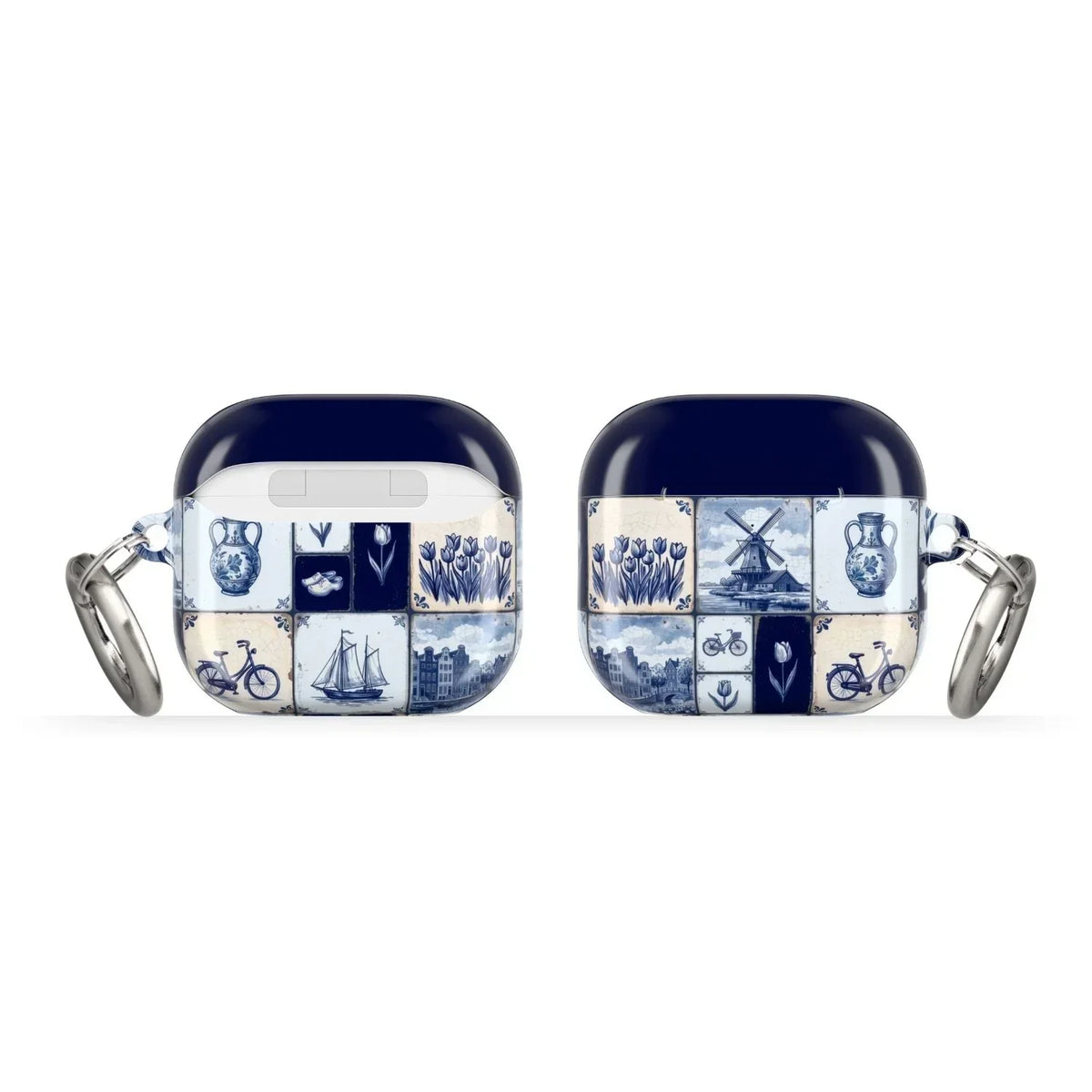
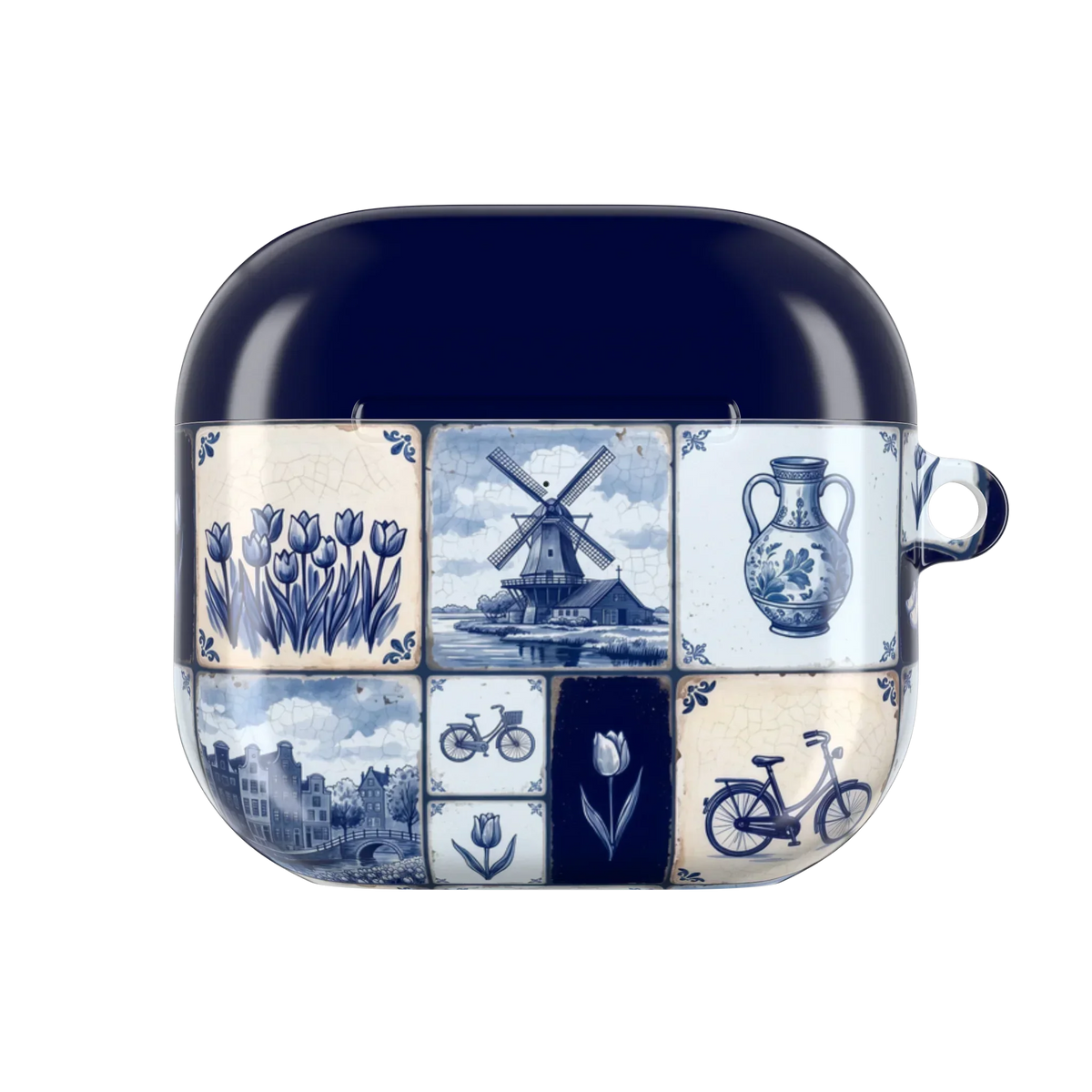
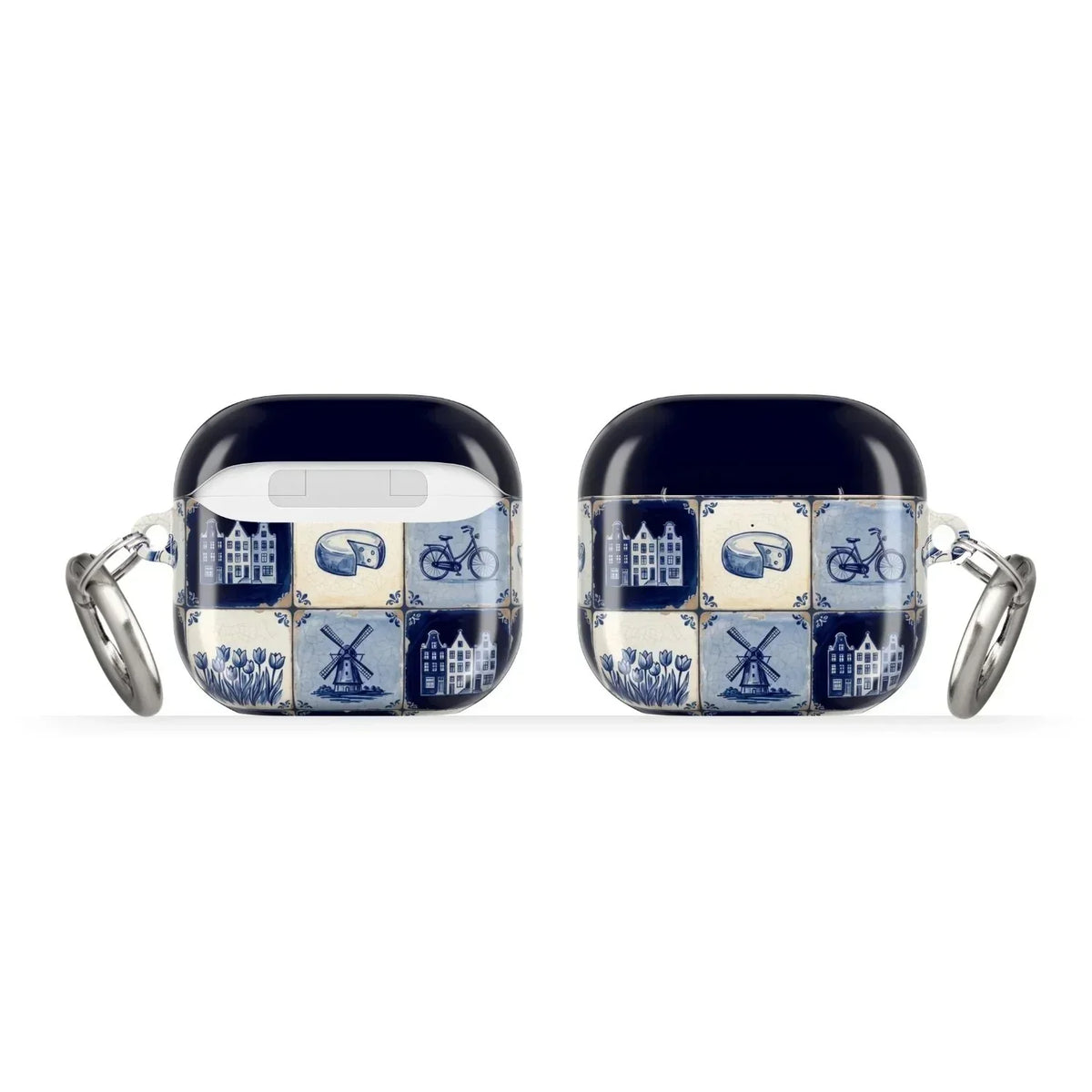
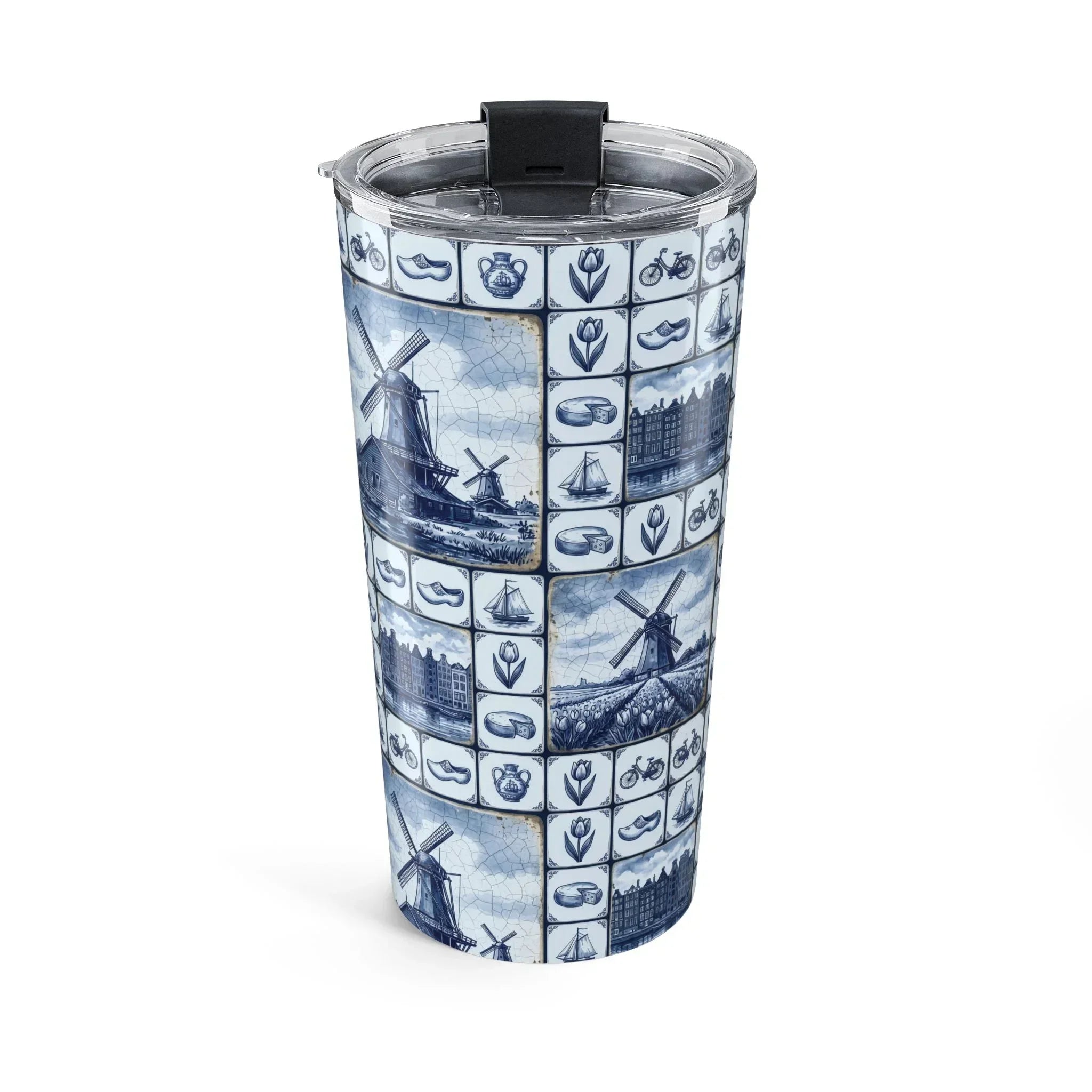
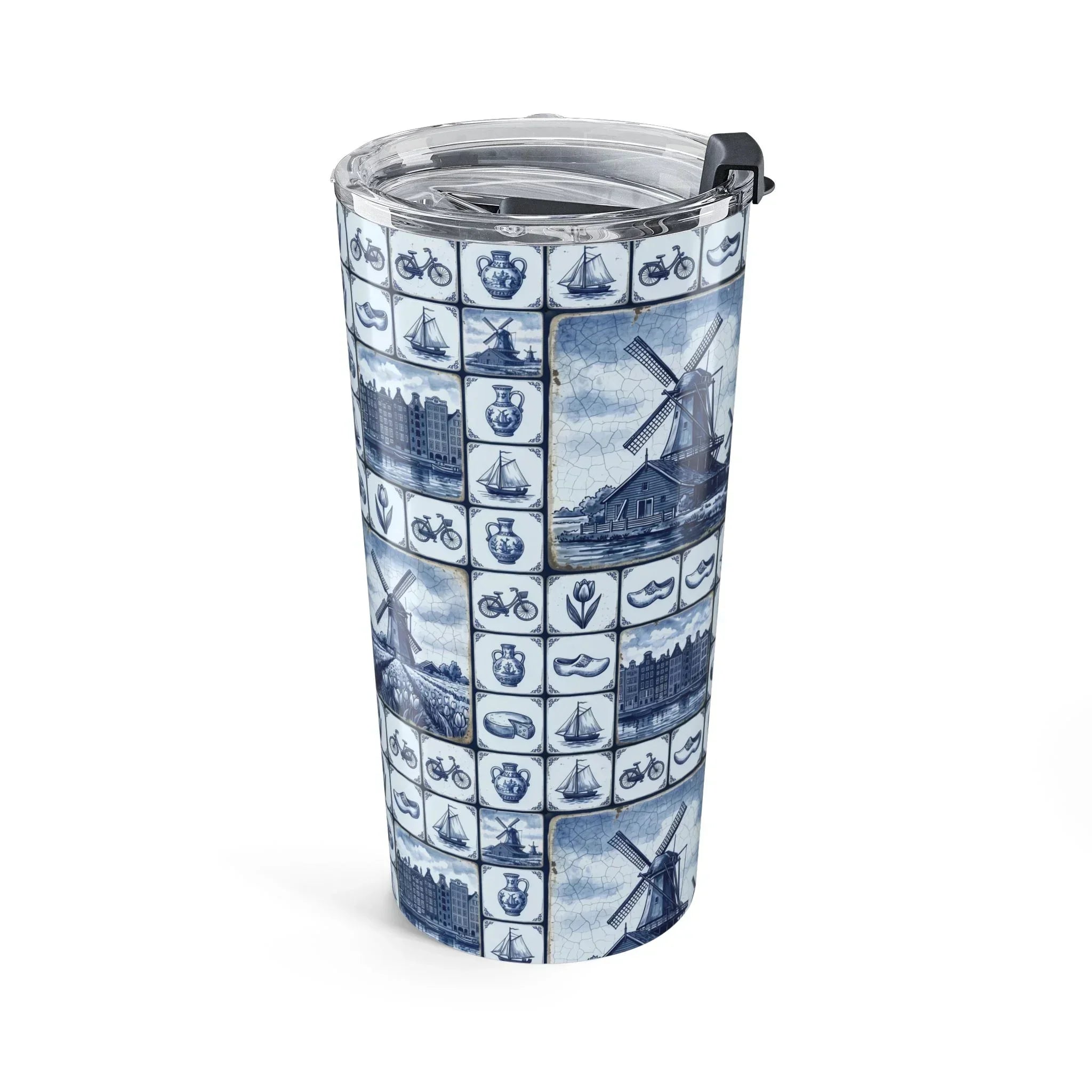
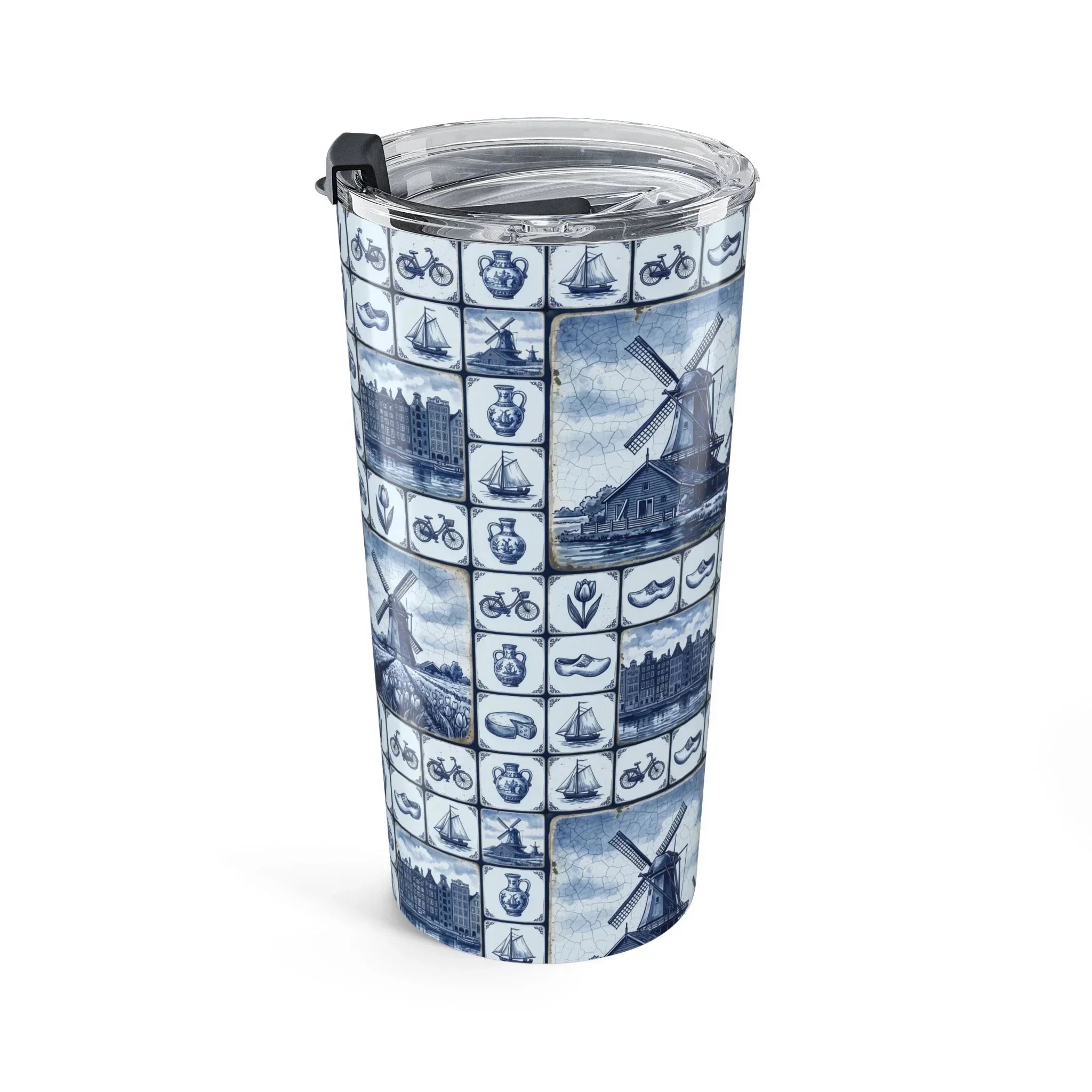
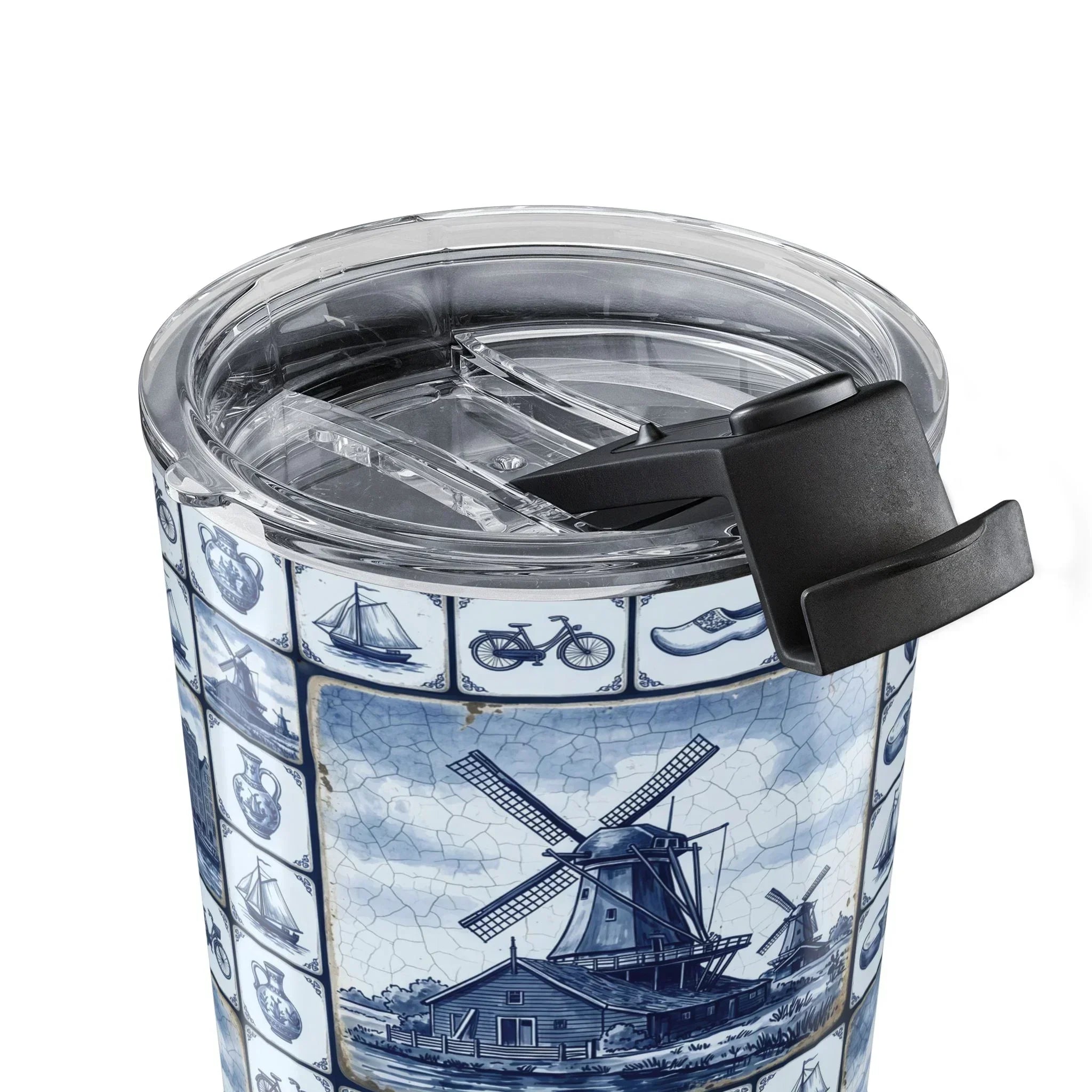
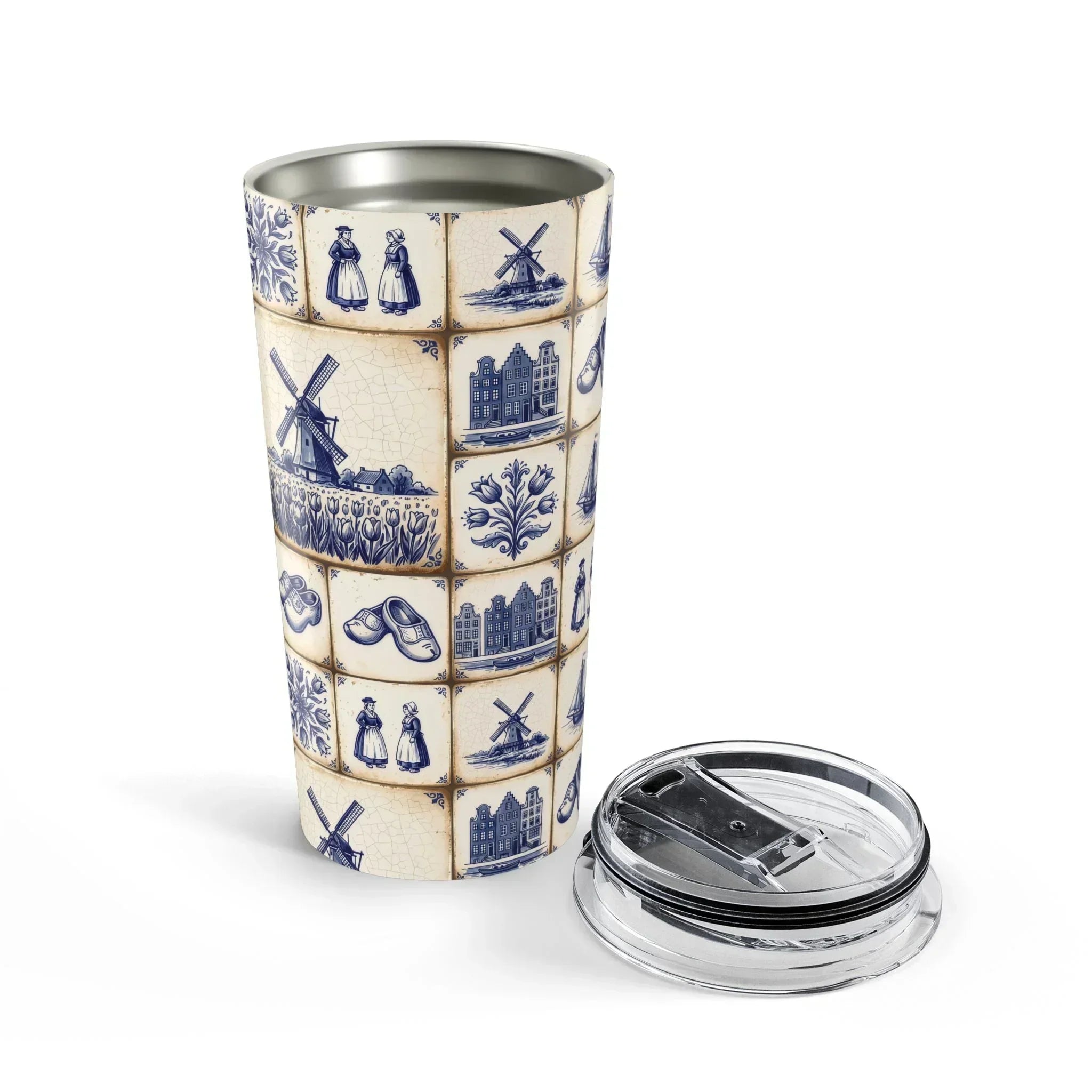
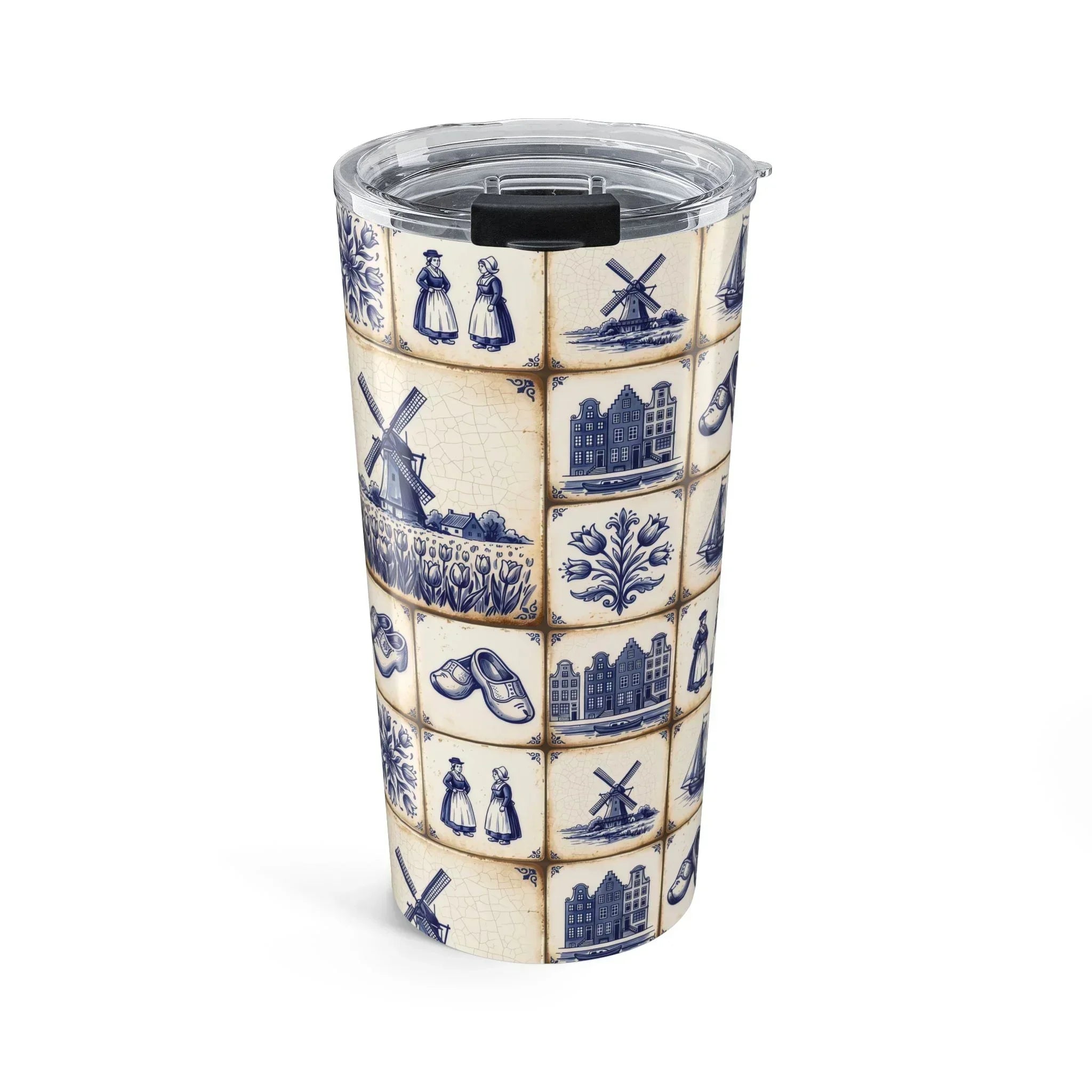
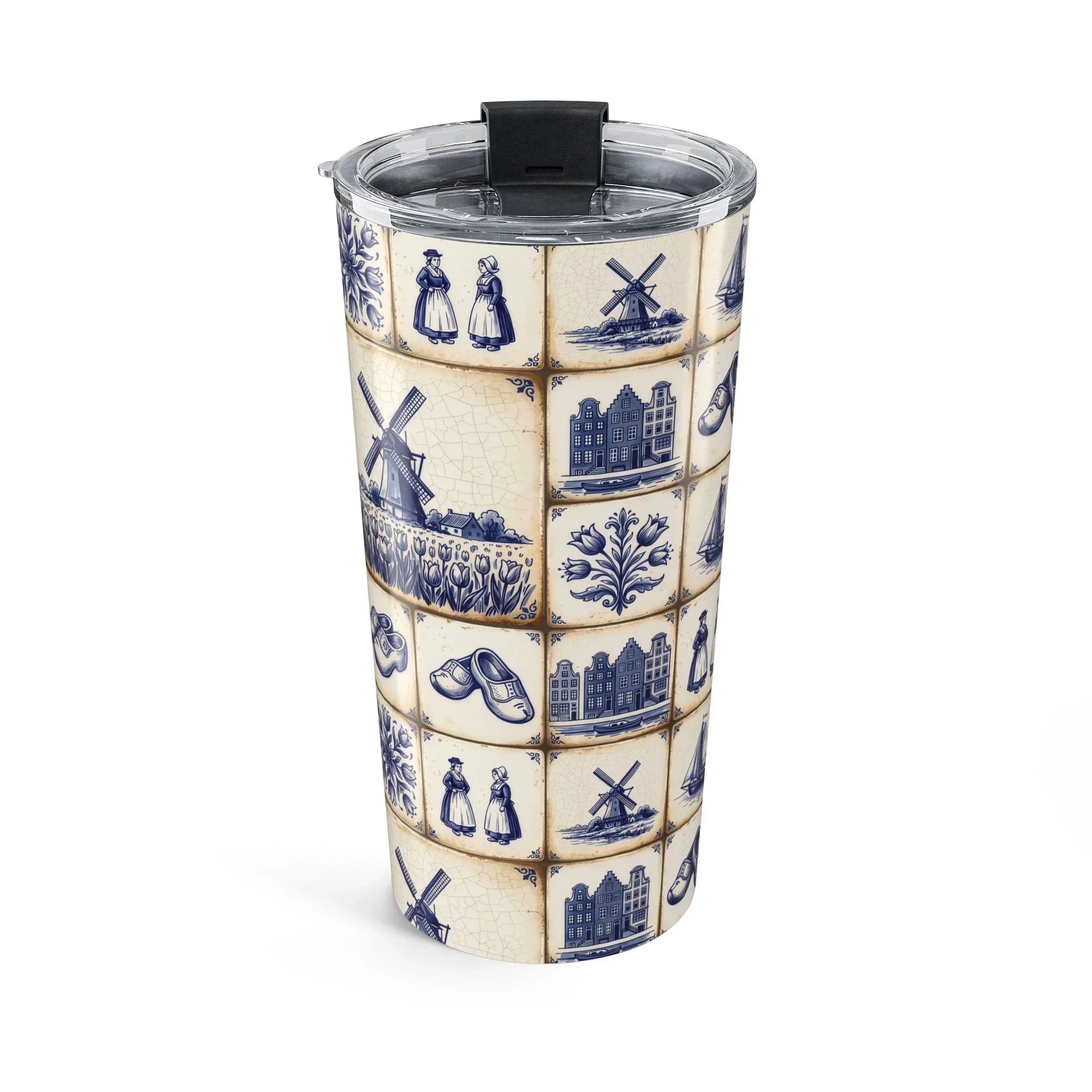
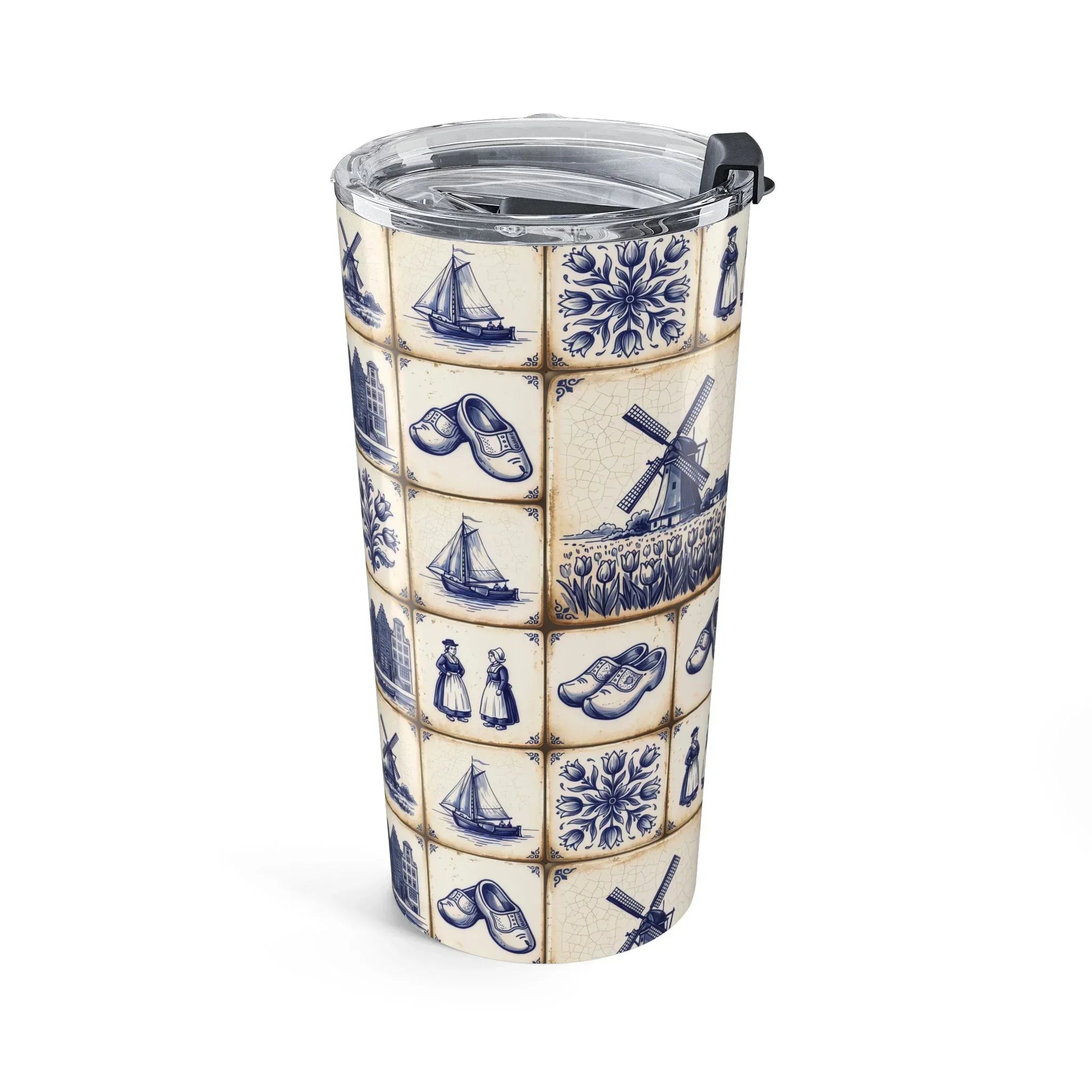
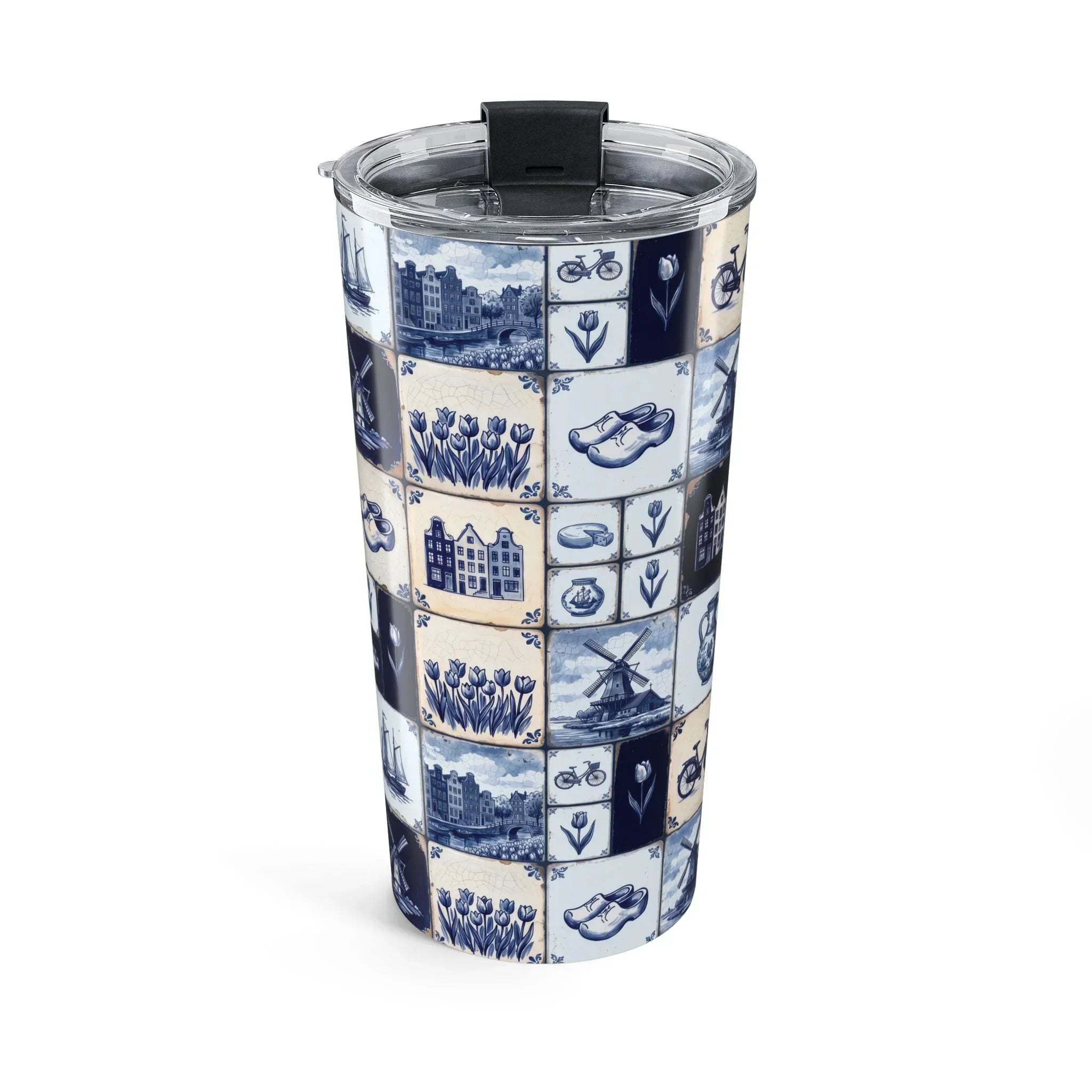
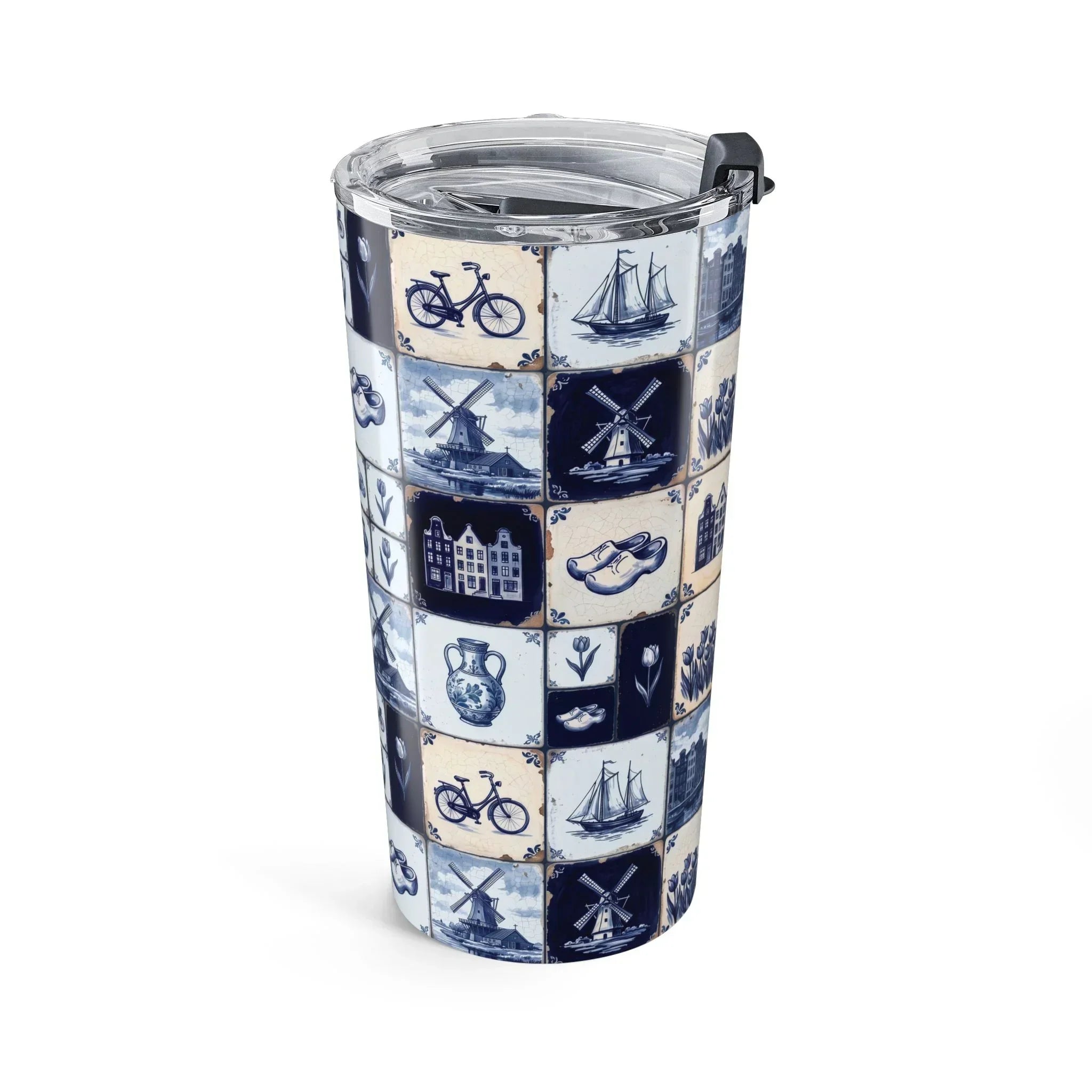
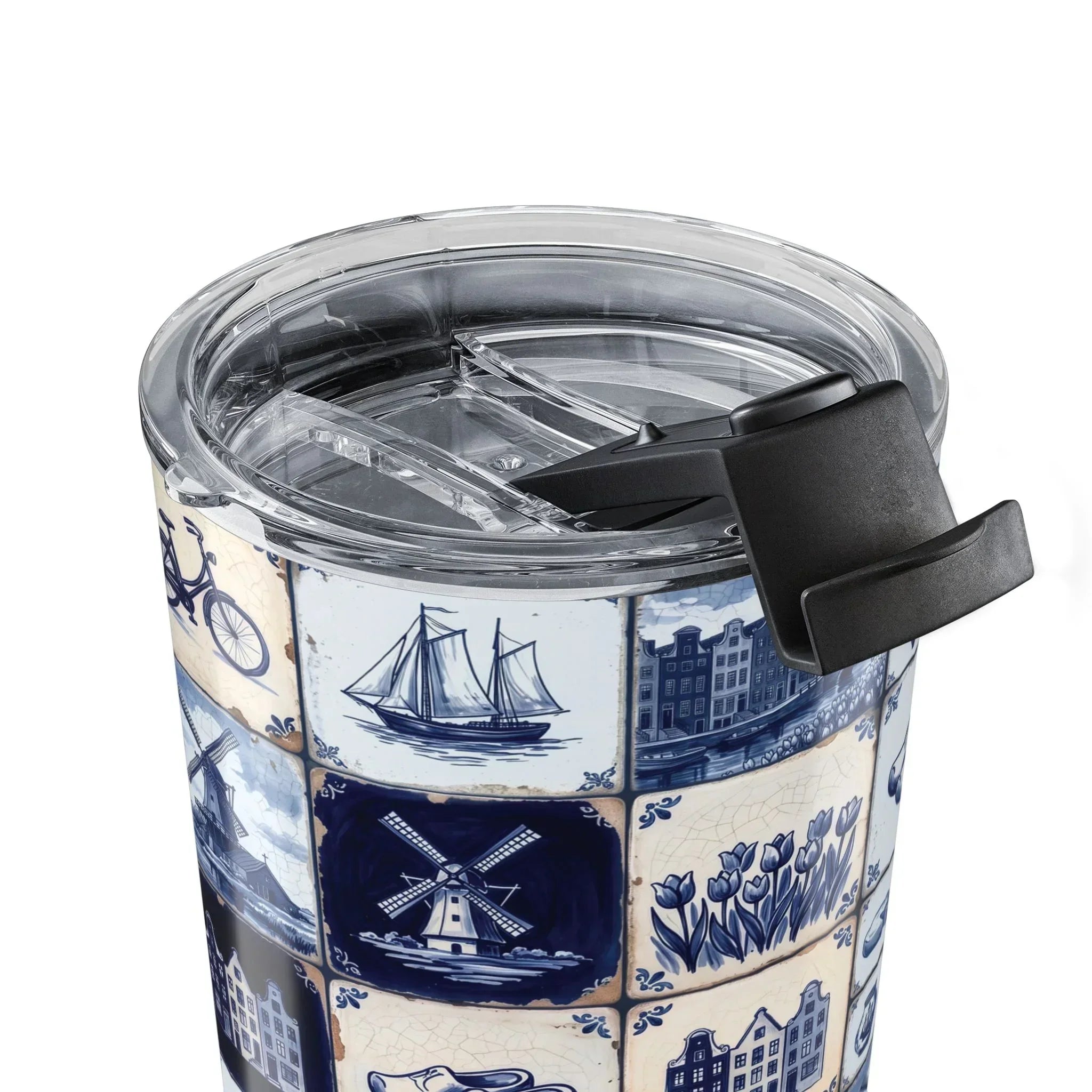
A compact repeat translates naturally to Dutch Delft Tile iPhone cases. Larger scenes have more room to unfold on Dutch Delft Tile laptop cases, while Dutch Delft Tile desk mats allow the pattern to extend across an entire workspace.

 Utrecht Mosaic AirPods Max Case
These contemporary objects do not replace traditional Delftware. Instead, they show how its visual language can continue evolving. You can shop the Dutch Delft Tile Collection to see how these blue-and-white motifs have been reinterpreted across modern everyday accessories.
Closing Thoughts
Delft tile art is not simply blue decoration on a white background. It is a living ceramic tradition shaped by movement, trade, craftsmanship and imagination.
From its international origins to its practical role inside Dutch homes, the Delft tile has always balanced usefulness with storytelling. Its ships, landscapes, occupations and quiet domestic scenes preserve small glimpses of the world in which they were made.
Perhaps that is what makes Dutch Delft tiles so compelling: a small ceramic square can hold a surprisingly large story.